
Payer conversion is where engagement becomes revenue. Operators trying to improve it usually reach straight for the paywall, and miss that conversion is a chain. This guide explains the whole chain and how to optimise it.
What payer conversion is
Payer conversion, sometimes called free-to-paying conversion, is the share of a dating site's members who become paying subscribers.
It is a simple ratio: of the members the site has, what proportion pay. But behind that simple ratio sits the whole question of whether a dating business actually works financially, which is why it deserves its own guide.
A dating site, on the freemium or hybrid models the pricing guidance describes, has a base of members who do not pay and a smaller group who do. Even on a hard-paywall paid model, there is a conversion question: of the members who arrive and engage, what share cross the paywall into paying. In every model, payer conversion is the rate at which the site turns members into revenue-generating members.
Payer conversion should not be confused with the related numbers around it. It is not the signup rate, how many visitors become members. It is not retention, how many paying members stay. It is the specific step in the middle: members becoming payers. The analytics guidance places it in the funnel, between engagement and retention, and that is exactly where it sits.
For an operator, the starting definition is straightforward: payer conversion is the share of members who pay, the rate at which the site converts an engaged audience into a paying one. The rest of this guide is about why that rate matters so much and, above all, how to improve it, which turns out to be less about the paywall alone than operators expect.
Why it is the central monetisation metric
Payer conversion deserves to be treated as the central monetisation metric, and an operator should understand why.
The analytics guidance names activation, retention and the free-to-paying conversion as the three most important numbers in a dating app. Of those three, payer conversion is the one that most directly determines whether engagement becomes money. Activation determines whether acquired members reach value; retention determines whether the model compounds; conversion is the specific hinge where an engaged audience becomes a revenue-generating one.
This makes conversion the decisive test of monetisation. A site can have strong acquisition and strong engagement, a lively, active community of members who use and enjoy the site, and still fail commercially, if those engaged members do not convert to paying. An engaged audience that does not convert is, financially, a cost without a return. Conversely, a site with solid conversion has a working monetisation engine: its engagement genuinely turns into revenue.
Conversion is also high-leverage. Because it is a rate applied across the whole engaged member base, a meaningful improvement in conversion is a meaningful improvement in revenue from the same number of members and the same acquisition spend. Improving conversion does not require acquiring more members or spending more; it requires getting more revenue from the members the site already has. That makes it one of the most valuable things an operator can work on.
And conversion, set against acquisition cost and combined with retention, feeds the ultimate test the analytics guidance describes: whether the lifetime value of a member exceeds the cost of acquiring them. Conversion is a central input to that test.
For an operator, the lesson is that payer conversion is the metric to watch above almost all others, because it is where the business model either works or does not, and because improving it is high-leverage and does not depend on spending more.
Conversion is a chain, not a button
The single most important idea in this guide is this: payer conversion is a chain of factors, not a single button, and operators who try to fix conversion by tweaking only the paywall usually fail.
When an operator sees a weak conversion rate, the instinct is to look at the paywall, the obvious place where conversion happens, and to adjust it: change the copy, change the price, change the placement. Sometimes the paywall genuinely is the weak point and that helps. Often it is not, and the operator tweaks the paywall endlessly while conversion stays stubbornly low, because the real problem is somewhere else in the chain.
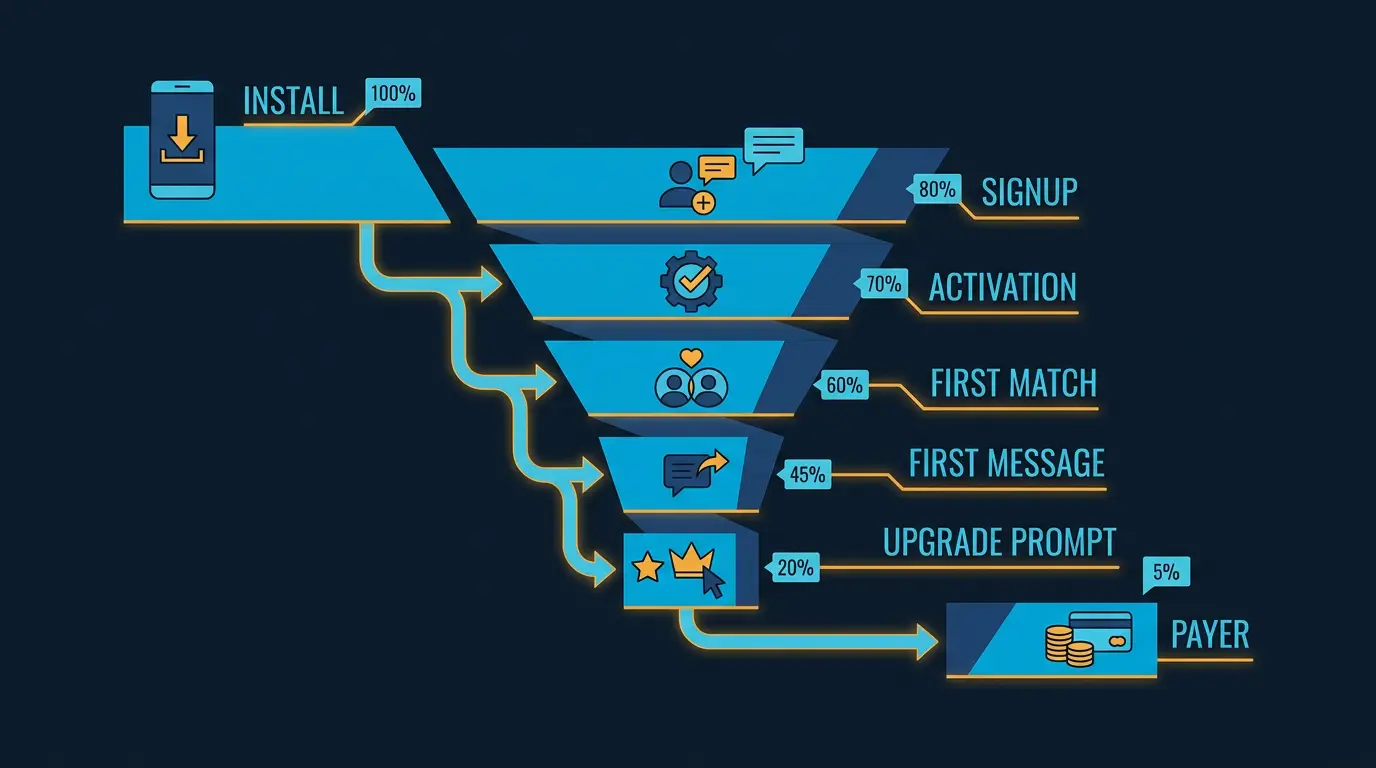
The chain runs roughly like this. A member can only convert if they are engaged, because an unengaged member has no reason to pay. They can only be engaged if they activated, reached a first real experience, because a member who never activated never became engaged. When an engaged member meets the paywall, it must appear at the right moment with the right offer. The price must be one the member, in this niche, will pay. And the member must trust the site enough to hand over money and commit. Conversion is the outcome of that whole chain holding together.
This means a weak conversion rate can be caused at any link. It can be caused by weak activation, members never reach engagement, so there is no one to convert. It can be caused by weak engagement, members are not invested enough to want to pay. It can be caused by a badly-timed paywall. It can be caused by pricing that does not fit the niche. It can be caused by a trust deficit, members who would value the service but do not trust the site enough to pay it. The paywall is only one of those links.
So optimising conversion means diagnosing which link is weak and strengthening that link, not reflexively tweaking the paywall. The following sections walk the chain. The measuring section explains how to find the weak link.
For an operator, the central guidance is: treat conversion as a chain, diagnose where it is breaking, and fix that, rather than assuming the paywall is always the answer.
Activation and engagement as prerequisites
The first links in the conversion chain are activation and engagement, and they are prerequisites: a member who has not activated and engaged essentially cannot convert.
Activation, as the onboarding and analytics guidance describe, is a new member becoming genuinely engaged, with a usable profile and a first real experience. A member who never activates, who signed up but never built a profile, never browsed real people, never had a first interaction, never reaches a state where paying could even make sense. They are not a potential payer; they are an acquisition cost that never reached the funnel stage where conversion happens. Weak activation therefore caps conversion, no matter how good the paywall is, because it shrinks the pool of members who could ever convert.
Engagement is the next link. An activated member who then genuinely engages, who uses the site, browses, matches, starts to invest hope and effort, builds, through that engagement, a reason to pay. They begin to want the things that paying unlocks. They become, in the language of the paywall guidance, a member who will feel the value when the paywall arrives. A member who activated but never really engaged has not built that reason, and is far less likely to convert.
This is why the analytics guidance calls engagement the leading indicator of conversion. Engaged members convert; unengaged members do not. The conversion rate is, to a large degree, downstream of how well the site activates and engages members.
The practical consequence for an operator optimising conversion is significant. If conversion is weak, the cause is very often upstream, in activation or engagement, not at the paywall. An operator whose members are not activating well, or not engaging deeply, will not fix conversion by adjusting paywall copy; they will fix it by improving onboarding and the early experience, as the onboarding guidance describes, so that more members reach the engaged state from which conversion becomes possible.
For an operator, the guidance is to treat activation and engagement as the foundation of conversion: if those are weak, fix them first, because no paywall can convert members who never became engaged enough to want to pay.
The paywall and the trigger moment
The paywall is the link in the chain where conversion visibly happens, and although it is not the only link, it is a genuine one, and getting it right matters.
The paywall guidance covers this in depth, and the essentials carry straight into conversion optimisation. The paywall should be placed around the capabilities members genuinely value most, typically real connection and messaging. It should be triggered at a moment of genuine member intent, the moment the member is reaching for that value, because the same paywall converts far better at a high-intent moment than at an arbitrary one. Its copy should connect the payment to the value the member wants in that moment. And it should be honest about price and terms.
When an engaged member, who has activated, engaged, and built a genuine reason to pay, meets a well-designed paywall at a high-intent moment, conversion happens. The member wants the value, the paywall offers exactly that value at that moment, and the member pays. The paywall is the link that converts the readiness the earlier links built into an actual payment.
When the paywall is badly designed, badly timed, badly placed, badly worded, it can fail even engaged members. A member who was genuinely ready to pay can decline a paywall that catches them at the wrong moment, or that asks for payment in the abstract instead of for the thing they want. So the paywall is a real link, and a genuine cause of lost conversion when it is wrong.
The key, for conversion optimisation, is to see the paywall as one link among several. If the earlier links are strong, members are activating and engaging well, but conversion is still weak, the paywall is a strong candidate for the weak link, and the paywall guidance describes how to improve it. If the earlier links are themselves weak, fixing the paywall will not be enough.
For an operator, the guidance is to design the paywall well, following the paywall guidance, and to recognise it as a real link in the conversion chain, while diagnosing honestly whether it, or something upstream, is the actual constraint.
Pricing and the offer
Another link in the conversion chain is the price itself and the way the offer is structured, and an operator should not overlook it when optimising conversion.
The pricing guidance covers the strategic choice of model and the setting of the price. For conversion specifically, the relevant point is that the price has to be one that members of the niche will actually pay. A price badly matched to the audience suppresses conversion: a price too high for what the audience will bear means engaged, willing members decline at the paywall not because they do not value the service but because the number is beyond what they will pay; a price that contradicts the positioning, as the pricing guidance warns, can also undermine conversion.
The structure of the offer matters too. How subscription lengths are presented, how any tiers are arranged, whether there is a trial or an introductory offer, all shape the conversion decision. A member meeting the paywall is not just deciding "pay or not"; they are deciding among the options presented, and a sensibly structured offer, clear options, a sensible default, makes the decision easier than a confusing one.
The free trial, covered in the free-trial guidance, is itself a conversion tool: it works on the conversion chain by letting members experience the paid value before committing, which can lift conversion among members who could not judge the value from outside the paywall.
The honest framing throughout is important. As the pricing guidance argues, underpricing a genuinely good service is a real mistake; it leaves revenue on the table and can signal low quality. Conversion optimisation does not mean simply cutting the price until more members convert. It means finding the price and offer structure that the niche genuinely responds to, which may be higher than an operator nervously assumes.
For an operator, the guidance is to treat the price and offer structure as a link in the conversion chain: confirm the price genuinely fits the niche, structure the offer clearly, and recognise that mispriced or confusingly structured offers suppress conversion among members who would otherwise pay.
Trust as a conversion factor
A link in the conversion chain that operators most often overlook is trust: a member will not pay a site they do not trust, however much they value what it offers.
Payment is an act of trust. When a member pays a dating site, they are trusting it with their money, trusting it to deliver what it promises, trusting it to handle the payment honestly, trusting it not to be a scam, trusting it to treat them fairly. A member who has activated, engaged, met a well-designed paywall at a good moment, and faces a fair price, can still decline, if at that moment they do not trust the site enough to commit money to it.
This means trust is a genuine conversion factor, and the trust-building work described elsewhere in this guidance is also conversion work. The about-page guidance, the landing-page trust signals, the visible safety the trust-and-safety guidance describes, the honesty that runs through the advertising and paywall guidance, all build the trust that, at the paywall, lets a member feel safe paying. A site that has built genuine trust converts better, because its engaged members reach the paywall already trusting the site enough to pay. A site that has neglected trust, that feels uncertain, unprofessional, possibly not legitimate, loses conversions among members who valued the service but did not trust it with their money.
The dating-specific sharpness of this is worth noting. Dating is a category with a real history of scams and dishonest operators, and members know it. A dating site therefore has to earn payment trust more deliberately than a category with a cleaner reputation. The cautious member doing due diligence, the one the about-page guidance describes, is also a member at the paywall deciding whether this site is safe to pay.
For an operator, the guidance is to recognise trust as a real link in the conversion chain: the trust-building work across the whole site is also conversion optimisation, and a trust deficit suppresses conversion among members who would otherwise have paid.
The dating-specific conversion dynamic
There is one dynamic in dating conversion that has no equivalent in most subscription businesses, and an operator should understand it because it changes how conversion should be read and pursued.
In most subscription businesses, the goal is for the customer to keep using and keep paying indefinitely. Dating is different. As the analytics guidance notes, the goal of a dating site is, somewhat unusually, to help members succeed, find a relationship, and therefore eventually leave. A member who finds a partner and stops paying is a success, not a failure.
This interacts with conversion in a subtle way. It means conversion optimisation must not be pursued in a way that fights the member's success. The aim is not to convert members and then keep them paying as long as possible regardless of whether the site is helping them; the aim is to convert members who are genuinely getting value from the site while they are using it. A site that converted members and then quietly preferred them not to succeed, so they kept paying, would be working against its own members, and that is both wrong and, over time, self-defeating, because a site that does not help people succeed loses its reputation and its word of mouth.
It also means an operator should read conversion alongside the dating-specific health metrics the analytics guidance describes, match rate, message rate, conversation rate. Conversion that comes from members genuinely succeeding on the site is healthy. Conversion wrung from members who are stuck and frustrated is not, and it will not last, because frustrated members eventually leave.
The honest framing is that good dating conversion comes from genuinely serving members. Members convert and pay because the site is genuinely helping them in their search, and that is sustainable. The conversion an operator should optimise for is the conversion of members who are being well served, not the extraction of payment from members who are not.
For an operator, the guidance is to pursue conversion as a by-product of genuinely serving members well, to read it alongside the health metrics, and never to optimise conversion in ways that work against members' success, because in dating, helping members succeed is the business.
Measuring and improving conversion
Optimising conversion requires measuring it properly, and the key to improvement is diagnosing which link in the chain is weak.
The starting point is to measure conversion within the funnel, as the analytics guidance describes, not as an isolated number. The operator should be able to see the chain: how many members activate, how many of those engage, how many engaged members convert. Seeing conversion in that context is what locates the weak link. If activation is poor, the conversion problem is upstream and the fix is onboarding. If members activate and engage well but conversion is still weak, the constraint is at the paywall, the pricing, or trust. The funnel view turns "conversion is low" into "conversion is low because this specific link is weak."
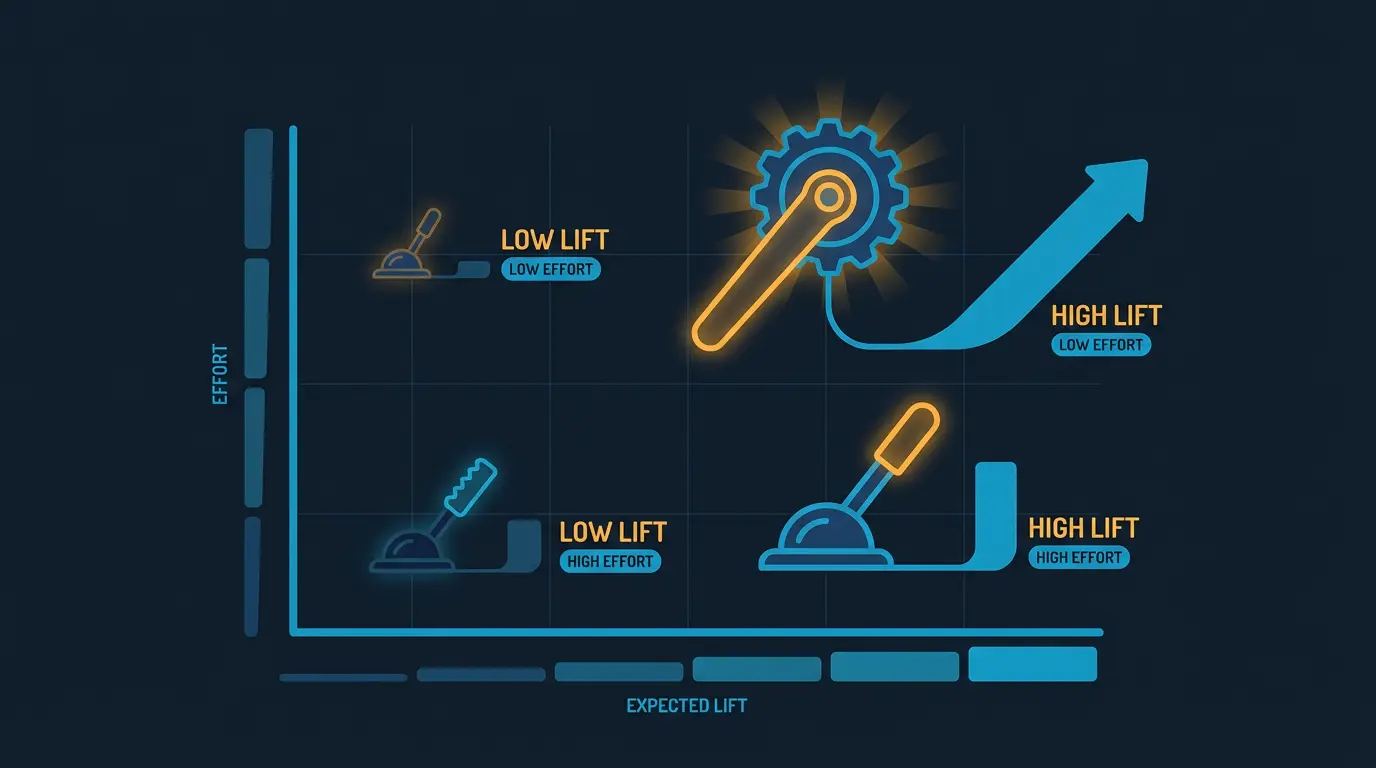
Once the weak link is identified, the operator improves it with the relevant work: onboarding for activation, the engagement levers for engagement, the paywall guidance for the paywall, the pricing guidance for price, the trust-building work for trust. And the operator tests changes one at a time, as the analytics and paywall guidance both insist, so that when conversion moves, the operator knows what moved it.
The operator should also read conversion alongside its downstream consequences. As the free-trial and paywall guidance warn, a change that lifts the headline conversion rate but produces members who churn or is not a genuine improvement. The real measure of a conversion improvement is more members converting and those members staying and paying over time, which means watching retention and chargebacks among newly converted members, and ultimately lifetime value against acquisition cost.
And the operator should be patient with the timescale. Some effects, especially on retention, take cohorts time to reveal, so conversion optimisation is a steady, evidence-based discipline, not a quick adjustment.
For an operator, the guidance is: measure conversion within the funnel to find the weak link, strengthen that specific link, test one change at a time, judge improvements by genuine downstream member quality, and work patiently on real evidence.
Common mistakes
The defining mistake is treating conversion as a paywall problem and endlessly tweaking the paywall, when the weak link is often upstream in activation or engagement, where no paywall change can help.
The second is neglecting activation, leaving the pool of engaged members who could ever convert too small, which caps conversion regardless of everything downstream.
The third is overlooking trust, assuming that a member who values the service will pay, when a member who does not trust the site enough will decline at the paywall even so.
The fourth is mispricing, a price badly matched to the niche, or simply cutting price to chase conversion, rather than finding the price the niche genuinely responds to. The fifth is judging conversion by the headline rate alone, ignoring whether converted members stay and pay over time, and the sixth is pursuing conversion in ways that work against members' genuine success, which is self-defeating in dating. Diagnose the chain, fix the real weak link, and measure the genuine output.
What to read next
For the links in the chain, read dating app onboarding flows that convert, dating paywall design and how to price a new dating site. For the metrics, see dating app analytics: what to measure. And to see a platform's conversion tools, DatingPartners.com can walk through them.
DatingPartners includes CRM, push and paywall tests pre wired. Start lifting conversion.
Visit DatingPartners.com →