
The free trial is one of the oldest tools in subscription monetisation, and one of the easiest to misuse. This guide explains how to design a dating free trial that converts members honestly, and why honesty is the only sustainable way to run one.
What a free trial is in dating
A free trial, in a dating context, is a period during which a member can use the paid side of the service without paying, after which, unless they cancel, they become a paying subscriber.
The structure is familiar from subscription businesses generally. A member signs up, is given access to premium features or full functionality for a defined period, a few days, a week, sometimes longer, and at the end of that period the subscription begins and billing starts. The member experiences the paid product first and pays afterwards, rather than the other way round.
There are variations. Some trials are genuinely free in that no payment details are taken until the trial converts; others take payment details up front and the trial converts automatically unless cancelled. Some sites offer a discounted introductory period rather than a fully free one, which is a close cousin of the free trial and raises the same design and honesty questions. The credit and hybrid models discussed in the pricing guidance can also include trial-like elements.
The common thread is the logic: let the member experience the value before asking them to pay, on the belief that experiencing the value is more persuasive than describing it.
For an operator, the starting point is to see the free trial clearly: it is a tool for converting non-paying members into paying ones by letting them feel the paid product first. Whether it is a good tool, and how to use it well, are the questions the rest of this guide addresses, and the answer turns heavily on honesty.
Why free trials work
Free trials are widely used in dating because, designed well, they genuinely work, and an operator should understand the logic before deciding to use one.
The core reason a trial works is that the value of a dating subscription is hard to judge from outside the paywall. A member who has not paid cannot easily tell how good the paid experience is: whether the premium features genuinely help, whether the site has the right people for them, whether paying will actually improve their results. Asked to pay on the strength of description alone, many hesitate, not because they would not value the service, but because they cannot yet tell that they would.
A free trial resolves that uncertainty by letting the member find out. Inside the trial, the member experiences the paid product directly. They see the premium features working, they see the genuine activity, they get a real sense of whether this site, paid, is worth it for them. A member who, during the trial, genuinely feels the value is far more persuaded than any description could make them, because they are converting on experience, not on a claim.
The trial also works by building investment. A member who spends a trial period using the site, building a profile, browsing, perhaps starting conversations, becomes invested. They have put effort and hope into the site, and at the end of the trial continuing feels natural while losing that investment feels like a loss.
For an operator, the legitimate logic of the free trial is this: it converts members by letting them genuinely experience value they could not judge from outside. That is an honest, sustainable basis for a trial. The trouble, as the next section explains, is that trials can also be designed to work through a dishonest mechanism, and that is where operators go wrong.
The risk: the trial that traps
A free trial can convert members through two very different mechanisms, and an operator must understand the distinction, because one is sustainable and one is destructive.
The honest mechanism is the one above: the member experiences genuine value, decides the paid service is worth it, and chooses to continue. They convert because they were convinced.
The dishonest mechanism is the trap. A trial designed to trap converts members not by convincing them but by exploiting inattention. It takes payment details up front, makes the conversion to paid automatic and easy to forget, makes the trial period and the billing date unclear, makes cancellation hard to find or hard to complete, and relies on a share of members simply failing to cancel in time and being charged for something they did not actively decide to continue. The conversion happens not because the member valued the service but because the member missed the moment to get out.
This trap mechanism is tempting because, in the very short term, it appears to work: it produces conversions. But it is destructive on every horizon that matters. It produces members who did not want to pay and feel cheated, and those members do not stay, do not engage, and generate complaints. It produces chargebacks, as the chargebacks guidance explains, because a member charged for something they did not mean to continue disputes it. It produces reputational damage as those members tell others. And, as the next section on transparency explains, it increasingly produces regulatory and legal exposure, because subscription-trap practices are exactly what consumer-protection law has been targeting.
For an operator, the essential understanding is that a free trial must be designed to convert through the honest mechanism, conviction, and never through the trap mechanism, exploited inattention. A trial that traps is not a clever monetisation tactic; it is a slow-acting harm to the business. Everything in the rest of this guide assumes the honest mechanism.
Designing the trial: length and inclusions
With the honest mechanism as the goal, the practical design questions are how long the trial should be and what it should include.
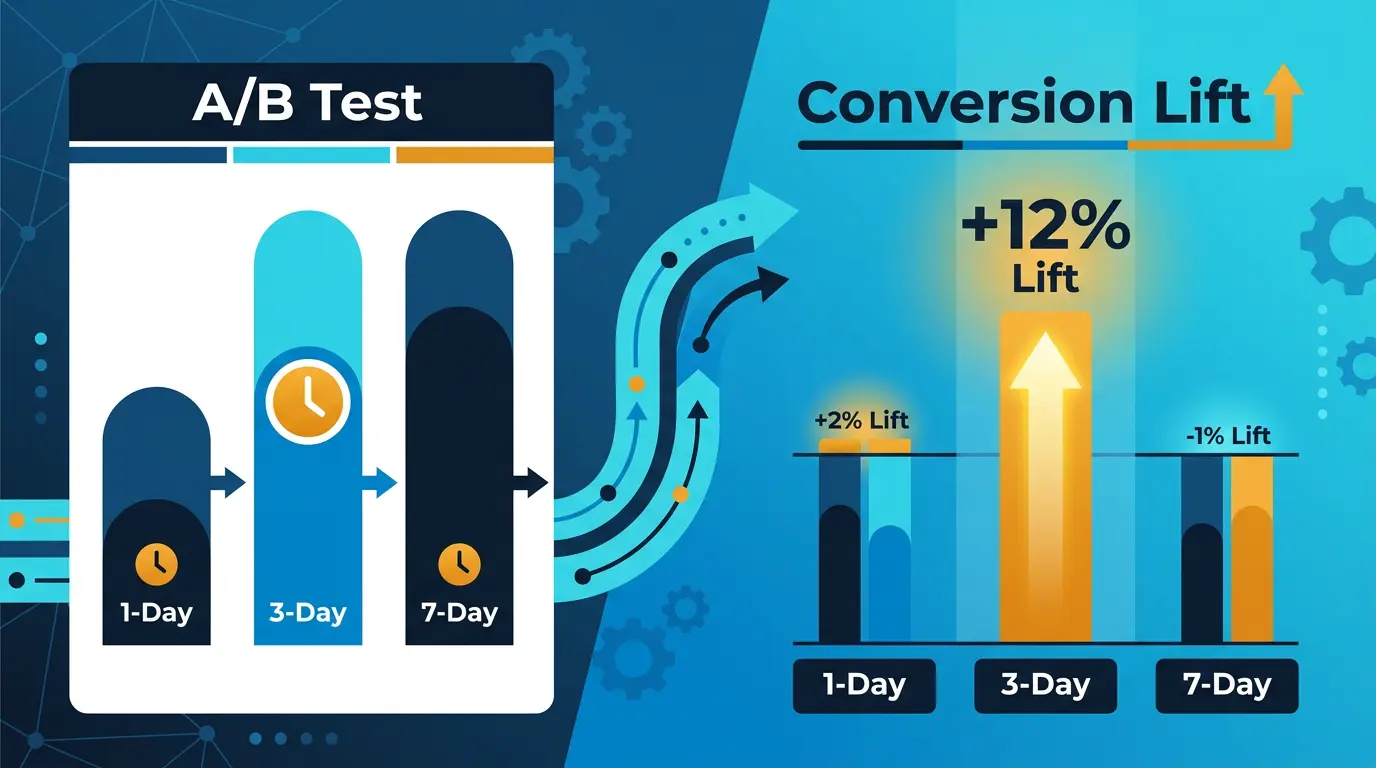
On length, the principle is that the trial should be long enough for the member to genuinely experience the value, and no longer. Too short, and the member does not have time to feel what the paid service offers before the decision arrives; the trial fails to do its job of letting value be experienced. Too long, and the member can get most of what they wanted without ever needing to pay, and the trial undermines the subscription it is meant to feed. The right length is the period in which a typical member of the niche can genuinely encounter the paid value, browse real people, use the premium features, perhaps have a first real interaction, and form a genuine view. That period varies by niche and by how the dating experience unfolds for that audience.
On inclusions, the question is what the trial gives access to. The trial should give the member a genuine experience of the paid product, because the whole logic depends on the member actually feeling the value. A trial that withholds so much that the member never really experiences the paid service cannot convince anyone. At the same time the trial is not the permanent free tier; it is a time-limited window into the paid experience. The design should let the member genuinely feel what paying delivers, within the trial period.
The trial design also interacts with the pricing model. A site on a freemium model and a site on a paid model use trials differently, and the trial should fit the model: on a hard-paywall paid site the trial is the window into the otherwise-gated service; on a freemium site the trial is a window into the premium tier.
For an operator, the guidance is to design the trial length and inclusions so that a genuine member of the niche can authentically experience the paid value within the trial, which is exactly what the honest conversion mechanism requires.
The conversion mechanics
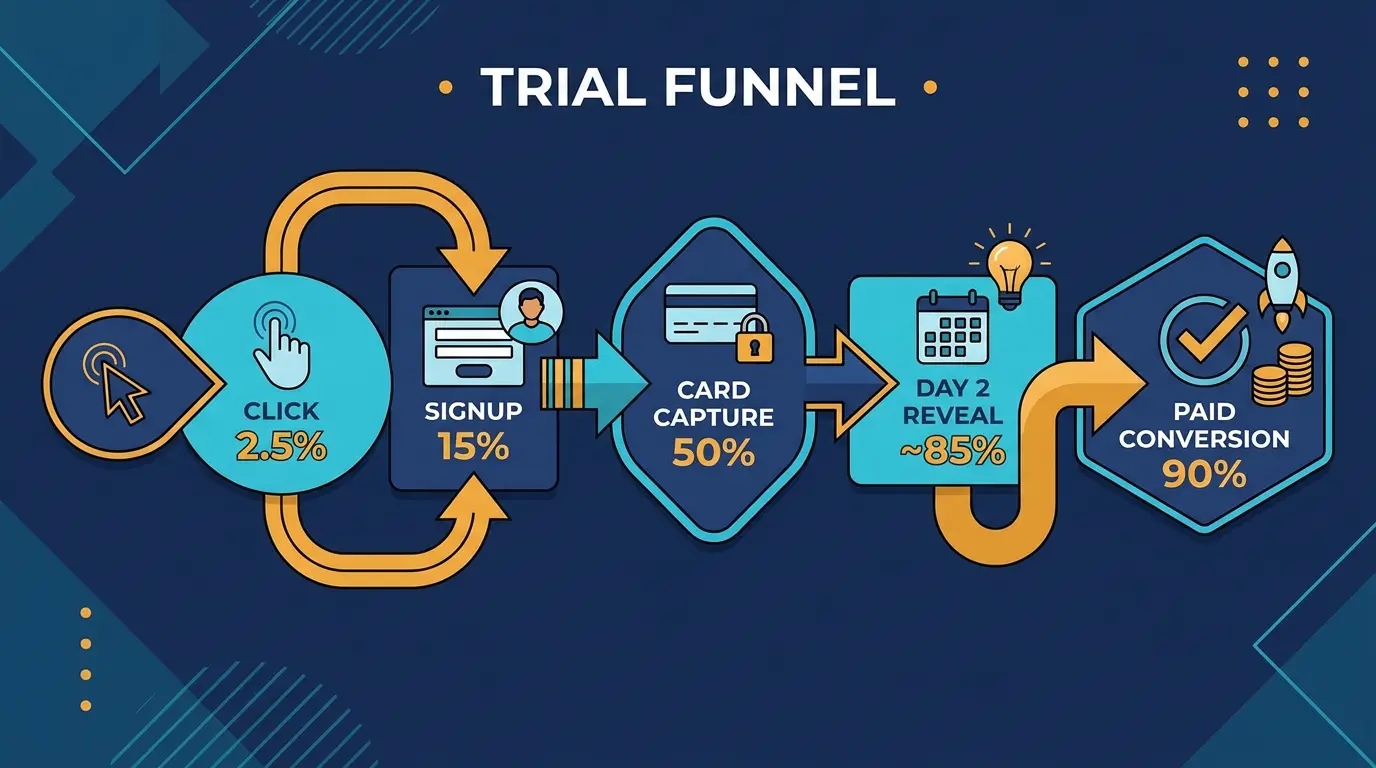
The conversion mechanics are how the trial moves a member from the free period into a paying subscription, and they are where honest design and trap design most visibly diverge.
The honest approach to conversion mechanics rests on a simple idea: the member should convert because they decided to, with full awareness. That means the member knows they are on a trial, knows when it ends, knows what will happen when it ends, knows what they will be charged, and has a genuine, easy opportunity to decide.
In practice this means: the trial's terms are clear at the start; the member is reminded, before the trial ends, that it is about to end and that billing is about to begin, so the conversion is never a surprise; the member can easily cancel before being charged if they decide the service is not for them; and the conversion to paid, when it happens, is something the member effectively chose, by experiencing the value and not cancelling, rather than something that happened to them while they were not looking.
The reminder before conversion is worth dwelling on, because operators sometimes resist it, fearing it prompts cancellations. It does prompt some, and that is the point: a member who, reminded, chooses to cancel is a member who did not want to pay, and converting them anyway through silence just produces a and a complaint later. The reminder converts the trial's output from "members who failed to notice" to "members who, aware, chose to continue", and the second group is the only group worth having.
Good conversion mechanics also handle the practical edges well: failed payments at conversion handled gracefully, the member's status clear, the experience smooth.
For an operator, the guidance is to build the conversion mechanics around member awareness and genuine choice: clear terms, a reminder before billing, easy cancellation, and a conversion the member effectively chose. That is the honest mechanism made concrete.
Transparency and the subscription-trap rules
Free trials sit squarely in the area of consumer-protection law that has been tightening fastest, and an operator must understand the transparency requirements, because the trap design is increasingly not just unwise but unlawful.
As the advertising-compliance and chargebacks guidance both note, regulators across many markets have been targeting the subscription trap: practices that lead consumers into recurring charges they did not properly understand or did not actively choose. Free trials that convert to paid subscriptions are a central focus of that attention, because they are the classic vehicle for the trap.
The transparency requirements that flow from this, and that a good honest trial meets anyway, include: the trial's terms must be clear before the member signs up, including that it converts to a paid subscription, when, and at what price; the recurring nature of what follows must not be hidden; the member should be properly informed, and good practice and increasingly the law expect a reminder before billing begins; and cancelling must not be made unreasonably hard. The rules vary by jurisdiction and continue to evolve, but the direction is consistent and clear.
The important realisation for an operator is that the honest trial and the compliant trial are the same trial. Everything the previous sections describe as honest design, clear terms, a pre-billing reminder, easy cancellation, conversion through genuine choice, is also what the transparency rules require. An operator who designs the trial to convert through conviction rather than through the trap is, in the same act, designing a compliant trial. An operator who designs the trap is taking on legal and regulatory exposure on top of the chargebacks and reputational damage.
For an operator, the guidance is to treat the transparency rules not as an external constraint fighting against the trial's effectiveness, but as a description of the honest trial the operator should be building anyway. Honest and compliant are, here, the same thing.
Trials and chargebacks
Free trials and chargebacks are tightly linked, and an operator should understand the link, because a badly designed trial is a chargeback generator.
As the chargebacks guidance explains, a major cause of dating chargebacks is the member who is surprised by a charge, or who feels they should not have to pay, and who disputes it with their bank. A trap-style free trial manufactures exactly that situation at scale. It produces a steady flow of members who reach the end of a trial they had half-forgotten, get charged for a subscription they did not actively decide to continue, do not recognise or do not accept the charge, and chargeback.
So a trap trial does not just produce conversions; it produces conversions twinned with chargebacks. And those chargebacks, as the chargebacks guidance stresses, carry fees, reverse the revenue, and, most dangerously, count toward the chargeback rate that card schemes monitor and that, if it climbs too high, threatens the ability to process payments at all. A trap trial can, in effect, monetise its way into losing the payment processing the whole business depends on.
An honest trial does the opposite. Because the member converts through genuine choice, with clear terms, a reminder, and easy cancellation, the member who is charged is a member who knew it was coming and effectively chose it. That member has little reason to chargeback. The honest trial converts fewer members than the trap appears to, because it lets the unconvinced ones cancel, but the members it does convert are genuine, and they do not generate the chargeback flood.
For an operator, this is one of the strongest practical arguments for the honest trial. The trap's apparent conversion advantage is largely illusory once the chargebacks are counted, and the chargeback rate it produces is a genuine threat to the business. The honest trial converts real members and protects the chargeback rate.
For an operator, the guidance is to recognise that trial design and chargeback rate are directly linked, and that designing the trial honestly is also designing it to protect the payment processing the business runs on.
Measuring trial performance
A free trial should be measured, so the operator knows whether it is genuinely working, and the operator should measure the right things.
The obvious metric is the trial conversion rate: of the members who start a trial, what share convert to paying. This matters, but on its own it is misleading, because a trap trial can show a high conversion rate while producing terrible members. So the conversion rate must always be read alongside what happens next.
The metrics that genuinely tell the operator whether the trial is working are downstream. The operator should watch whether the members the trial converts actually stay: their retention, cohort by cohort, as the analytics guidance describes. A trial producing members who convert and then immediately churn or chargeback is not working, however good the headline conversion rate. The operator should watch the chargeback rate among trial-converted members specifically, because a spike there is the clearest sign of a trap dynamic. And the operator should watch the lifetime value of trial-converted members against members who paid without a trial, and against the cost of running the trial.
Read together, these tell the real story: a trial that converts members who stay, pay over time, and do not chargeback is genuinely working; a trial that converts members who churn and dispute is producing the illusion of success.
The operator should also test and refine the trial, as with any monetisation element, changing one thing at a time, trial length, inclusions, the conversion communication, and watching the genuine downstream effect, not just the headline conversion.
For an operator, the guidance is to measure the trial by its genuine output, retention, chargebacks, lifetime value of converted members, not by the headline conversion rate alone, because the headline rate is exactly the number a trap trial flatters.
What white label handles for you
On a platform, the free trial sits across the line between what the provider builds and what the operator shapes, and an operator should understand the split.
The provider builds the billing and subscription mechanics: the system that runs the trial, handles the conversion to paid, processes the payment, manages the subscription lifecycle. The trial is implemented within the provider's payment and subscription infrastructure, the same infrastructure described in the payment-systems guidance. The operator does not engineer the trial mechanism.
What the operator shapes is the trial as a monetisation and member-experience decision, within what the platform supports: whether to offer a trial, how it is configured where the platform allows configuration, how it is presented and communicated, and, crucially, the honesty of the whole design. The operator's marketing, the operator's landing pages, the operator's presentation of the offer all shape how the trial is communicated and whether it is honest.
This means the responsibility for the honesty of the trial substantially involves the operator. The provider supplies compliant billing infrastructure; the operator must make sure the way the trial is offered, advertised and presented is honest, clear and compliant, because that presentation is part of the operator's marketing footprint.
The operator should also confirm, when assessing a provider and configuring the trial, that the platform's trial and subscription handling supports the honest design this guide describes: clear terms, the ability to inform members and remind them before billing, genuinely easy cancellation. A platform whose subscription handling makes honest trial design hard is a platform to question.
For an operator, the guidance is: the provider supplies the trial and billing mechanics; the operator decides whether and how to use a trial, shapes its presentation, and owns its honesty. Confirm the platform supports honest trial design, and then design the trial honestly.
Common mistakes
The defining mistake is designing the trial to trap rather than to convince, converting members through exploited inattention instead of genuine value, which produces members who feel cheated, chargebacks, reputational damage and regulatory exposure.
The second is hiding the terms: making the trial length, the billing date, the price after the trial, or the recurring nature unclear, which is both dishonest and increasingly unlawful.
The third is making cancellation hard, which converts would-be cancellers into chargebacks rather than into retained members and breaches tightening consumer law.
The fourth is omitting the pre-billing reminder out of fear it prompts cancellations, when the cancellations it prompts are members who did not want to pay anyway and converting them silently just produces disputes. The fifth is judging the trial by its headline conversion rate alone, the exact number a trap trial flatters, instead of by retention, chargebacks and lifetime value. Convert through conviction, be transparent, and measure the real output.
What to read next
For where the trial leads, read dating paywall design and dating payer conversion optimisation. For the chargeback link, see how to handle chargebacks on a dating site. For the honesty rules, read dating advertising compliance. And to confirm a platform's subscription handling, DatingPartners.com can walk through it.
DatingPartners trials, card handling and conversion messages are tested on 30M accounts. Copy the pattern.
Visit DatingPartners.com →