
Hinge is a relationship-focused dating app, part of Match Group, that grew strongly by positioning itself deliberately against casual swipe dating. Its defining idea is captured in its slogan, "designed to be deleted": Hinge positions itself as the app you use to find a relationship and then leave. Its product reflects this, with prompt-based profiles intended to give a richer sense of a person than a photo alone. Hinge makes money the standard dating way. Its growth shows the power of a clear, relationship-serious positioning that genuinely differentiates from casual dating, a lesson directly relevant to an operator choosing a niche and a positioning.
Hinge is one of the clearest recent success stories in dating, and its success rests almost entirely on positioning. This guide analyses Hinge's growth story and strategy, and draws out what an operator can learn.
What Hinge is
Hinge is a dating app, part of Match Group's portfolio, that is positioned around serious relationships rather than casual dating, and that grew strongly to become one of the genuine success stories of recent dating history.
Within Match Group's portfolio, Hinge occupies a particular and important place. As the Match Group analysis describes, Tinder has historically been the dominant brand in that portfolio, but Hinge became the brand that grew strongly, the brand that gave Match Group a major, expanding asset distinct from Tinder, and so a brand that mattered to the balance of the whole portfolio.
What makes Hinge genuinely worth studying, though, is not its place in a portfolio but how it succeeded. Hinge did not succeed through a brilliant new interaction design the way Tinder did with the swipe. It did not succeed through scale or breadth the way Match Group's portfolio does. Hinge succeeded, more than anything, through positioning: through being clearly, deliberately and genuinely the relationship-focused app, positioned against the casual swipe dating that Tinder had come to represent.
This makes Hinge, in a sense, the most directly instructive of the major industry case studies for an ordinary operator. Tinder's lesson, the power of an industry-reshaping interaction design, is real but not repeatable to order. Match Group's lesson is about portfolio strategy at vast scale. Hinge's lesson is about positioning, and positioning is exactly the lever an operator does have, the lever the niche and getting-started guidance puts at the centre of an operator's strategy.
For an operator, the starting point is to see Hinge clearly: a relationship-focused app, an important growth brand within Match Group, and, above all, a case study in winning through clear, deliberate positioning, which is the most directly transferable lesson of all the industry analyses.
The positioning: designed to be deleted
Hinge's positioning is captured in its well-known slogan, and the slogan is worth taking seriously, because it is the strategy in a phrase: "designed to be deleted."
The idea behind "designed to be deleted" is striking. Hinge positions itself as an app whose purpose is to be successful enough for the member that the member finds a relationship and then deletes the app, because they no longer need it. The app's stated ambition is its own redundancy, one member at a time.
This positioning does several powerful things, and an operator should understand each.
It states a clear purpose. The slogan tells the member exactly what Hinge is for: finding a relationship, a real one, the kind that means you stop dating. There is no ambiguity about what kind of dating Hinge is for.
It differentiates sharply against casual dating. By the time Hinge grew, Tinder and the swipe had come to represent fast, casual dating, and a portion of the market had a genuine appetite for something that felt more serious. "Designed to be deleted" positioned Hinge as precisely the opposite of casual: the app for people who want a real relationship, not endless swiping. It defined Hinge by contrast with what the market leader had come to mean.
It aligns the app with the member's genuine goal. As the analytics, conversion and gamification guidance all stress, the genuine goal of a dating member is, often, to find a relationship and therefore eventually leave, and the genuine purpose of a good dating service is to help them do that. "Designed to be deleted" makes that alignment the explicit brand promise. Hinge is, by its own positioning, on the side of the member's real goal.
And it is honest and memorable. The slogan is a single, clear, memorable phrase that genuinely captures a real promise. It is the kind of positioning the about-page and Bumble analyses describe: a clear identity connected to a genuine purpose.
For an operator, "designed to be deleted" is a masterclass in positioning. It is one phrase that states a clear purpose, sharply differentiates against the market leader, aligns the brand with the member's genuine goal, and is honest and memorable. That is what a strong positioning looks like.
The product: prompts and the profile
Hinge's positioning is not just a slogan; it is reflected in the product, and the most distinctive product element is the prompt-based profile.
Where the swipe presents a person primarily as a photo and minimal information, Hinge's profile is built differently. A Hinge profile centres on prompts: a member answers a set of short, personal, sometimes playful prompt questions, and those answers, alongside photos, make up the profile. The prompts are designed to draw out something of the person's character, their interests, their humour, their personality, rather than presenting them as a photo alone.
This product design follows directly from the positioning. If Hinge is the app for finding a real relationship, then the product should help members get a richer, more genuine sense of each other than a photo and a swipe allow. The prompt-based profile is the product expression of the relationship-serious positioning: it is designed to surface the kind of information that helps people judge genuine compatibility and connection, not just appearance.
The interaction design follows too. Hinge's design encourages members to engage with the specific content of a profile, to respond to a particular prompt answer, which is a more considered, more personal kind of interaction than a fast binary swipe. It is, again, the product reflecting the positioning: a more considered app for more considered dating.
The general lesson here is important: a strong positioning should be reflected in the product, not just the marketing. Hinge does not merely claim to be relationship-serious; its product is genuinely built to support a more considered, more genuine kind of connection. The positioning and the product agree.
For an operator, the product lesson from Hinge is that positioning must be more than a slogan. If an operator positions their dating service a particular way, the product experience, configured within whatever the platform allows, the profile fields, the way members engage, should genuinely reflect that positioning. A positioning the product contradicts is a positioning that will not hold. Hinge's prompts show positioning and product working together.
The growth story
Hinge's growth is the success story this guide is named for, and it is worth understanding the shape of it, even while being measured about specific figures.
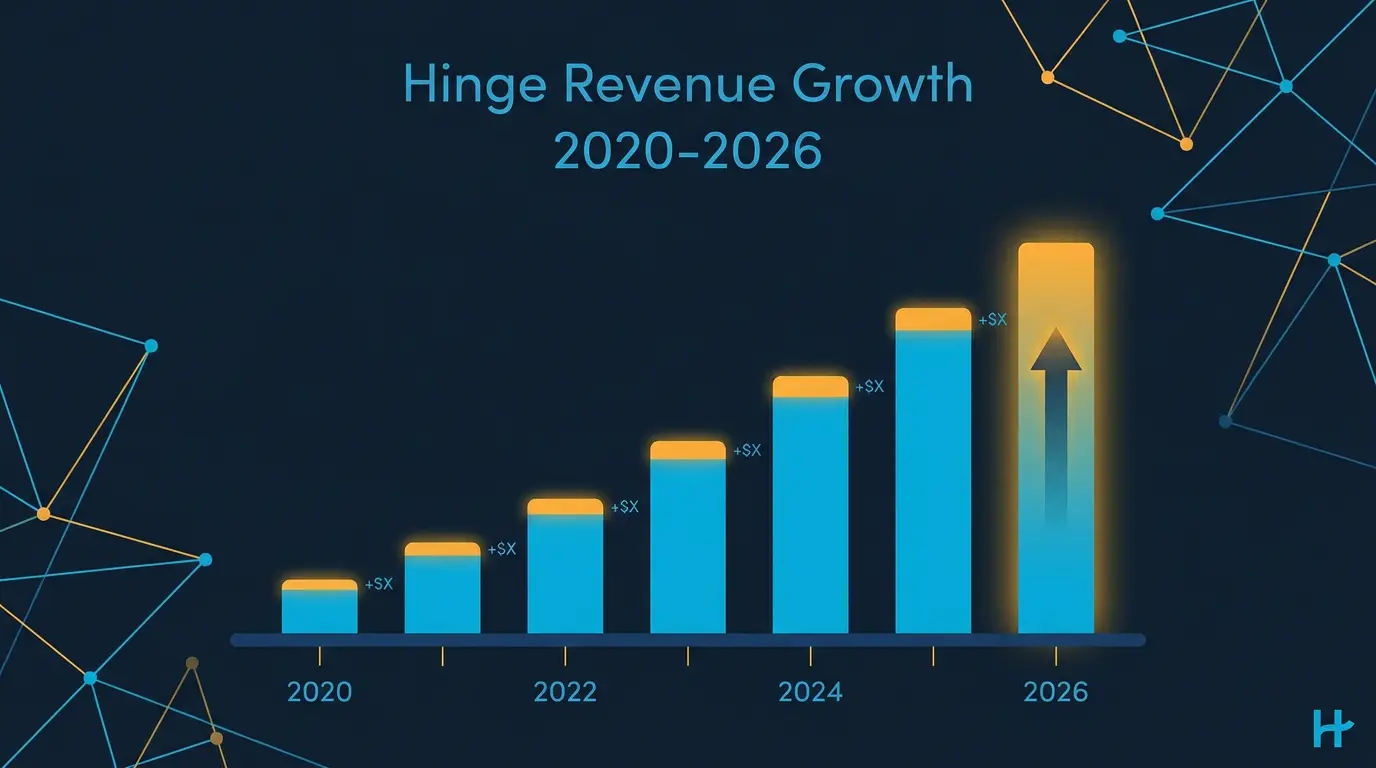
Hinge grew, over recent dating history, from a smaller app into one of the genuine success stories of the industry and a major, strongly-growing brand within Match Group's portfolio. It is one of the clearest examples, in recent years, of a dating app achieving substantial, sustained growth in a market widely described as mature.
The shape of that growth is the instructive part, and it connects directly to everything above. Hinge grew not by out-scaling the giants and not by a Tinder-style reinvention of the core interaction, but by occupying a clear, genuine, differentiated position, the relationship-serious position, and serving it well. There was a genuine, sizeable segment of the market that wanted serious, relationship-focused dating and felt that the dominant casual-swipe experience did not serve them. Hinge positioned itself precisely for that segment, built a product genuinely suited to it, and grew by serving it well.
This is, in essence, the niche strategy succeeding at major scale. Hinge identified a genuine, underserved appetite, the appetite for serious dating, positioned clearly for it, and served it with a product designed for it. That is exactly the focused, positioned, audience-serving strategy the niche and getting-started guidance describe, and Hinge's growth is a powerful demonstration that it works.
It is worth being measured: the specifics of Hinge's growth, exact figures, performance in any given period, change and should be checked against current sources. What is stable, and what matters, is the shape: substantial, sustained growth achieved through clear positioning and a fitting product, in a mature market, by serving a genuine, differentiated segment well.
For an operator, the growth story is the heart of why Hinge matters. It shows, at major scale, that an operator does not need to out-scale the giants or reinvent the industry to grow. A clear positioning, a genuine differentiated segment, and a product that fits, can produce real, sustained growth even in a mature market. That is the most encouraging and most directly applicable lesson in all the industry analyses.
How Hinge makes money
Hinge's business model, how it actually earns, is, like every other major player analysed in this content, the industry-standard model.
Hinge makes its money from its users, not from advertising. It earns through the familiar two forms: subscriptions, members paying for premium tiers and premium access, and à la carte purchases, one-off in-app purchases of features and enhancements, the model the monetisation guidance describes throughout.
As with Tinder, Bumble and Match Group, the specific figures change and should be checked against current sources. What is stable is the model: member-monetised, subscriptions plus à la carte purchases.
The point worth drawing out, again, is the consistency. Every major dating company analysed in this content, the broad-portfolio giant, the distinctive challenger, the swipe innovator, and now the relationship-focused growth story, makes its money the same fundamental way. Hinge's distinctiveness, like Bumble's and Tinder's, is not in its monetisation. It is in its positioning and its product.
There is, though, a particular and interesting point about Hinge's monetisation, given its positioning. Hinge's "designed to be deleted" positioning explicitly embraces the dating-specific dynamic that members succeed and leave. A member who finds a relationship through Hinge and deletes the app is, by Hinge's own stated purpose, a success. This means Hinge's monetisation has to work within a brand promise that openly accepts members leaving when they succeed. Hinge earns from members while they are genuinely using the app to look for a relationship, which is the honest, member-aligned form of monetisation the conversion and gamification guidance describe: earning from genuinely serving members, not from trapping them.
For an operator, the lesson is twofold. First, again, the standard subscription-and-purchases model is validated, used by every major player. Second, Hinge shows that this model works even alongside a positioning that openly embraces members succeeding and leaving, which is a quiet endorsement of honest, member-aligned monetisation: a dating company can be commercially successful while genuinely being on the side of its members' real goal.
Hinge within Match Group
Hinge's place within Match Group is worth drawing together, building on the Match Group analysis.
Hinge is part of Match Group's portfolio, and it became the brand that grew strongly, an expanding major asset distinct from the long-dominant Tinder.
This made Hinge strategically important to Match Group in a specific way. As the Match Group and Tinder analyses describe, Match Group's historic concentration in Tinder was both a strength and a concentration risk, and a portfolio less dependent on a single dominant brand is more balanced and more resilient. Hinge's strong growth is exactly what gives the portfolio more of that balance: it is a second major, growing brand, so the company is less wholly dependent on Tinder.
Hinge within Match Group is also a good illustration of the portfolio strategy working as intended. The portfolio strategy, the Match Group analysis explains, is to cover the breadth of the market with focused brands serving different segments. Hinge serving the relationship-serious segment, distinct from Tinder serving the more casual segment, is precisely that strategy in action: two brands in one portfolio, each positioned for a different genuine segment of the market, both succeeding. Hinge is, in effect, a demonstration that the portfolio-of-focused-brands strategy genuinely works.
For an operator, Hinge within Match Group reinforces two lessons from the portfolio analyses: that a healthy portfolio benefits from more than one strong brand, and that the portfolio strategy works by having each brand genuinely focused on a distinct segment. Hinge is the focused, relationship-serious brand in the portfolio, and its success is the portfolio strategy succeeding.
Strengths of the strategy
A fair analysis should set out the genuine strengths of Hinge's strategy.
The first and central strength is the positioning. "Designed to be deleted" is a genuinely excellent positioning: clear, differentiated, purposeful, honest and memorable. A clear, strong positioning is a real and durable asset.
The second strength is the alignment of product and positioning. Hinge does not just claim to be relationship-serious; its prompt-based product genuinely supports a more considered kind of connection. Positioning and product agree, which makes the positioning credible.
The third strength is serving a genuine, real need. Hinge's positioning works because there is a real, sizeable segment that genuinely wants serious, relationship-focused dating. The strategy is built on something real.
The fourth strength is the alignment with the member's genuine goal. By positioning around the member finding a relationship and leaving, Hinge puts itself genuinely on the side of the member's real goal, which builds trust and a genuine connection with the audience.
The fifth strength is that Hinge's success is built on positioning, which is a durable, strategy-level strength rather than a strength of scale or of a single hard-to-repeat invention.
For an operator, Hinge's strengths are the most encouraging of all the industry analyses, because they are strengths of positioning and strategy, exactly the levers an operator has. An operator cannot build the swipe or become Match Group, but an operator can absolutely pursue a clear positioning, an aligned product, a real need, and alignment with members' goals.
Challenges and pressures
A fair analysis must equally set out Hinge's genuine challenges.
The central challenge, shared with every major player, is sustaining growth at scale in a mature market. Hinge has grown strongly, but continuing to grow, as it becomes large, in a mature market, is genuinely hard.
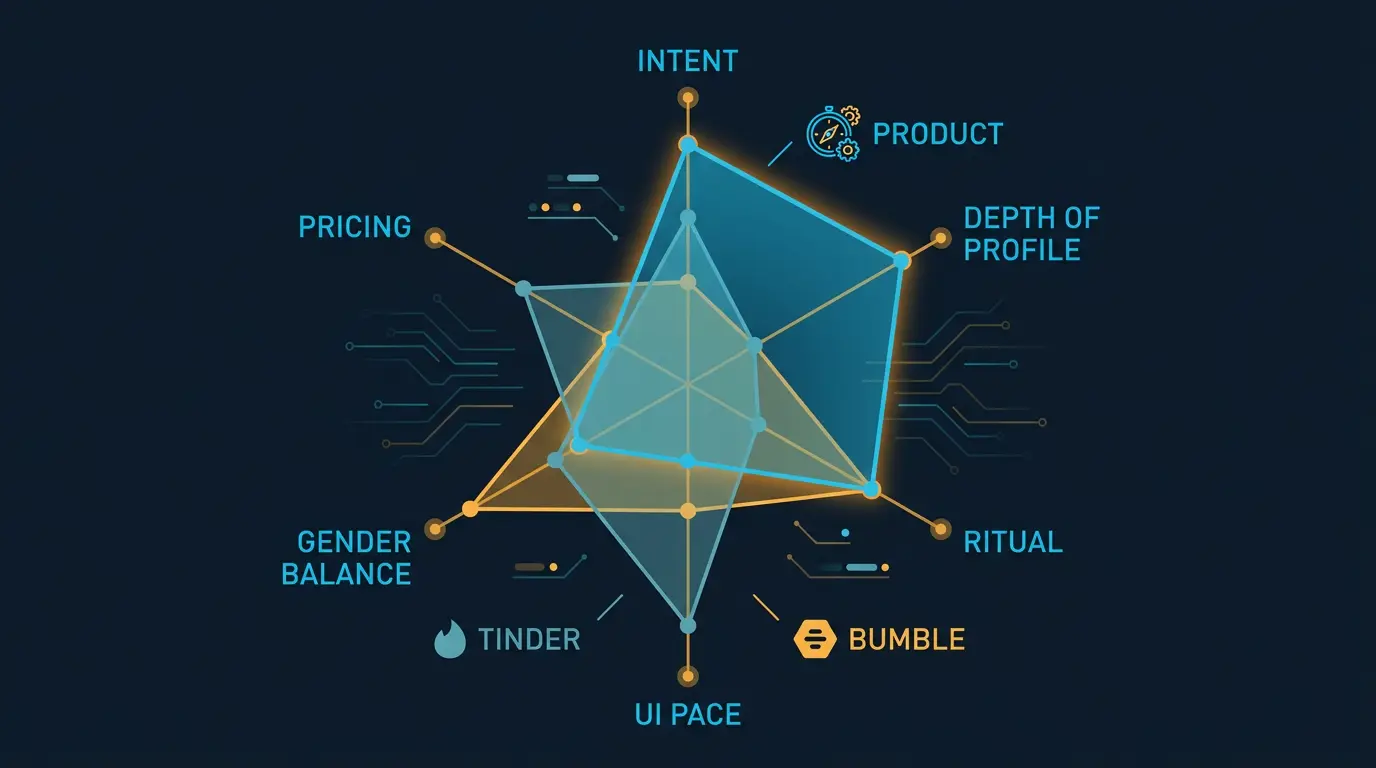
A second pressure is competition. Hinge's relationship-serious position was a genuine differentiation, but other dating products and brands also serve, or claim to serve, the relationship-focused segment, and Hinge competes for that segment.
A third pressure, particular to a brand whose strength is one clear positioning, is sustaining and evolving that positioning over the long term. A brand built so much on "designed to be deleted" faces the question of how it keeps that positioning fresh, credible and genuinely lived in the product as the brand grows and matures. This echoes the question the Bumble and Tinder analyses raised about brands built on one powerful idea.
A fourth pressure, subtle but real, is the inherent tension in Hinge's own positioning. A brand that is genuinely "designed to be deleted" is a brand that genuinely succeeds by its members leaving, which means Hinge, more than most, must continually replenish its members and must be genuinely good enough at helping members succeed to keep earning the right to its positioning. The positioning is a strength, but it sets a high bar the brand must keep meeting.
A fifth pressure is the industry-wide environment: the safety scrutiny, the app store economics, the regulatory landscape.
As ever, how these pressures are playing out at any moment changes and should be checked against current sources.
For an operator, Hinge's challenges carry a useful nuance: a strong positioning is a genuine strength, but it must be continually lived and earned, not just claimed. Hinge must keep genuinely being the relationship-serious, member-aligned app, or its positioning becomes hollow. That is a lesson for an operator's own positioning too.
What operators can learn
Pulling the analysis together, Hinge offers what may be the most directly applicable lessons of all the industry case studies, and an operator should hold them.
The first lesson is that positioning can drive real growth. Hinge grew substantially, in a mature market, primarily through clear positioning. An operator should take seriously that a strong, clear positioning is not marketing decoration; it can be the engine of genuine growth.
The second lesson is to differentiate against what the market leaders represent. Hinge grew by being clearly the opposite of what casual swipe dating had come to mean. An operator can look at what the dominant dating experiences represent, and find a genuine, underserved position defined partly by contrast with them.
The third lesson is to serve a genuine, real need. Hinge's positioning worked because the appetite for serious dating was real. An operator's positioning and niche choice should equally answer a genuine need, as the niche guidance insists.
The fourth lesson is to make the product reflect the positioning. Hinge's prompts genuinely support its relationship-serious positioning. An operator should ensure their product experience genuinely fits their positioning, not just their marketing.
The fifth lesson is to align the brand with the member's genuine goal. Hinge positions itself openly on the side of members succeeding. An operator who genuinely aligns their service with members' real goals builds trust and a durable connection, and, as Hinge shows, can do so while being commercially successful on the honest model.
The sixth lesson is the encouraging one: an operator does not need to out-scale the giants or reinvent the industry. Hinge proves that a focused, well-positioned, genuinely-fitting service can grow substantially even in a mature market. That is the niche strategy, and it is exactly the strategy the model makes accessible to an operator.
For an operator, Hinge is the case study to take most to heart: clear positioning, differentiation, a real need, an aligned product, alignment with members' goals, and the genuine encouragement that a focused, well-positioned service can succeed.
Common misconceptions
A few common misconceptions about Hinge are worth correcting.
The first misconception is that Hinge succeeded through a clever monetisation model. It did not; Hinge uses the industry-standard subscription-and-purchases model. Its success is in positioning and product.
The second misconception is that "designed to be deleted" is just a marketing slogan. It is more than that; it is a genuine strategic positioning, reflected in the product and aligned with the member's real goal. Its power is that it is genuine.
The third misconception is that Hinge succeeded simply by being newer or by good luck. It succeeded by occupying a clear, genuine, differentiated position and serving a real need well. Its success has an explicable strategic basis.
The fourth misconception is that a positioning, once chosen, looks after itself. Hinge's own challenges show that a positioning must be continually lived and earned in the product, or it becomes hollow.
The fifth misconception is that Hinge, as a major Match Group brand, has nothing to teach a small operator. The opposite is true: Hinge's lessons are lessons of positioning and strategy, the very levers an operator has, making Hinge perhaps the most directly applicable industry case study of all.
For an operator, seeing past these misconceptions means seeing Hinge accurately: a relationship-focused app that grew through genuine positioning and an aligned product, on the standard monetisation model, and instructive in the most directly applicable way of any of the major players.
What to read next
For the parent company, read Match Group: business model deep dive. For the casual-dating contrast, see Tinder business model and algorithm history. For applying positioning at operator scale, read how to choose a dating niche and how to write a dating site about page that builds trust. And to build a well-positioned dating brand of your own, DatingPartners.com can walk through the white label model.
See the full Match Group brand playbook analysis. DatingIndustryInsights.com.
Visit DatingPartners.com →