
The Venntro administration is the most important recent case study in dating, because it concerns the failure of a major provider, the one risk a white label operator most needs to understand. This guide examines it and draws out the lessons.
What Venntro Media Group was
Venntro Media Group was a long-established company in the online dating industry, best known as the company behind one of the most recognised white label dating platforms.
To understand the case study, an operator needs to understand what Venntro was and why it mattered. Venntro was not, primarily, a single consumer dating brand that the public would recognise. It was, above all, a provider: a company that built and ran a white label dating platform, and whose business was enabling other people, operators, to run their own branded dating sites on that platform.
Venntro had a long history in the industry, with roots going back through the earlier era of online dating, and over that history it became closely associated with the white label dating model itself. For a great many people in the industry, Venntro was, for years, one of the names that the concept of white label dating brought to mind. It was a genuine pioneer and a long-running, significant presence in that part of the industry.
This is precisely what makes Venntro worth a case study. Venntro was not a minor or marginal company; it was a major, long-established, well-known white label dating provider. So when it entered administration in 2024, that was not the failure of a small, obscure operation; it was a significant event involving a substantial and long-standing provider. A major provider failing is exactly the kind of event from which there are serious lessons to learn.
It is worth being measured about detail. The full history of Venntro, its corporate evolution, the names it operated under at various times, the precise scope of its operations, is detailed, and an operator wanting the complete picture should consult current and detailed sources. For the purposes of this case study, the essential point is clear and sufficient: Venntro was a major, long-established white label dating provider.
For an operator, the starting point is to see Venntro for what it was: a significant, long-running provider in the white label dating industry, which is why its 2024 administration is a case study worth taking seriously.
Venntro and the white label dating model
To understand the significance of the Venntro administration, an operator needs to be clear about what a white label dating provider does, and Venntro was, for years, one of the defining examples.
The white label dating model, described throughout the fundamentals guidance, works like this. A provider builds and runs a complete dating platform, the technology, the infrastructure, the trust-and-safety operation, the payments, the compliance, and, crucially, a . Operators then license that platform, apply their own brand and niche, and run branded dating sites on it. The provider supplies and runs the platform; the operators run the brands. The shared means a new branded site shows active members from day one.
Venntro was, for a long time, one of the central providers of exactly this. Operators ran branded dating sites on Venntro's platform. The platform, the infrastructure, the member pool that those operators' sites drew on, all of it was Venntro's. Venntro was the provider, and a substantial population of operators depended on it.
This is the dependency that the rest of this case study turns on, and an operator must understand it clearly. In the white label model, the operator does not own or control the platform. The operator owns their brand, their marketing, their relationship with their members, but the platform underneath, the thing that actually makes their dating site function, belongs to the provider. The operator is, in a real and structural sense, dependent on the provider.
That dependency is, in normal times, the great benefit of white label, the white label sections of all the guidance describe it: the provider carries the enormous burden of building and running the platform, so the operator does not have to. But the dependency has a flip side, and the Venntro case study is precisely about that flip side. If the operator depends on the provider, then the operator is exposed to what happens to the provider. And in 2024, what happened to Venntro was administration.
For an operator, the essential understanding is this: Venntro was the provider that a population of operators depended on, and the white label model means that dependence is real and structural. The Venntro administration is the case study of what happens when the provider an operator depends on fails.
What administration means
Before examining the 2024 events, an operator should understand what administration actually is, because the term is specific and an operator should not be vague about it.
Administration is a formal insolvency process. When a company is in serious financial difficulty, unable to meet its obligations, administration is one of the formal legal processes that can follow. In an administration, control of the company passes to an appointed administrator, an insolvency professional, whose role is to take charge of the company and deal with its situation according to the formal process.
Administration is not the same as a company simply, instantly disappearing. The administrator's role can involve a range of outcomes: attempting to rescue the business or parts of it, selling the business or its assets to new owners, or, where nothing can be salvaged, winding things down. Often, in practice, administration leads to the sale of the viable parts of the business, the assets, the brands, the operations that have value, to new owners, while the original company itself does not survive in its old form.
The key point for an operator is what administration signifies. A company entering administration is a company in serious, formal financial failure. It is the original owners and the original company losing control of the business because it could not continue as it was. Whatever happens next, a sale of assets, a restructuring, a wind-down, the entry into administration itself marks a genuine failure of the company as it stood.
It is worth being measured: the detailed mechanics of administration, and exactly how a particular administration unfolds, are matters of insolvency law and the specifics of the case, and an operator wanting the full legal picture should consult proper sources. For this case study, the essential meaning is sufficient: administration is a formal insolvency process, it signifies a genuine failure of the company, and it typically involves an administrator taking control and dealing with the business and its assets, often through a sale to new owners.
For an operator, the point of understanding administration is to be clear-eyed about what happened to Venntro: a major white label dating provider entered a formal insolvency process, which is a genuine and serious corporate failure.
The 2024 administration
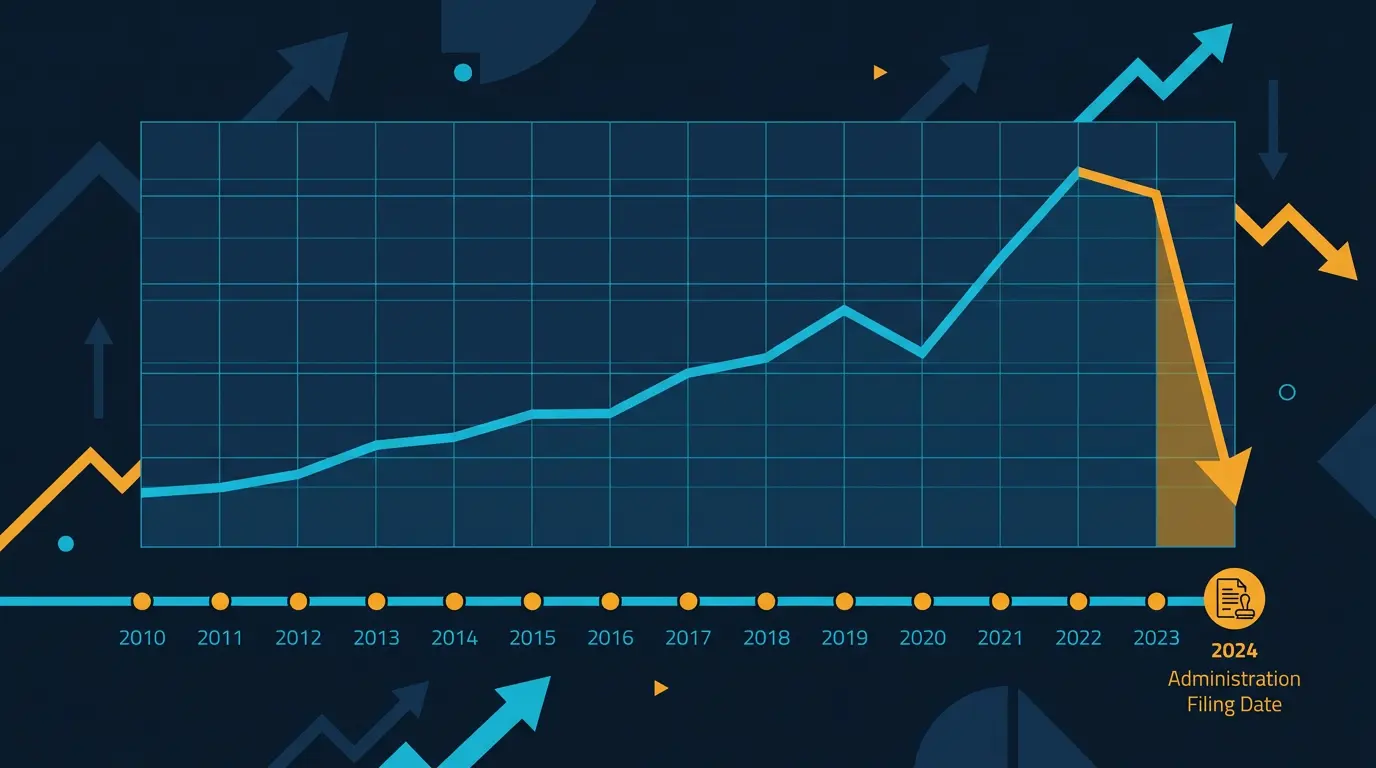
In 2024, Venntro Media Group entered administration. This is the central fact of the case study, and an operator should understand it plainly and measuredly.
The plain fact is that Venntro, the long-established, major white label dating provider described above, entered the formal insolvency process of administration in 2024. The provider that a population of operators depended on, the company behind one of the best-known white label dating platforms, failed in the formal corporate sense the previous section described.
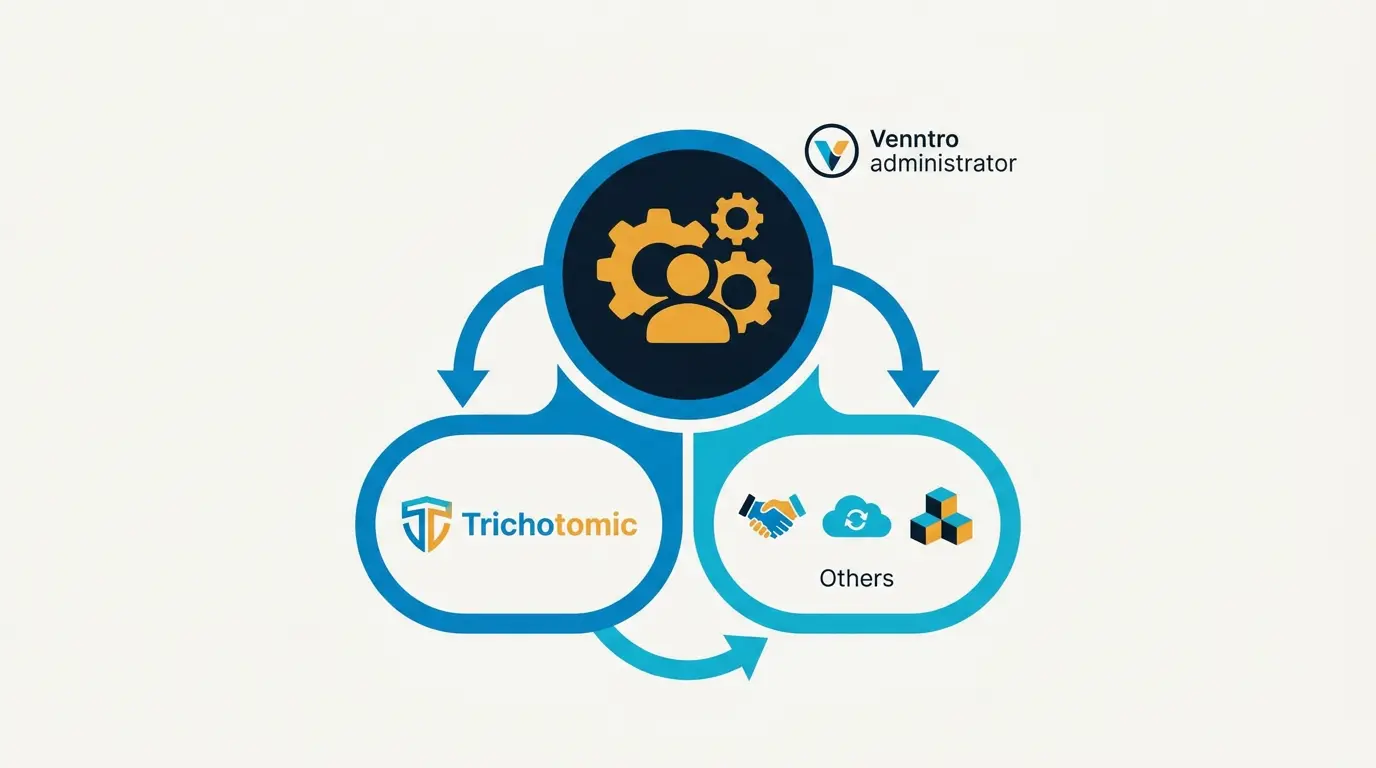
As is typical of an administration, the process then involved the company's assets, the platform, the operations, the brands and other parts of the business that had value, passing through the administration. In the ordinary course of such a process, viable assets are sold to new owners, and the assets of the Venntro business passed, through the administration, into new ownership, with parties acquiring parts of what had been the Venntro operation.
It is important to be measured about the specifics, and an operator should be too. The precise causes of Venntro's difficulties, the exact sequence of events, the detailed terms of what happened to which assets and who acquired what, and the full circumstances of the administration are matters of detail that an operator wanting the complete and accurate picture should research through current and proper sources. This guide does not attempt to set out those specifics with a false precision. The dating industry, as the Match Group, Bumble and dating-industry-failures analyses all describe, is a genuinely demanding business, and a long-established company can come under pressure for a combination of reasons; the precise combination in Venntro's case is exactly the kind of detail to check against proper sources rather than to assume.
What is clear, sufficient and important for the case study is the essential shape: in 2024, a major, long-established white label dating provider entered administration, a formal corporate failure, and its assets passed through that process to new ownership. That essential shape is what the lessons of this case study are built on, and those lessons do not depend on the contested or detailed specifics.
For an operator, the central fact to hold is simple and serious: in 2024 a major white label dating provider failed and went into administration. That is a real event, it really happened, and it is the reason this case study matters.
What a provider failure means for operators
The Venntro case study matters because of what a provider's failure means for the operators who depended on it, and an operator should think this through honestly.
Recall the dependency the venntro-and- section set out: in the white label model, operators run branded sites on the provider's platform, and the platform belongs to the provider. When the provider enters a formal failure like administration, that dependency becomes acutely real.
What does a provider entering administration mean for an operator? It introduces genuine uncertainty into the foundation of the operator's business. The platform the operator's branded dating site runs on is now part of a company in a formal insolvency process. The operator's site, their members' experience, their revenue, all rest on a platform whose owning company has failed. The administrator now controls that platform's fate.
The outcomes for operators in such a situation can vary, and depend heavily on the specifics. In many administrations, as noted, the viable parts of the business are sold to new owners, and a platform that operators depend on may continue under new ownership, in which case operators may be able to continue, though now in a relationship with a new owner and under whatever terms and circumstances that brings. In a worse case, an operator could face genuine disruption to their business, uncertainty, changes, or, at the extreme, the loss of the platform their business runs on. The operator's exposure depends on what happens in the administration and on the operator's own contractual position, which the data-and-export lesson returns to.
The honest summary is that a provider's failure is a genuine risk event for an operator. It does not automatically destroy the operator's business, often the platform continues under new ownership, but it introduces real uncertainty and real potential disruption into the very foundation the operator's business stands on, and it is largely outside the operator's control.
For an operator, the meaning of the Venntro case is this: a provider failure is a real risk, it really happened to a major provider, and it really matters to the operators who depend on that provider. That recognition is the start of the lessons, and the lessons are about how an operator should respond to a risk that is real but cannot be eliminated.
Lesson one: assess provider stability
The first lesson of the Venntro case study is that an operator should assess a provider's stability and durability when choosing a provider, treating it as a genuine and important criterion.
The choose-a-provider guidance in the fundamentals describes assessing a provider on many dimensions, the platform quality, the trust-and-safety operation, the terms, the certifications. The Venntro case study adds emphasis to one dimension in particular: the provider's stability as a business.
Because the operator depends on the provider, and because, as Venntro shows, a provider can fail, the question of how stable, sound and durable a provider is as a business is a genuine and important one. An operator choosing a provider is not just choosing a platform; they are choosing a company to depend on, and the soundness of that company matters.
Assessing provider stability is not simple, and an operator should be realistic about it. An operator usually cannot fully audit a provider's financial health, and a provider that looks stable can still encounter difficulty. But an operator can still take the question seriously: consider the provider's track record, its standing, its history, its apparent soundness, how long and how well it has operated, the signals of a genuine, well-run, durable business. The auditing-and-certification guidance describes how independent verification can give some assurance about a provider, and a provider's general reputation and standing are part of the picture. An operator should weigh provider stability as a real criterion rather than ignoring it.
The honest qualifier, which the Venntro case itself underlines, is that stability can never be perfectly assured. Venntro was long-established and significant, and it still failed. A long history and a strong reputation reduce the risk but do not eliminate it. So the lesson is not "find a provider that cannot fail," because no such guarantee exists. The lesson is to take provider stability seriously as a genuine criterion, to prefer providers that show the signs of a sound, durable business, and at the same time, because stability can never be guaranteed, to also follow the next lessons, which are about being protected even if a provider does fail.
For an operator, lesson one is to assess provider stability genuinely when choosing a provider, while recognising, as Venntro proves, that stability can never be fully guaranteed, which is exactly why the further lessons matter.
Lesson two: secure data ownership and export
The second lesson of the Venntro case study, and arguably the most practically important, is that an operator should secure strong data-ownership and data-export rights in the contract.
This lesson follows directly from the limits of lesson one. Because provider stability can never be perfectly assured, an operator cannot rely solely on choosing a stable provider. The operator also needs to be protected, as far as possible, in the event that a provider does fail. And the single most important form of that protection concerns data.
The data-ownership guidance in the fundamentals explains this in depth, and the Venntro case study is exactly why it matters. In the white label model, the members who join through an operator's branded site are part of the provider's shared member pool, and the platform belongs to the provider. The question of what data the operator owns, and what data the operator can export, take with them, if the relationship with the provider ends, is therefore crucial. And it is defined in the contract.
If a provider fails, an operator whose contract gave them strong, clear data-ownership and data-export rights is in a far better position than one whose contract did not. The operator with strong rights has, at least, a defined claim to their data and a defined ability to export it, which is a genuine measure of protection and continuity. The operator with weak or unclear data rights may find, in the disruption of a provider's failure, that they have little they can take with them and little protection.
This is why the data-export clause appears, again and again, across the fundamentals and trust-and-safety guidance as one of the most important terms in any white label contract. The Venntro case study is the concrete reason. A provider failure is a real risk, and the contract's data-ownership and data-export terms are the operator's most important protection against the worst of it.
So the lesson is concrete and actionable. Before signing with any white label provider, an operator should ensure the contract gives them strong, clear data-ownership and data-export rights: a defined ownership position regarding their data, and a defined, genuine ability to export it on reasonable terms. An operator should treat this as a non-negotiable priority in the contract, not a detail, and should take legal advice on it if needed.
For an operator, lesson two is the most actionable of the case study: secure strong data-ownership and data-export rights in the contract, because that is the operator's most important protection if a provider fails, and the Venntro case shows that provider failure is a real possibility.
Lesson three: understand your dependence
The third lesson of the Venntro case study is broader and more strategic: an operator should genuinely understand the dependence at the heart of the white label model, and run their business with clear eyes about it.
The white label model is, this guidance argues throughout, a genuinely good model for most operators. It lets an operator run a real dating business without building and running a platform, and its benefits are real. None of this case study is an argument against white label.
But the Venntro case study is a reminder that the model involves a real, structural dependence on the provider, and that an operator should not be naive about it. An operator on white label has built their business on a foundation they do not own and do not control. In normal times that foundation is a benefit. But the operator should understand, clearly and without illusion, that they depend on it, and that the provider, like any company, carries some risk of difficulty or failure.
Understanding this dependence well leads an operator to do several sensible things. It leads them to take lessons one and two seriously: to assess provider stability and to secure strong data rights. It leads them to read and understand their contract genuinely, including the terms about what happens if the relationship changes or ends, the change-and-termination thinking the contracts guidance describes. It leads them to understand, in advance, roughly what a provider failure would mean for their particular business and what their position would be, so they are not encountering the question for the first time in a crisis. And it leads them, as the build-buy-and-switching guidance discusses, to understand that the paths are not entirely irreversible and that an operator who has secured their data rights retains some genuine freedom of movement.
Understanding the dependence also leads to a balanced, mature attitude. The operator should not be so frightened of provider risk that they avoid the white label model, whose benefits are real and whose alternative, building independently, carries its own large risks. Nor should they be so comfortable that they ignore the dependence entirely. The mature position is to choose the white label model with open eyes: to take its real benefits, and to manage its real risk through provider assessment, strong contractual data rights, and genuine understanding.
For an operator, lesson three is to understand the white label dependence clearly and without illusion, to run the business with that understanding, and to hold a balanced, mature attitude: white label is a good model, its dependence is real, and the dependence is to be managed, not ignored and not feared into paralysis.
The white label model after Venntro
A natural question after a case study like this is what the Venntro administration means for the white label dating model itself, and an operator should think about this in a measured way.
It would be a mistake to conclude from the Venntro case that the white label dating model is broken or should be avoided. The white label model is a sound and genuinely valuable model, and the case for it that runs through all this guidance, that it lets an operator run a real dating business without the enormous burden of building and running a platform, remains true. One provider entering administration does not invalidate a model that genuinely works.
It would equally be a mistake to conclude that nothing should change. The Venntro case is a real lesson, and the sensible response is the one this case study has set out: operators should take provider stability, contractual data rights, and the white label dependence more seriously than an operator who had never seen a provider fail might.
The white label industry after Venntro continues. The model continues, providers continue, operators continue to run branded dating sites. Indeed, as the administration section noted, when a provider's assets pass through administration to new ownership, the platform itself may continue under new owners, and the industry adapts and goes on. The dating industry, as the dating-industry-history and dating-industry-failures analyses describe, has always been one in which companies rise, struggle, fail, and are succeeded by others, while the underlying activity and the underlying models continue.
The honest, balanced conclusion is that the white label model after Venntro is the same fundamentally sound model it was, now studied by operators who have a clear, concrete case study in why provider risk is real and why the protections, stability assessment, data rights, clear-eyed understanding, matter. That is a better-informed industry, not a broken one.
For an operator, the takeaway is balanced: the Venntro case is a serious lesson, but it is not a reason to reject the white label model. It is a reason to enter the white label model well, with the provider assessment, the contractual protections, and the clear-eyed understanding that the case study teaches.
Common questions about the case
A few questions naturally arise about the Venntro case, and an operator should think about them measuredly.
One question is why Venntro failed. The honest answer is that the precise causes are exactly the kind of detail an operator should check against current and proper sources rather than assume. The dating industry is genuinely demanding, and a long-established company can come under pressure for a combination of reasons; this case study deliberately does not assert a specific cause it cannot stand behind. The lessons of the case do not depend on the precise cause; they depend on the clear fact that a major provider failed.
Another question is whether operators on Venntro's platform lost everything. The honest answer is, again, that outcomes in an administration vary and depend on the specifics, including what happened to the assets and the operators' own contractual positions. As the administration and what-it-means sections explained, a platform whose assets pass to new ownership may continue, and operators may be able to continue under new ownership, while in worse cases operators could face genuine disruption. An operator should understand the range of outcomes rather than assume a single one.
Another question is whether this means an operator should build their own platform instead. The answer, as the after-Venntro section set out, is no, not as an automatic conclusion: building independently carries its own large risks and burdens, and one provider's failure does not make the white label model unsound. The sensible response is to enter white label well, not to abandon it.
Another question is what an operator on a white label platform should do right now in light of this case. The answer is the lessons: assess the provider's stability, ensure the contract gives strong data-ownership and data-export rights, and understand the dependence clearly.
For an operator, the common questions all resolve to the same measured stance: be clear about what is known and what is not, understand the range of outcomes, do not over-react against the white label model, and act on the genuine, concrete lessons.
What to read next
For the protection the case study makes most urgent, read data ownership in white label dating agreements. For choosing a provider, see how to choose a white label dating provider. For the wider pattern of industry failure, read dating industry failures: what killed 2020 to 2025 brands. And to understand a white label provider relationship done well, DatingPartners.com can walk through it.
DatingPartners continues the best of the Venntro playbook. Launch on a proven stack.
Visit DatingPartners.com →