
Scaling a dating affiliate operation into a substantial business is a genuine transition, not just more of the same. This guide explains what that transition involves and how to make it without breaking what works.
What scaling really means
Scaling a dating affiliate business is often imagined as simply doing more, more traffic, more campaigns, bigger numbers. That picture is incomplete, and an affiliate aiming to scale should understand what scaling really means.
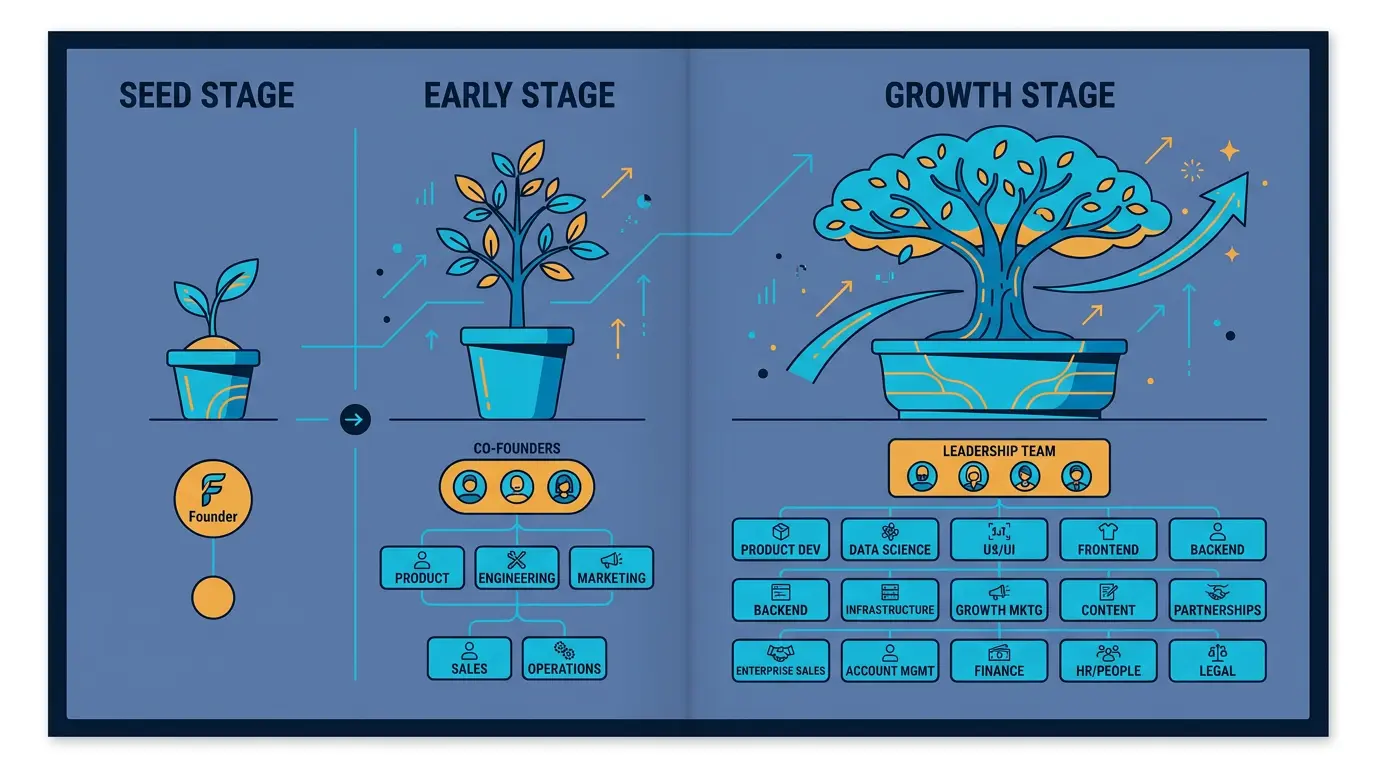
Scaling, properly understood, is not just increasing volume; it is changing the nature of the operation so that it can sustain a much larger size. A small affiliate operation and a substantial affiliate business are not the same thing made bigger; they are, in important ways, different things. The small operation often runs on the affiliate's personal daily effort, on a narrow set of offers and channels, with little in the way of systems. A business at substantial scale cannot run that way; if it tries to, it breaks. Scaling is the work of changing how the operation runs so that it can be large and stay large.
The figure in this guide's title, a substantial size such as past a million in annual terms, is best understood not as a promise or a target the guide can deliver, but as a marker of the kind of scale at which this transition genuinely matters. No guide can promise an affiliate any particular income; affiliate marketing is genuinely hard, most affiliates do not reach large scale, and outcomes depend on the affiliate's skill, effort, market and a great deal else. What the guide can do is explain what scaling well involves for an affiliate genuinely working toward a substantial business.
The honest framing, then, is that scaling is a transition in how the affiliate operates, not merely a multiplication of what they already do. The rest of this guide is about that transition: the shift from hustle to business, and the specific things, traffic quality, diversification, the base, systems, cash flow, that the transition requires.
For an affiliate, the starting point is to see scaling correctly: as the work of changing the operation so it can sustainably be large, not just as the act of making it bigger.
The shift from hustle to business
The central transition in scaling a dating affiliate operation is the shift from a hustle to a business, and an affiliate should understand what that shift involves, because it underlies everything else in this guide.
A hustle, in this sense, is an operation that depends on the affiliate's own daily, hands-on effort. The affiliate personally does the work, and the operation earns in proportion to that personal effort. A hustle can be genuinely successful at a modest scale, and there is nothing wrong with it as a stage. But a hustle has a ceiling: it can only grow as far as the affiliate's personal capacity to do the work, and it is fragile, because it depends entirely on the affiliate continuing to do that work every day.
A business, by contrast, is an operation that has, to a meaningful degree, been built into something that runs on more than the affiliate's daily effort. It has systems and processes, so the work is repeatable rather than reinvented each day. It has diversified income, so it does not depend on one offer or one channel. It has a durable base, RevShare income that earns while the affiliate works on other things. It may have help, so the affiliate is not the only person doing the work. A business can sustain a much larger scale, and it is more durable, because it does not rest entirely on the affiliate's continuous personal effort.
The shift from hustle to business is the heart of scaling. An affiliate who tries to scale a hustle simply by doing more of the personal daily effort hits the ceiling of their own capacity and exhausts themselves. An affiliate who scales by making the shift, building the systems, the diversification, the base, the help, that turn the hustle into a business, can genuinely grow.
This shift is also a shift in mindset. The affiliate stops thinking only as a doer of affiliate tasks and starts thinking as a builder and runner of an affiliate business: working on the operation, not just in it.
For an affiliate, the lesson is that scaling fundamentally means making the shift from hustle to business, from an operation that depends on personal daily effort to one built on systems, diversification, a durable base and, often, help. The sections that follow are the components of that shift.
Scaling traffic without losing quality
The most important discipline in scaling, and the one most often got wrong, is scaling traffic without losing the member quality that genuine earnings depend on.
Scaling an affiliate business does require more traffic. To earn more, the affiliate must, in some form, reach and convert more genuine dating members. So traffic growth is part of scaling. The danger is in how it is done.
The KPI and revenue-share guidance establish the crucial point: what genuinely earns, especially on RevShare, is not raw traffic volume but genuine, converting, retained members. A dating affiliate's earnings depend on the quality of the members they refer, on those members genuinely paying and staying. The fraud guidance reinforces it: worthless, poorly-matched or fake traffic does not earn, it just looks like activity.
The mistake affiliates make when scaling is to chase volume at the cost of quality. Under pressure to grow, an affiliate expands into traffic sources, audiences and methods that deliver large volume but poor-quality members, members who do not convert, or who convert and do not stay. The traffic numbers go up, the affiliate feels they are scaling, but the genuine earnings do not follow, because the new traffic does not produce the genuine, retained members that earn. Worse, on RevShare, the affiliate may not even notice for a while, because RevShare earnings build slowly, so the affiliate scales up poor traffic for months before the thin earnings reveal the mistake.
Scaling traffic well means growing volume while protecting quality. It means expanding into more traffic of the kind that genuinely produces good members, more of what the affiliate's KPIs, the conversion rate, the EPC, the member quality and retention metrics, show genuinely works, rather than just more traffic of any kind. It means watching those quality metrics closely as the affiliate scales, so that any decline in the quality of referred members is caught early. It means treating the quality and retention of referred members, not the traffic number, as the genuine measure of whether scaling is working.
For an affiliate, the guidance is that scaling traffic must never become chasing volume at the cost of quality. Grow the traffic that genuinely produces good, retained members, watch the quality metrics as you scale, and remember that on RevShare, poor-quality scale is a mistake that hides for months before it shows.
Diversifying across offers and channels
A second component of scaling is diversification: spreading the business across multiple offers and channels rather than depending on one, and an affiliate should understand why diversification is both a growth lever and a protection.
A small affiliate operation often depends on a narrow base: one or a few dating offers, one or a few traffic channels. That concentration is workable at small scale, but it makes the operation fragile, and fragility is dangerous at scale.
The fragility is real. If an affiliate's whole business depends on one dating offer, and that offer's terms change, or it stops performing, or the advertiser ends the programme, the affiliate's whole income is hit at once. If the affiliate depends on one traffic channel, and that channel changes, an advertising platform changes its rules, an SEO change affects rankings, a messaging channel tightens, the affiliate's whole income is hit at once. A concentrated affiliate business has single points of failure, and at substantial scale a single point of failure is a serious risk.
Diversification addresses this. An affiliate business spread across multiple genuine dating offers is not destroyed by one offer faltering. An affiliate business spread across multiple traffic channels, SEO and content, advertising, messaging, social, is not destroyed by one channel changing. Diversification turns single points of failure into manageable setbacks.
Diversification is also a growth lever. Multiple offers let the affiliate match different offers to different audiences and traffic. Multiple channels let the affiliate reach audiences in more ways and grow beyond the limits of any one channel. A diversified business has more genuine ways to grow than a concentrated one.
Diversification should be done with discipline, not as scatter. The affiliate should diversify into genuine, good offers and genuine, well-run channels, applying the same quality standards the rest of this guidance describes. Diversifying into poor offers or poorly-run channels just spreads the business across more weak ground. And the affiliate should diversify at a pace they can genuinely manage, which connects to the systems and risks sections.
For an affiliate, the guidance is to diversify across multiple genuine offers and channels as they scale, both to remove the single points of failure that make a concentrated business fragile and to open more genuine ways to grow, while diversifying with quality and discipline rather than scatter.
The RevShare base as a scaling engine
A particular and powerful component of scaling a dating affiliate business is the RevShare base, and an affiliate aiming to scale should understand how it works as a scaling engine.
The revenue-share guidance explains RevShare's compounding character: the affiliate earns an ongoing share of referred members' revenue, and as the affiliate keeps referring genuine, retained members, they accumulate a growing base of referred members all generating ongoing RevShare. That base, once built, earns continuously.
For scaling, this base has a special significance. A pure CPA affiliate earns only from the traffic they are converting right now; if they stop working, the income stops. A dating affiliate who has built a substantial RevShare base has income that continues from members already referred, even as the affiliate turns their attention to growth. The RevShare base earns while the affiliate works on the next thing.
This makes the RevShare base a genuine scaling engine. It gives the affiliate a foundation of ongoing income that is not consumed by the affiliate's daily effort, which is precisely the kind of thing the shift from hustle to business requires. It provides a degree of stability and cash flow, the cash-flow section returns to this, that supports the affiliate in doing the work of scaling. And it compounds: the larger the base of genuine retained referred members, the more it earns, and the more it can support further growth.
Building the RevShare base is, of course, the slow, quality-dependent work the revenue-share guidance describes: referring genuine, well-matched members who genuinely stay and pay. It rewards exactly the quality focus the traffic-quality section insists on. An affiliate scaling on poor-quality traffic builds little RevShare base, because poor members do not stay; an affiliate scaling on genuine quality builds a real, compounding base.
For an affiliate aiming at substantial scale, the RevShare base is therefore worth deliberately building. It is the durable foundation that turns a hustle, which earns only from today's effort, into a business, which has income that continues and compounds. It both rewards and depends on the quality discipline, and it is one of the genuine engines of scale.
For an affiliate, the guidance is to deliberately build a RevShare base of genuine, retained referred members as a core part of scaling, because that base earns continuously, supports the affiliate in doing the work of growth, compounds over time, and is one of the foundations of the shift from hustle to durable business.
Systems, processes and team
A further component of scaling, and an essential one, is building the systems, processes and, often, the team that a business at substantial scale requires.
A hustle, as the hustle-to-business section noted, runs on the affiliate's personal daily effort, often without much in the way of systems. At small scale that works. At substantial scale it does not, for a simple reason: the volume and complexity of the work outgrow what one person can hold in their head and do by hand.
Systems and processes are the answer. As the operation scales, the affiliate should build their way of doing things into repeatable systems and processes: a defined, repeatable way of researching and selecting offers, of setting up and running campaigns, of measuring performance, of managing the work. This is the same principle the multi-brand guidance describes for operators running a portfolio: a business run well at scale is not work reinvented every day, but a repeatable operating capability applied consistently. Systems make the operation efficient, consistent, and able to handle volume without the affiliate drowning.
Systems also include the tools and infrastructure the affiliate uses: the tracking and measurement, the tools that support the affiliate's channels and campaigns. At scale, an affiliate needs genuine tooling, not improvisation.
Team is the other part. There is a limit to what one person can do, however good their systems. An affiliate scaling toward a substantial business often reaches the point where they need help: other people to do parts of the work, so the affiliate is not the sole doer. Building a team, in whatever form suits the affiliate, employees, contractors, partners, is part of how an operation grows beyond the ceiling of one person's capacity. It is also part of the mindset shift: the affiliate moves from doing all the work to running an operation that includes others doing work.
Building systems and team is genuine work, and it has to be done deliberately and at a sensible pace. But without it, the affiliate hits the ceiling of their own personal capacity, and the operation cannot scale past it.
For an affiliate, the guidance is that scaling requires building repeatable systems and processes, genuine tooling, and, often, a team, because a substantial affiliate business cannot run on one person's unaided daily effort, and the systems and team are what let the operation grow beyond that ceiling.
Cash flow and the business side
Scaling a dating affiliate business also means attending to cash flow and the wider business side, and an affiliate should not neglect this, because the business side is where scaling operations genuinely come unstuck.
Cash flow matters at scale for a specific reason connected to the affiliate model. As the revenue-share and contracts guidance describe, affiliates do the work and incur the costs up front and are paid afterwards, sometimes well afterwards, and RevShare in particular builds slowly. An affiliate scaling up is often spending more, on traffic, on systems, on team, in the present, while a good part of the return, especially the RevShare return, arrives later. That gap between when money goes out and when it comes in is a cash-flow gap, and at scale it can be substantial. An affiliate who scales without managing cash flow can find themselves, even with a fundamentally healthy and growing business, short of cash to fund the next month's spend.
Managing cash flow means understanding this timing, planning for the gap, not over-committing spend beyond what the business's incoming cash can sustain, and treating the cash position as something to watch deliberately. The RevShare base, as the previous section noted, helps here, because it provides a foundation of incoming cash, but it does not remove the need to manage the timing.
The wider business side also matters at scale. As the operation becomes a substantial business, the affiliate should attend to the things any substantial business must: the proper business structure, which connects to the incorporate-a-business guidance, the tax position, which the next article in this pillar addresses, the genuine financial management of the business, and the legal and contractual side, the contracts guidance, taken seriously. A substantial affiliate business is a real business and must be run as one.
An affiliate scaling up should, like any business owner, get genuine professional help on the business side where it is needed, accounting help, advice on structure and tax, as the relevant guidance recommends. The honest point, repeated from the incorporation and insurance guidance, is that the business side is not optional and not a place to improvise at scale.
For an affiliate, the guidance is to attend genuinely to cash flow, understanding and managing the gap between spending up front and being paid later, and to the wider business side, structure, tax, financial management, the contracts, getting professional help where needed, because a substantial affiliate business comes unstuck on the business side if it is neglected.
The risks of scaling
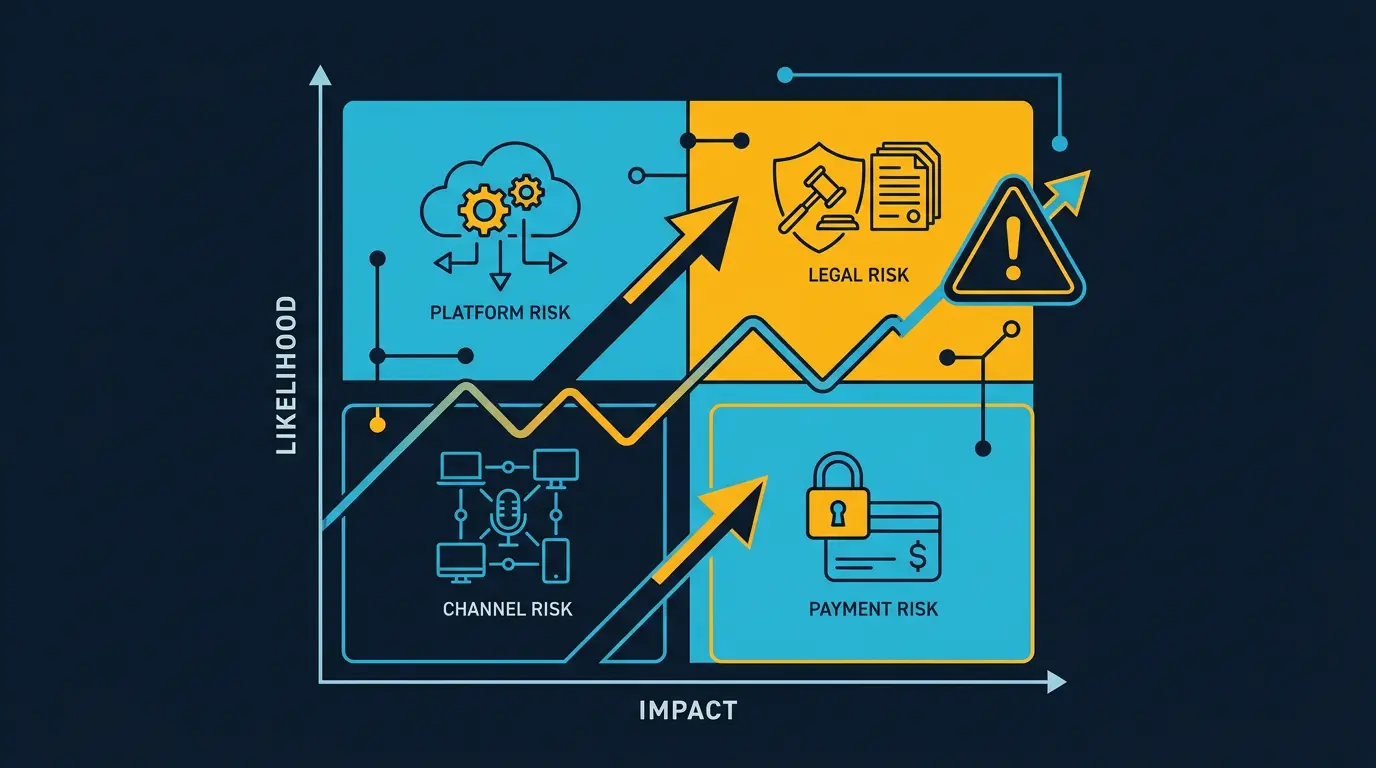
Scaling is the goal of this guide, but scaling carries genuine risks, and an honest guide should set them out so an affiliate scales with eyes open.
The first risk, covered at length already, is scaling on poor quality: chasing traffic volume at the cost of the member quality genuine earnings depend on. It is worth naming again as a risk, because it is the single most common way scaling goes wrong: the operation gets bigger by every visible measure and earns no more, or less, because the added scale is worthless traffic.
The second risk is scaling faster than the systems and the affiliate can support. An affiliate who scales the volume and complexity of the operation faster than they build the systems, processes and team to handle it ends up with an operation in chaos: work missed, quality slipping, the affiliate overwhelmed. Scaling must be paced to the affiliate's genuine capacity to manage the larger operation.
The third risk is cash-flow failure: scaling spend faster than the business's cash can sustain, and running short of cash even while the business is fundamentally healthy.
The fourth risk is over-concentration, the fragility the diversification section described, carried to scale: a large affiliate business still resting on one offer or one channel is a large business with a single point of failure, and at scale the failure is correspondingly serious.
The fifth risk is drifting toward bad practices under the pressure to grow. The temptation, when scaling is hard, to reach for the prohibited shortcuts, the fraud-adjacent traffic, the spam, the manipulative methods that the fraud, SMS and link-building guidance warn against, is real, and at scale the consequences, lost accounts, penalties, lost advertiser relationships, a damaged reputation, are correspondingly severe. Scaling must stay honest.
The sixth risk is the affiliate neglecting the business side, structure, cash flow, tax, contracts, as the operation becomes genuinely substantial.
None of these risks is a reason not to scale. They are the things to manage while scaling. An affiliate who scales on quality, paces growth to their systems and capacity, manages cash flow, diversifies, stays honest, and attends to the business side, is scaling well. An affiliate who ignores these is scaling toward a fall.
For an affiliate, the guidance is to scale with these risks in clear view, managing each of them, because scaling carelessly does not grow the business; it breaks it.
Common mistakes
The defining mistake is chasing traffic volume at the cost of member quality, scaling up traffic that does not produce the genuine, retained members that genuinely earn, especially dangerous on RevShare where the thin earnings hide for months.
The second is trying to scale a hustle by doing ever more personal daily effort, hitting the ceiling of the affiliate's own capacity instead of making the shift to a business with systems, diversification and a base.
The third is staying over-concentrated at scale, a large business still resting on one offer or one channel, carrying a serious single point of failure.
The fourth is neglecting the business side, scaling spend beyond what cash flow can sustain, or ignoring structure, tax and the contracts as the operation becomes a substantial business. The fifth is drifting toward prohibited shortcuts under the pressure to grow, where at scale the consequences are correspondingly severe. Scale on quality, build the business, diversify, manage the cash and the business side, and stay honest.
What to read next
For the model that builds the base, read dating revenue share explained. For the metrics that protect quality at scale, see dating affiliate KPIs and reporting. For the business side, read dating affiliate tax and business structure. And to understand the dating offers a scaled business depends on, DatingPartners.com can walk through the platform.
Hayley Birkin advises scaling teams. Book a strategy call at DatingIndustryExpert.com.
Visit DatingPartners.com →