
Tax and business structure are the part of affiliate marketing that affiliates most want to ignore and most regret ignoring. This guide explains the essentials in plain terms, with the firm caveat that it is general information, not advice.
An important caveat
As with the guidance on incorporating a business, on insurance and on affiliate contracts, a firm caveat belongs at the very start: this guide is general information, not tax or legal advice.
Tax and business structure are areas where the right answer depends entirely on the individual's specific circumstances, where they live, the scale and nature of their income, their wider financial situation, their plans, and on law that varies by jurisdiction and changes over time. No general guide can tell an affiliate how to handle their specific tax position or what structure is right for them, and this one does not try to.
What this guide does is explain the concepts: why tax and structure matter for an affiliate, the basic shape of how affiliate income is taxed, the structural choice between operating personally and through a company, and the practical disciplines of records and professional help. The aim is to give an affiliate enough understanding to take their tax and structure seriously and to work effectively with a professional.
The clear and repeated recommendation is that an affiliate earning meaningfully from dating affiliate marketing should use an accountant. Tax is genuinely complex, getting it wrong has real consequences, and the cost of professional help is modest relative to the income and the risk. Professional advice here is not an optional extra; it is the sensible and, frankly, the necessary course.
With that caveat firmly in place, the rest of the guide explains what an affiliate should understand.
Why tax and structure matter for an affiliate
Affiliates, especially those who started affiliate marketing as a side activity, often treat tax and business structure as an afterthought, something to worry about later. That is a mistake, and an affiliate should understand why these things genuinely matter.
They matter because affiliate income is real income with real obligations attached. As the next section sets out, affiliate income is taxable, and the obligation to declare it and pay tax on it is a genuine legal obligation, not an optional one. An affiliate who treats affiliate income as somehow informal, off to the side, not really a business, is mishandling a genuine legal responsibility, and the consequences of getting tax wrong, whether through neglect or misunderstanding, can be serious.
They matter because getting the structure and the handling right early is far easier than fixing it later. An affiliate who, from early on, treats their affiliate marketing as a business, keeps proper records, understands their tax position, and has the right structure, has a sound foundation. An affiliate who ignores all of this and then, having grown, has to untangle years of poor records and a wrong structure, faces a far harder and more expensive task.
They matter because, as the scaling guidance describes, an affiliate operation that grows becomes a genuine, substantial business, and a substantial business must be run as one, with a proper structure, proper financial management and proper handling of tax. The affiliate who built good tax and structure habits from the start scales smoothly; the affiliate who did not has to fix the foundations while also trying to grow.
And they matter because handling tax and structure properly is, simply, part of running a legitimate, professional operation. The honest affiliate, who runs clean, lawful promotion as the rest of this pillar describes, should equally run a clean, lawful, properly-handled business.
For an affiliate, the lesson is that tax and structure are not an afterthought. They are part of running affiliate marketing as the genuine business it is, the obligations are real, getting it right early is far easier than fixing it late, and an affiliate should take this seriously from the start.
Affiliate income is taxable income
The single most important fact in this guide is simple and an affiliate must not lose sight of it: affiliate income is taxable income.
When an affiliate earns commission from dating affiliate marketing, that commission is income. It does not matter that it was earned online, that it came from a network or an advertiser rather than an employer, that it arrived in irregular amounts, or that the affiliate started the activity as a hobby or a side project. It is income, and income is, in general, taxable.
This means a dating affiliate has, in general, an obligation to declare their affiliate income and to pay the tax due on it, according to the rules of their jurisdiction. The affiliate is, in tax terms, typically running a business or carrying on a self-employed activity, and the income from it must be accounted for and taxed like any other business or self-employment income.
The exact mechanics, how the income is categorised, what tax applies, at what rates, how and when it is declared and paid, what can be set against it, vary by jurisdiction and depend on the affiliate's circumstances and structure, and they are exactly what an accountant handles. But the underlying fact does not vary: the income is taxable and must be properly declared.
It is worth being blunt about the consequence of ignoring this. An affiliate who earns affiliate income and does not declare it, whether through deliberate evasion or through a vague assumption that it does not count, is not handling their tax; they are failing to. Tax authorities treat undeclared income seriously, and the consequences, back taxes, penalties, interest, and worse, can be severe. There is no version of affiliate marketing in which the income is genuinely tax-free simply because of how it was earned.
The honest framing connects to the rest of this pillar's emphasis on running clean. An affiliate who runs honest, lawful promotion should equally handle their tax honestly and lawfully. The two are part of the same thing: running a genuine, legitimate business.
For an affiliate, the essential fact to carry from this guide is that affiliate income is taxable income, that it must be declared and taxed, and that this is a genuine, serious obligation, not an optional or informal one.
Operating as a business: personally or through a company
A core structural question for a dating affiliate is whether to operate personally or through a company, and an affiliate should understand the choice, which closely parallels the one the incorporate-a-business guidance describes for operators.
Operating personally means the affiliate carries on their affiliate marketing as an individual, typically as a self-employed person or sole trader. There is, in law, no separation between the person and the affiliate activity: the income is the individual's income, the affiliate activity is the individual carrying on a self-employed trade. This is simple to set up and to run, and for an affiliate at a modest scale it is often the natural starting point.
Operating through a company means the affiliate forms a company, a separate legal entity, and carries on the affiliate business through it, as the incorporate-a-business guidance describes. The company, not the affiliate personally, runs the affiliate business and earns the income. This is more involved to set up and to run, with the company administration and obligations the incorporation guidance describes, but it can offer the advantages incorporation offers: the separation of the affiliate's personal liability from the business, a clean entity for the business's contracts and finances, a professional structure, and, depending on the affiliate's circumstances, potentially different tax treatment.
The choice between the two depends on the affiliate's situation, and it is exactly the kind of question an accountant should advise on. Broadly, and only broadly, an affiliate at a smaller, simpler scale often operates personally, while an affiliate whose affiliate marketing has become a substantial, serious business often finds the company structure increasingly appropriate, for the liability protection, the clean structure, and the way it suits a genuine business, exactly the logic the incorporation guidance sets out. The when-to-formalise section returns to the timing.
What an affiliate should not do is make this choice carelessly or by guesswork. Whether and when to incorporate, and which structure suits the affiliate's specific tax and personal situation, genuinely depends on circumstances and genuinely benefits from professional advice. The affiliate's job is to understand that the choice exists and matters, and to make it with an accountant rather than alone.
For an affiliate, the guidance is to understand the structural choice between operating personally and through a company, to recognise that the personal route often suits a smaller operation and the company route an established business, and to make the actual choice, and its timing, with professional advice.
The international dimension
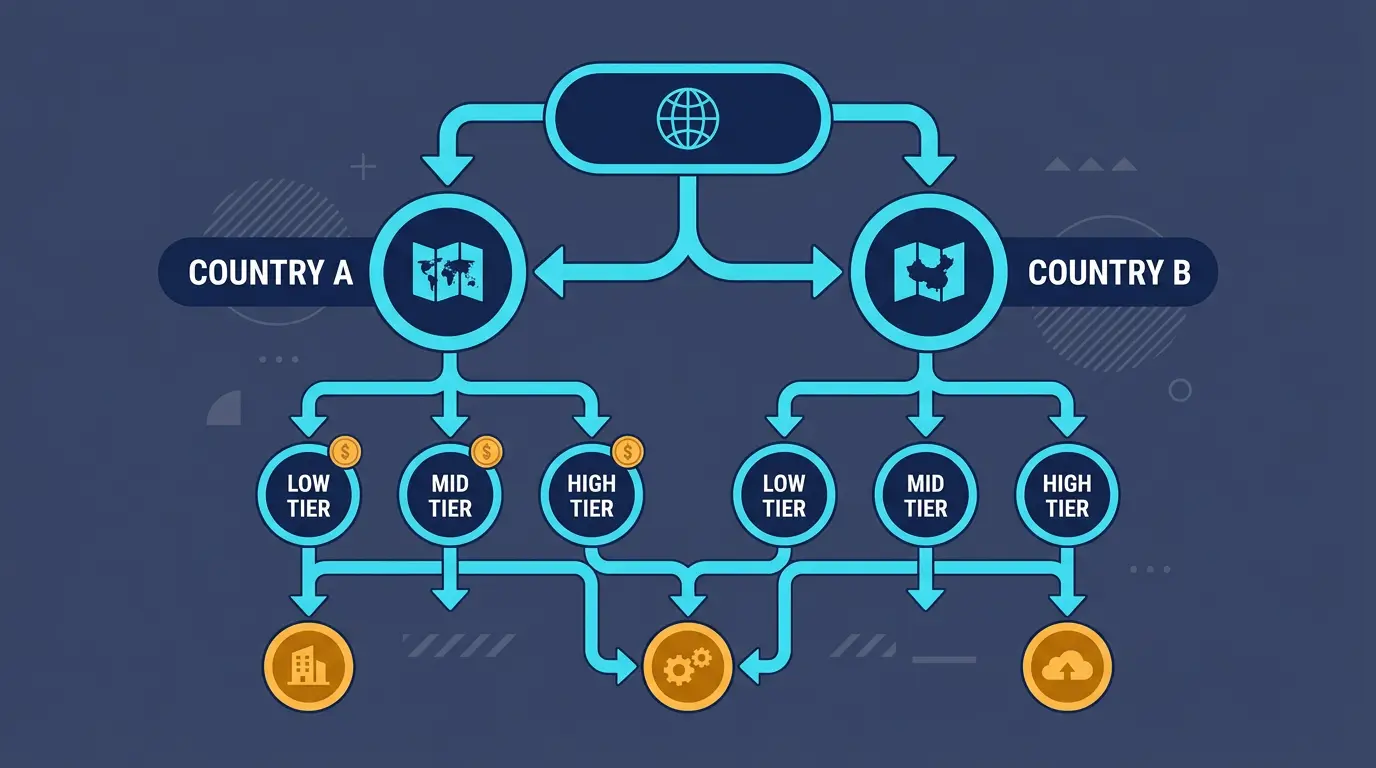
Dating affiliate marketing is frequently international, and an affiliate should understand that this adds a dimension to their tax and structure, while recognising that the international side is exactly where professional advice is most essential.
Affiliate marketing crosses borders easily. An affiliate based in one country may promote dating offers from advertisers and networks based in other countries, may be paid from other countries, and may reach audiences in many countries. The income, the parties paying it, and the audiences can all be spread internationally even though the affiliate themselves is in one place.
This international spread can have tax implications. Where the affiliate is based and tax-resident, where their income arises, and the cross-border nature of being paid from other jurisdictions can all bear on the affiliate's tax position. The detail is genuinely complex, it depends heavily on the specific countries and the specific arrangements, and it is precisely the kind of thing that cannot be handled by guesswork.
An affiliate should also be wary, exactly as the incorporate-a-business guidance warns operators, of the temptation to construct elaborate cross-border or offshore structures purely to minimise tax. Cross-border tax structuring is complex, the rules around it have tightened, and getting it wrong can be far more costly than any hoped-for saving. For most affiliates, the sensible approach is the straightforward one: operate, and be taxed, where the affiliate genuinely is and genuinely carries on the business, handle the international dimension of the income properly, and resist clever-sounding offshore schemes.
The honest message on the international dimension is therefore twofold. First, an affiliate should be aware that the international nature of affiliate income is a genuine factor in their tax position, not something to ignore. Second, the international dimension is the area where professional advice is most necessary, because it is genuinely complex and the cost of getting it wrong is genuinely high.
For an affiliate, the guidance is to recognise that dating affiliate income is often international and that this affects their tax position, to keep their structure straightforward and honest rather than reaching for offshore schemes, and to handle the international dimension specifically with professional advice.
Records and bookkeeping
Underpinning everything in this guide is a practical discipline an affiliate must keep up: proper records and bookkeeping.
Records are the foundation of handling tax and running the affiliate business properly. An affiliate cannot declare their income correctly if they have not recorded it. They cannot account for the costs of the business if they have not recorded them. They cannot understand their genuine profitability, the earnings-against-cost picture the KPI guidance describes, without records. And they cannot respond properly to any question from a tax authority without records. Good records are not bureaucracy; they are the basis of doing the rest correctly.
Keeping proper records means, in practice, recording the affiliate's income, the commissions earned, from which networks and advertisers, when, in good and complete detail. It means recording the affiliate's business costs, the genuine costs of running the affiliate operation, advertising spend, tools, and the rest, with the documentation that supports them. It means keeping the underlying documentation, the statements, the records of payment, the receipts, organised and retained. And it means doing this consistently and contemporaneously, keeping records as the affiliate goes, rather than trying to reconstruct a year of activity from memory and scattered fragments at the last minute.
Good records make everything else easier. They make the affiliate's tax straightforward for the accountant to handle correctly. They give the affiliate a genuine picture of their business's finances. They protect the affiliate if a question ever arises. And, as the affiliate grows and scales, good records from the start mean the affiliate has a sound financial history rather than a mess to untangle.
An affiliate at any meaningful scale should consider proper bookkeeping, whether done with good tools, with help, or as part of the accounting support the next section recommends. The point is that the records must genuinely be kept, properly and consistently.
For an affiliate, the guidance is to treat records and bookkeeping as a non-negotiable discipline from the start: record income and costs properly and consistently, keep the supporting documentation, and recognise that good records are the foundation of handling tax correctly and running the affiliate business as a genuine business.
When to formalise the structure
A practical question many affiliates face is when to formalise their structure, in particular when to move from operating personally to operating through a company, and there are sound principles for the timing, though the actual decision needs professional advice.
In the early stage, when an affiliate is starting out, earning modestly, and still learning whether affiliate marketing will work for them, operating personally as a self-employed individual is often the natural and sensible choice. It is simple, it has little overhead, and it suits an activity that is still small and still being proven. Formalising into a company before there is a genuine business to formalise can be premature overhead.
As the affiliate's operation grows and becomes a genuine, established, earning business, the case for formalising strengthens. The reasons are the ones the incorporate-a-business guidance gives: at a more substantial scale, the liability protection of a company, the clean entity for the business's contracts and finances, the professional structure, and potentially the tax treatment all become more relevant. An affiliate whose affiliate marketing has become a real business, with substantial income, contracts, costs and perhaps a team, as the scaling guidance describes, is at the stage where the company structure typically deserves serious consideration.
The signals that it may be time to formalise include: the income becoming substantial and sustained; the operation genuinely becoming a business rather than a side activity; the affiliate taking on the contracts, costs, and perhaps people that a real business involves; and the affiliate's exposure and stakes growing to the point where the liability protection and clean structure of a company genuinely matter.
But the actual decision, and its timing, should be made with an accountant, because it depends on the affiliate's specific income, tax position and circumstances. The point of this section is not to tell an affiliate exactly when to incorporate, which no general guide can, but to help them recognise that the question becomes genuinely live as they grow, and to raise it with their accountant at the right stage rather than drifting on a structure that has been outgrown.
For an affiliate, the guidance is that operating personally often suits the early stage, that the case for formalising into a company strengthens as the operation becomes a genuine, substantial business, and that the affiliate should watch for the signals of growth and make the actual decision, and its timing, with professional advice.
Getting professional help
The recommendation that has run through this whole guide deserves its own section, because it is the single most important practical thing an affiliate can do about tax and structure: get genuine professional help.
The case for it is straightforward. Tax and business structure are genuinely complex. The rules are detailed, they vary by jurisdiction, they change, and the right handling depends entirely on the affiliate's specific circumstances. The international dimension adds further complexity. The consequences of getting it wrong, whether through neglect, misunderstanding, or a wrong structure, are genuine and can be serious. And the affiliate's own expertise is in affiliate marketing, not tax. This is precisely the kind of area where a professional is genuinely necessary.
The professional an affiliate primarily needs is an accountant. A good accountant does for the affiliate what the affiliate cannot reliably do alone: ensures the affiliate's income is properly declared and the tax correctly handled, advises on the structure question and its timing, advises on the international dimension, helps set up and maintain proper records and bookkeeping, and keeps the affiliate compliant as the rules and the affiliate's situation change. For some questions, particularly around structure and contracts, legal advice may also be appropriate, as the incorporate-a-business and contracts guidance note.
The cost of this help is modest relative to what it protects. A meaningfully-earning affiliate business can readily afford an accountant, and the cost is small set against the income at stake and the cost of getting tax wrong. An affiliate who treats accounting help as an expense to avoid is being false-economical; an affiliate who treats it as a necessary, worthwhile cost of running a genuine business is being sensible.
An affiliate should get this help genuinely, not nominally: work with the accountant properly, give them good records, take their advice. And an affiliate should get it early, ideally as the affiliate income becomes meaningful, rather than after years of mishandling that then have to be untangled.
For an affiliate, the guidance is unambiguous and is the heart of this guide: get genuine professional help, an accountant above all, get it early, work with them properly, and treat the cost as a necessary and worthwhile part of running affiliate marketing as the genuine business it is.
Common mistakes
The defining mistake is treating affiliate income as informal or somehow not real income, and failing to declare it and pay the tax due, which is a genuine and serious failure with potentially severe consequences.
The second is treating tax and structure as an afterthought, ignoring them until the operation has grown, and then facing the hard, expensive task of untangling years of poor records and a wrong structure.
The third is neglecting records and bookkeeping, so the affiliate cannot declare income correctly, account for costs, understand their genuine profitability, or respond to a tax authority.
The fourth is making the structure decision, personally or through a company, and its timing, by guesswork rather than with professional advice, and either incorporating prematurely or drifting on an outgrown structure. The fifth is reaching for elaborate offshore schemes, or, above all, trying to handle complex tax without an accountant. Treat affiliate income as real business income, keep good records, and get genuine professional help early.
What to read next
For the operator-side equivalent, read how to incorporate a dating business. For the business side of growth, see scaling a dating affiliate business past 1M USD. For the contracts that generate the income, read dating affiliate contract and negotiation guide. And to understand the dating offers behind the income, DatingPartners.com can walk through the platform.
Hayley Birkin and Ambervine advise dating operators on structure. Book a 30 min call." --- **End of Pillar 4 — Dating Affiliate Marketing (26 articles)** Pillar 4 moves the funnel from technology (Pillar 3) into revenue, making it the highest intent commercial pillar for DatingPartners signup CTAs and FortitudeSend publisher sign ups. Image briefs remain on palette; bylines alternate between Hayley Birkin (operator) and Kim Harris (network scale).
Visit DatingPartners.com →