
Of all the safety risks a dating platform must address, stalking is among the most serious, because it can move from the app into a member's physical life. This guide explains how a dating platform prevents stalking, and what an operator must understand and confirm, even though the operator does not build the protections themselves.
Why stalking is a dating-specific danger
Every online platform has to think about abuse, but dating platforms carry a sharper version of the problem, and it is worth being clear about why.
The purpose of a dating platform is to connect strangers and to encourage them, eventually, to meet in person. That is not an incidental feature; it is the entire point of the product. But the same design that lets two well-intentioned people find and meet each other can be turned by a malicious person into a tool for finding and pursuing a victim. The platform cannot simply switch off the features that enable stalking, because those features are the features everyone uses.
Dating platforms also gather and display exactly the information a stalker wants. A profile shows a person's photographs, their approximate location, their interests, sometimes their workplace or the area they live in, often enough detail to identify them elsewhere. A member shares this in good faith with the intention of being found by good people. A stalker uses the same information for the opposite purpose.
And dating sits at the intersection of online and physical risk. A harassing message is serious, but a stalker who can work out where a member lives or works has moved the danger off the platform and into the member's real life. That escalation, from digital contact to physical pursuit, is what makes stalking the safety risk a dating platform must treat with the greatest seriousness, and it is why prevention has to be designed in rather than bolted on.
What stalking looks like on a dating platform
Stalking is not a single behaviour, and recognising its forms is the first step to preventing it.
The most obvious form is persistent unwanted contact: a member who keeps messaging another after being ignored, declined or asked to stop. On its own a single message is nothing; the pattern of repeated, unwanted approach is the warning sign.
A subtler form is evasion of blocking. A member who is blocked, and then creates a new account to reach the same person again, is not making an innocent mistake. Repeated re-contact through new accounts is one of the clearest signals of intent to stalk, and a platform that does not detect it leaves a victim defenceless.
Another form is information-gathering: a member who studies a target's profile intensely, who tries to extract identifying details, who pieces together a workplace or a neighbourhood from what the target has shared. This can happen before any direct contact at all.
And the most dangerous form is the move toward physical pursuit: a member who uses location features, or information drawn from the profile, to work out where the target is and to appear there. By the time stalking reaches this stage it is no longer only a platform problem, but the platform's design is what made it possible or made it hard.
A platform serious about stalking prevention is built to recognise all of these, not just the obvious one.
The location dimension
Location is the single most important technical dimension of stalking prevention, because location is what turns online harassment into physical danger.
The non-negotiable rule, covered in depth in the geolocation guidance, is that a dating platform must never reveal a member's exact location or coordinates to another member. It shows approximate distance, never a precise point. A platform that exposes precise location, or enough precision to derive it, hands a stalker the one piece of information that makes physical pursuit possible.
But the location dimension goes further than the displayed distance. A well-designed platform also resists triangulation, the technique of deriving someone's exact position by moving around and observing how the distance to them changes. Rounding the displayed number is not enough on its own; the system has to be designed so the underlying coordinates genuinely cannot be reconstructed.
Location protection also means giving members control: the ability to set location manually rather than by precise device positioning, to limit visibility, and to not have their movements tracked. A member who is being stalked, or fears they might be, needs to be able to reduce their location exposure, and a good platform makes that possible.
For an operator, location is the protection to scrutinise hardest when assessing a platform, because location handled badly is the failure most likely to result in physical harm. Confirm that the platform shows distance and not coordinates, resists triangulation, and gives members genuine control over their location.
Blocking, and what good blocking means
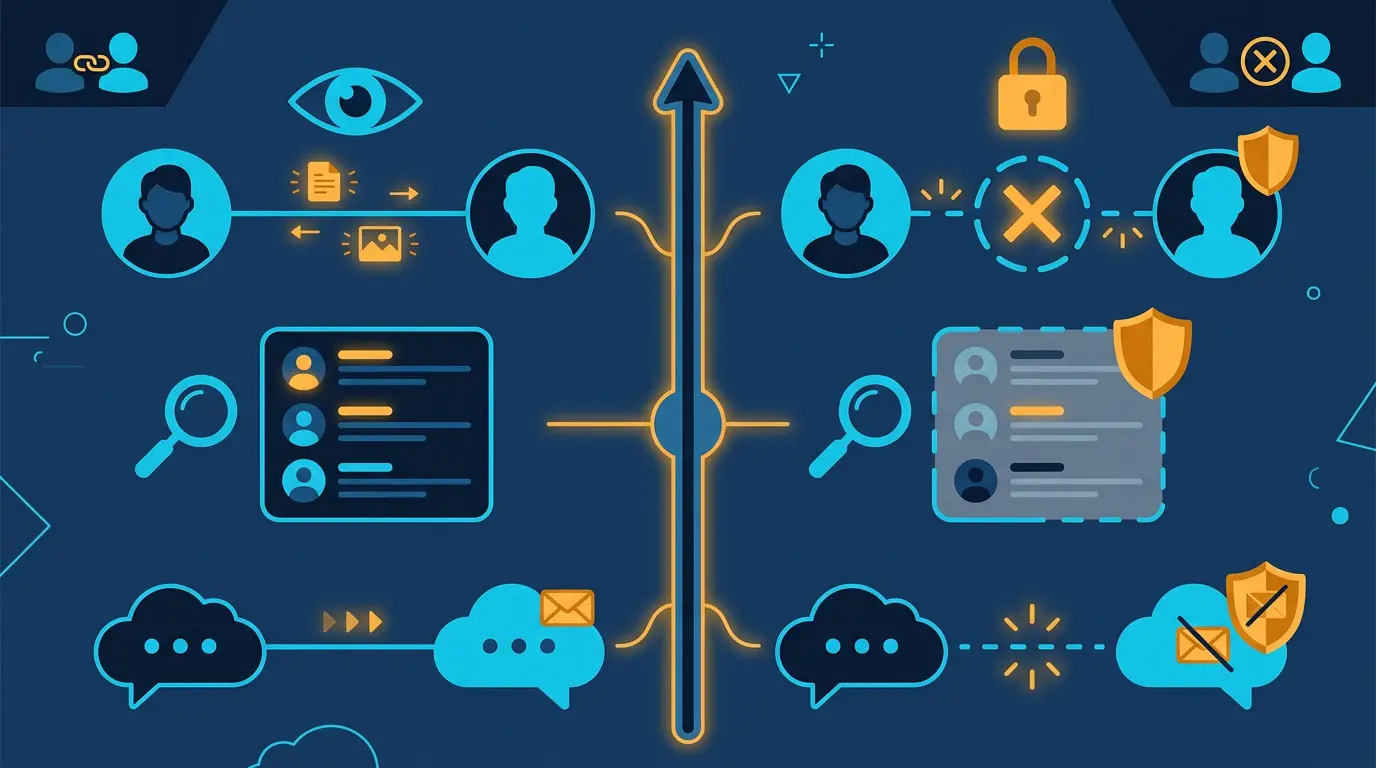
Blocking is a member's most direct tool against a stalker, and the difference between weak and strong blocking is the difference between a real protection and a false comfort.
Weak blocking simply hides the two members from each other in the ordinary feed. It feels like protection but it is thin: the blocked member may still be able to find the other through search, through a direct link, or by creating a new account.
Good blocking is comprehensive. When a member blocks another, the block should genuinely and completely sever the connection: no messaging, no visibility in either direction, no ability to find the blocked-from member through search or any other route. The blocked member should not be able to tell easily that they have been blocked in a way that provokes escalation, and crucially the block should be durable.
The hardest part of good blocking is resisting evasion. A determined stalker who is blocked will try to return through a new account. A platform serious about stalking prevention has measures to detect when a newly created account is, in effect, a blocked member coming back, and to extend the block rather than letting it be trivially defeated. This is genuinely difficult, and it is one of the clearest marks of a platform that takes stalking seriously versus one that offers only the appearance of protection.
For an operator, blocking is worth testing directly on a prospective platform. Block an account and confirm that the severance is total, not cosmetic.
Limiting information exposure
A stalker can only pursue what they can find out, so limiting how much identifying information is exposed is a core preventive measure.
A dating profile is, by design, somewhat revealing, and that is fine. The aim is not to make profiles anonymous, which would defeat the product, but to avoid exposing the specific details that enable real-world identification and pursuit beyond what the member intends.
This works on a few levels. The platform should not expose precise location, as covered above. It should be thoughtful about what profile information is shown to whom, and ideally give members control over the visibility of more sensitive details. It should discourage or prevent the display of information that pinpoints a member, an exact address, a specific workplace, in the standard profile fields. And it should help members understand what they are revealing, so they can make informed choices about their own profiles.
There is also the question of what a member can extract through the platform's behaviour. A well-designed platform does not, for example, leak a member's online status, last-seen time or movements in ways that let another member build a detailed picture of their routine.
For an operator, the principle to confirm is that the platform exposes enough for genuine connection and no more, and gives members control over the rest. Information exposure is a quieter risk than location, but a stalker who can identify a target off-platform has escaped the platform's protections entirely.
Detecting stalking patterns
Prevention cannot rely only on members reporting; the platform should also be detecting the behavioural patterns that signal stalking.
Stalking has signatures that a system can be designed to notice. Repeated attempts to contact a member who has not responded or has declined. The creation of new accounts that quickly target the same person a blocked account targeted. Sudden, intense focus by one account on another's profile. Patterns of behaviour across multiple victims by the same person. None of these is invisible to a platform that is looking.
A platform serious about stalking prevention combines member reporting with proactive detection: systems that flag these patterns for the moderation team to review, so that a stalker can be identified and stopped before a victim has to escalate, and ideally before the victim even realises the scale of what is happening.
Detection has to be designed carefully, because not every repeated interaction is sinister, and the system must avoid both missing real stalkers and wrongly flagging innocent behaviour. That balance is genuine, specialist work.
For an operator, the point is that a good platform does not wait passively for reports. It looks. When assessing a provider, it is reasonable to ask how the platform detects patterns of harassment and block evasion, not just how it handles a report once filed. A platform that only reacts is weaker than one that also watches.
Responding to reports of stalking
When a member does report stalking, how the platform responds is decisive, because a slow or weak response can leave a member in real danger.
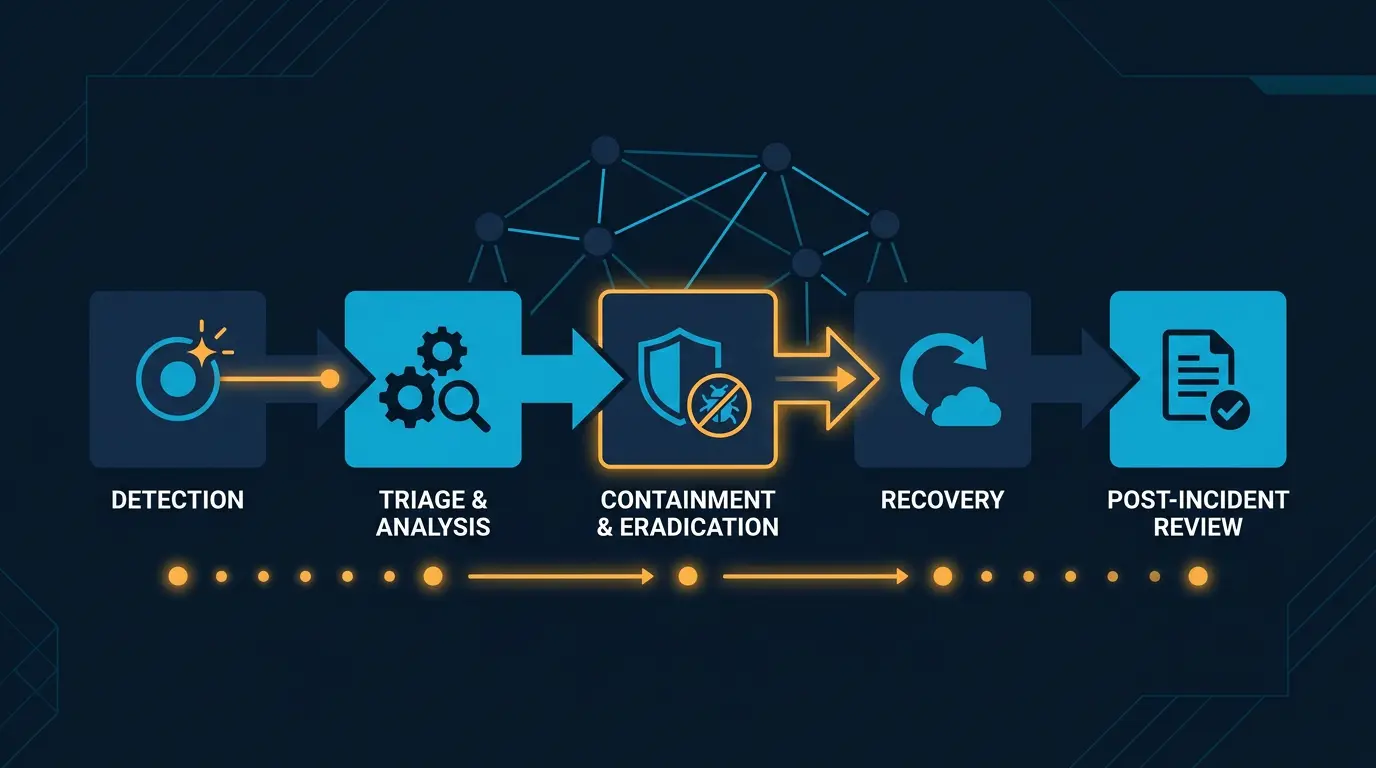
Reports of stalking are not ordinary moderation tickets and should not be treated as such. They need to be recognised as urgent, prioritised, and routed to people equipped to handle them. A report that someone is being persistently pursued, that a blocked account keeps returning, or that a member fears for their physical safety must move faster than a report about a rude message.
A good response is also decisive. Where the evidence supports it, the platform should act firmly against the stalking account, remove it, prevent its return, and preserve the evidence. Half-measures against a determined stalker simply prolong the danger.
The response should also keep the reporting member informed enough to feel protected, without exposing process details that could be used against them. A member who reports stalking and hears nothing back, or sees no apparent action, learns that the platform will not protect them, which is its own kind of harm.
And the platform should recognise the limits of its role. Stalking can be a criminal matter, and a platform should be prepared to support a member who needs to involve the authorities, including by preserving and providing relevant evidence appropriately. For an operator, confirming that a platform treats stalking reports as urgent and acts decisively is essential, because this is where prevention either holds or fails.
Supporting the member at risk
Stalking prevention is not only about stopping the stalker; it is also about supporting the person at risk, and a humane platform does both.
A member who is being stalked is frightened, and the platform's design should reduce that fear rather than add to it. That means making the safety tools easy to find and use, reporting, blocking, controlling visibility and location, so that a member in distress is not fighting the interface as well as the stalker. It means clear, calm communication when they reach out for help.
It also means recognising that some members are at greater risk than others. A member leaving an abusive relationship, a member in a vulnerable situation, a member whose safety depends on not being found, all need the platform's protections to be genuinely robust. A platform designed with these members in mind is a safer platform for everyone.
Support also means signposting. A platform cannot be a substitute for specialist support services, but it can make sure a member who is being stalked knows that help exists beyond the app and is pointed toward it.
For an operator, the lesson is that stalking prevention has a human dimension as well as a technical one. The technical protections do the heavy lifting, but how the platform treats a frightened member, with seriousness, speed and care, is part of whether it genuinely keeps people safe.
Stalking and the duty of care
Stalking prevention also sits within a wider legal and ethical frame that an operator should understand: the duty of care a dating platform owes its members.
Modern online safety regulation, including the UK Online Safety Act and comparable frameworks elsewhere, expects platforms to assess the risks their service poses to users and to take reasonable steps to mitigate them. For a dating platform, the risk of harassment and stalking is one of the most foreseeable risks there is. A platform cannot credibly claim it did not see the danger coming.
This means stalking prevention is not only a moral obligation or a feature members like; it is part of the regulatory expectation on the service. A platform that has not designed in location privacy, durable blocking, pattern detection and a serious reports process has not met the standard a regulator, and a member, would reasonably expect.
For an operator, this connects stalking prevention to the platform's overall compliance posture. The protections described in this guide are not optional extras; they are part of what makes the platform lawful to run as well as safe to use. An operator should regard a platform's stalking protections, and the operator's own ability to point to them, as part of the compliance framework, not separate from it.
The practical takeaway is that an operator who confirms a platform handles stalking well is confirming something that matters legally as well as ethically, and an operator who does not has a gap in both.
What white label handles for you
On a platform, the stalking prevention protections are built by the provider, which is, as with the rest of trust and safety, a substantial benefit, but one the operator must not treat as a reason to stop paying attention.
The provider builds the location privacy, the blocking and its resistance to evasion, the information-exposure controls, the pattern detection, and the moderation process that handles stalking reports. The operator does not engineer any of this, and a capable provider has built it to a standard a small independent operator could not match alone.
But the operator carries the brand. When a member joins a branded dating site, they trust that site, and if its stalking protections fail, the member's trust, and the harm, attach to the operator's brand, not to the invisible provider behind it. So the operator cannot simply assume the protections are there and adequate.
What the operator should do is verify, specifically and concretely. Confirm that the platform shows distance and not coordinates and resists triangulation. Test that blocking genuinely and completely severs contact. Ask how the platform detects block evasion and harassment patterns. Ask how stalking reports are prioritised and how fast they are handled. Ask what happens when a matter needs to involve the authorities. These are not awkward questions; they are exactly the questions a responsible operator should ask, and a good provider will answer them readily. The provider builds the protection; the operator confirms it is real.
Common mistakes
The defining mistake an operator can make is assuming a platform handles stalking well without verifying it, because stalking is the safety failure most likely to result in physical harm and the brand carrying it is the operator's.
The second is underestimating block evasion, treating blocking as solved when a determined stalker returning through new accounts can defeat weak blocking entirely.
The third is focusing only on reactive reporting and ignoring proactive detection, leaving the platform blind to stalking patterns until a victim escalates.
The fourth is neglecting the location dimension, the protection that most directly prevents online harassment from becoming physical danger. The fifth is treating stalking reports as ordinary moderation tickets rather than urgent matters that need speed, seriousness and decisive action. Stalking is the risk to take most seriously of all; verify, do not assume.
What to read next
For the location detail, read geolocation and proximity matching. For the wider safety picture, see the dating safety features checklist. For the supporting tooling, read the dating trust and safety tooling stack. And to confirm how a platform handles stalking prevention, DatingPartners.com can walk through it.
DatingPartners default obfuscation and cross brand blocking protect members everywhere.
Visit DatingPartners.com →