
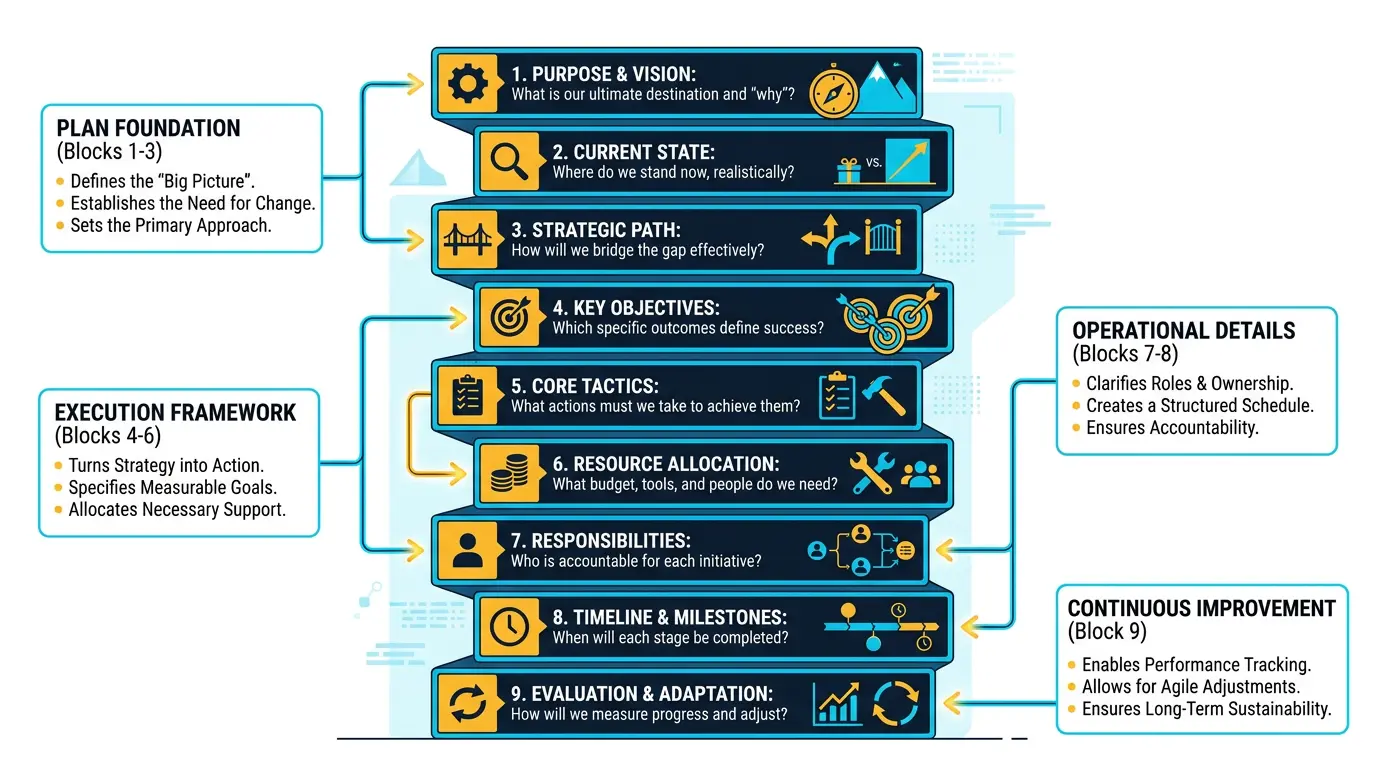
Most people start a dating site without writing a plan, and most of them regret it. A business plan is not a document you write for a bank and then file away. It is the exercise that forces you to confront the numbers before you spend money, and it is the artefact an investor, a partner, or a provider will ask for. This guide gives you the full ten section template and walks through how to fill out each one properly. It is based on 21 years operating dating businesses and on plans that have actually raised money.
Why a dating site needs a plan
A dating business has an unusual shape. Costs are low, but so is the early revenue, and the gap between launch and stable income is several months long. A plan is how you prove to yourself, before spending, that you can survive that gap and that the unit economics work once you reach the other side.
There is a second reason. The plan is your shared language with everyone you will need: a co founder, an investor, a white label provider deciding whether to take you on, even your future self trying to remember why you made a decision. Write it once, properly, and keep it updated. The plan below works whether you are bootstrapping or raising money, because the discipline is the same.
Section 1: Executive summary
Write this last, even though it sits first. The executive summary is a single page that states what the business is, who it serves, how it makes money, what it needs to launch, and what you expect it to earn. A reader should finish it and understand the whole business.
Keep it concrete. Not "a platform that revolutionises connection," but "a subscription dating site for single parents in the United Kingdom, launching on white label infrastructure for under £8,000, targeting £4,000 monthly revenue by month twelve." Specificity signals that you have done the work. Vagueness signals that you have not.
Section 2: Market opportunity
This section sizes the prize. Show the overall dating market, then narrow quickly to the slice you are actually addressing. A figure like the global online dating market being worth over twelve billion US dollars a year is fine as context, but it is not your market. Your market is the number of people in your niche, in your geography, who are realistically reachable.
Do the narrowing in the open. State the niche population, the share who are single and looking, and the share you could plausibly reach through your chosen channels. An honest, smaller number is far more convincing than a vast one, because it shows you understand the difference between a market and an addressable market. Cite your sources.
Section 3: Niche and positioning
This is the section that separates a serious plan from a hopeful one. State your niche precisely, explain why it is large enough to support a business and specific enough that members have a reason to choose you, and name the existing competitors honestly. A useful internal benchmark is whether the niche can realistically generate around 40,000 potential monthly organic visitors in your geography. Too far below that and acquisition becomes very hard.
Then state your positioning in one clear sentence. What does a member get here that they do not get on a general app, and why will they trust you. Positioning is not a tagline, it is a promise you can keep. If you cannot write it clearly, the business is not ready, and no amount of polish on later sections will fix that.
Section 4: Product and platform
Describe what you are building and how. State your build path, white label, no code, open source, or custom, and explain why it fits your budget and timeline. If white label, name the type of provider and what they supply, which is typically the platform, payments, moderation, and compliance. If custom, explain the technology bet that justifies the far higher cost.
List your launch feature set and, just as importantly, what you are deliberately leaving out of version one. A plan that shows restraint reads as more credible than one promising every feature at launch. Include your expected timeline from signing to live, which on white label is realistically two to four weeks.
Section 5: Trust, safety and compliance
Treat this as a real section, not a footnote, because regulators now do. Set out how you will handle moderation, fake profiles, reporting and blocking, age assurance, and data protection. Reference the regimes that apply to your markets, such as the UK Online Safety Act, the EU Digital Services Act, and GDPR.
If you are using a white label provider, state clearly what compliance you inherit from them and what remains your responsibility. An investor or partner reading the plan wants to see that you understand trust and safety as both an obligation and a competitive advantage. Sites that members feel safe on retain better, and that flows straight into your financial model.
Section 6: Marketing and acquisition
This section answers the question that sinks most dating sites: where do the members come from. Name your primary acquisition channel for the first ninety days and explain why it suits your niche. Content and search suit mature and interest led niches. Paid social suits younger audiences. Affiliate and partnerships suit broad appeal niches.
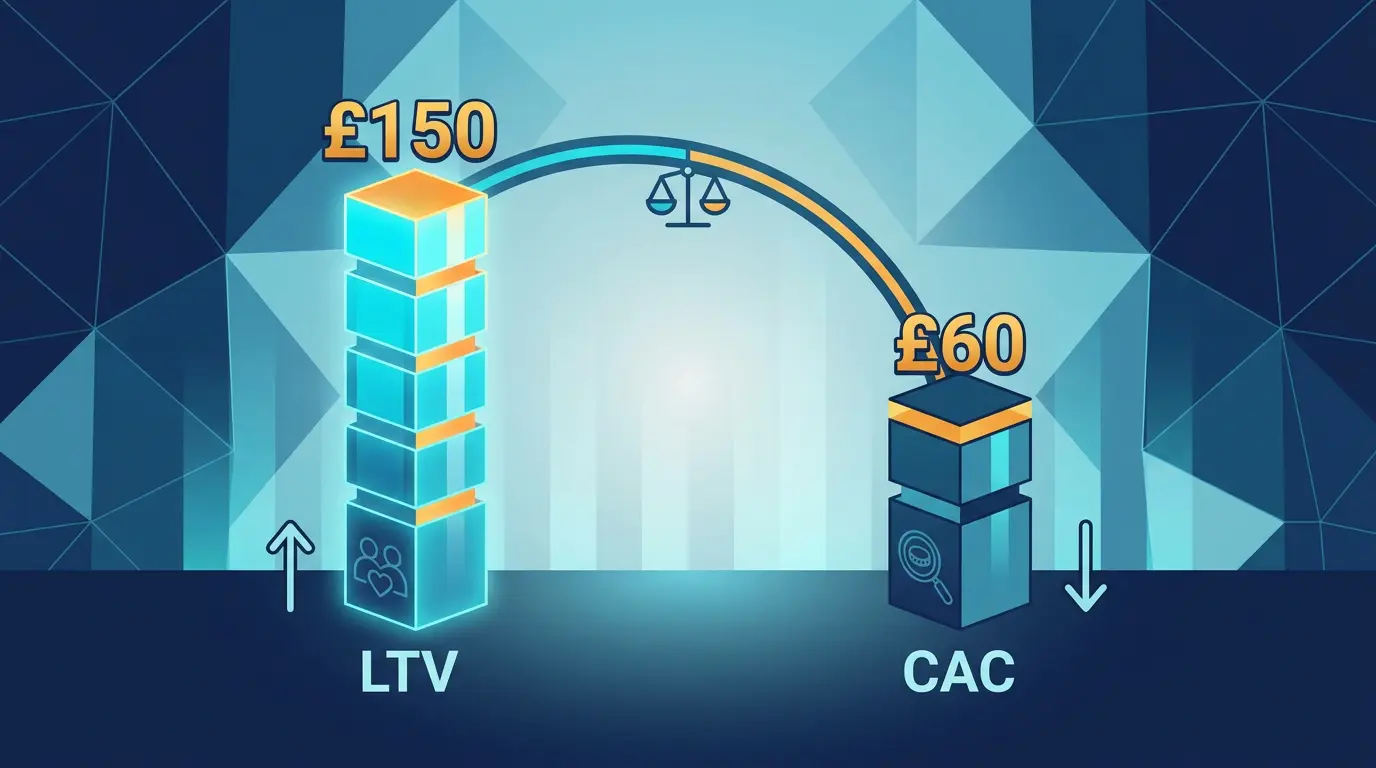
Give real numbers. Estimate your cost to acquire a member, your expected signup rate, and your expected conversion from free to paying. State your marketing budget and how long it has to last. A plan that says "we will use social media" without numbers is not a plan. A plan that says "we expect a cost per paying member of around £40 through paid social, with a £15,000 budget over six months" is one an investor can actually evaluate.
Section 7: Revenue model and pricing
State how the site earns. For most niche dating sites that means subscriptions, often a free profile with limited messaging and a paid tier around £19.99 to £24.99 a month that unlocks full communication, with discounts for longer terms. Note any secondary revenue such as premium features or, later, advertising.
If you are on white label, be explicit about revenue share. The standard split gives the operator 60 to 70 percent and the provider 30 to 40 percent. Your projections must use your share, not gross member revenue, because that is what actually reaches your account. Getting this wrong is the most common error I see in first drafts.
Section 8: Financial projections
This is the section investors read most closely, so build it from the bottom up rather than picking a revenue target and working backwards. Start with traffic, apply a signup rate, apply a free to paying conversion rate, apply your subscription price, then apply your revenue share to reach your actual income.
A worked example makes the method clear. Take 10,000 monthly visitors, a 4 percent signup rate, and a 12 percent conversion from signup to paying. That is 48 new paying members a month at, say, £24.99. Gross member revenue is roughly £1,200. At a 60 percent operator share you keep about £720 in month one from new members alone. Layer in a realistic retention curve, where perhaps half stay to month two and a quarter to month six, and the same site builds toward £3,000 to £4,000 a month by month twelve. Project month by month for at least the first year, show your costs against that, and show the month you reach breakeven. Honest, modest numbers built this way beat optimistic round numbers every time.
One practical tip on the model itself. Build it in a simple spreadsheet with the assumptions, signup rate, conversion, price, retention, and revenue share, set out as clearly labelled, editable cells at the top. Then anyone reviewing the plan, including you, can change one assumption and instantly see the effect on the result. A model that is transparent about its assumptions earns trust. A model that hides them, or presents only the output, does not. Investors will always ask to see the assumptions, so present them openly from the start.
Sections 9 and 10: Team, risks and milestones
The team section says who is doing the work and why they can. For a solo operator, that is fine, but be explicit about which skills you have and which you will buy in, such as design or legal review. Investors back people, so do not skip this even if the team is just you.
The final section lists the genuine risks, such as a single channel acquisition strategy failing, regulatory change, or exposure, and what you will do about each. Then it lists your milestones with dates: validated, launched, first hundred paying members, breakeven. A plan that names its own risks reads as honest. A plan that pretends there are none reads as naive.
Adapting the plan for an app or a network
The ten section template works for any dating business, but two variants come up often enough to address directly.
If you are planning a dating app rather than a website, three sections change. Product and platform must address the build path honestly, because an app costs more and takes longer than a site. Revenue model must account for the Apple and Google commission of 15 to 30 percent on in-app purchases, which lowers your effective revenue again beyond the white label share. And the risks section must name App Store and Play Store approval as a real, scheduled risk, because a rejection can push a launch back by weeks. Build the financial model on net revenue after the platform commission, never before it.
If you are planning a network of niche sites rather than a single site, the plan changes shape. You still write the niche and positioning section for each site, but briefly, because the whole point of a network is that every site reuses the same playbook and the same infrastructure. The financial model becomes a portfolio model, where each site follows a similar curve and the network total is the sum of those curves. The most attractive feature of a network is that fixed costs barely move as you add sites, so the marginal economics improve with every launch. Make that explicit, because it is the strongest argument the model has.
One note that applies to every version. Keep the plan a living document. The first draft is written before launch on estimates. Once the site is live and producing real numbers, replace those estimates with actuals every quarter. A plan with real data in it is far more persuasive than the most polished set of projections, and it becomes a genuine operating tool rather than a document you wrote once and filed away.
Mistakes that lose investor confidence
The most common mistake is projecting gross member revenue instead of your revenue share, which overstates income by 30 to 40 percent and is spotted instantly by anyone who knows the industry. The second is a vague niche, because it makes every later section unconvincing. The third is treating marketing as an afterthought when it is the hardest part of the whole business.
Two more. Founders often present hockey stick growth with no mechanism behind it, when steady, explained growth is far more credible. And many ignore retention entirely, modelling only new members, when retention is the lever that actually decides whether the business compounds or stalls. Fix those five and your plan will be ahead of most.
What to read next
To pressure test the idea before you write the plan, read how to validate a dating site idea. For the numbers behind your financial model, see how much it costs to start a dating site. For the full launch sequence, see how to start a dating site. And if your plan assumes a white label build, DatingPartners.com can give you the revenue share terms to model against.
Download the free template above, then book a 20-minute plan review with DatingPartners' operator success team. We'll tell you what's missing before an investor does.
Visit DatingPartners.com →