
Why Influencer Marketing Matters for Dating
Dating is inherently personal and trust-based. Traditional advertising often struggles because people filter it out. When someone they follow recommends a dating app, the message carries social proof that paid ads can't replicate.
Influencer marketing in the dating space serves multiple purposes:
- Authentic testimonials: Real users sharing their experiences builds credibility
- Niche audience access: Influencers come with pre-segmented, engaged communities
- Content creation: You get user-generated content that you can repurpose across channels
- Extended reach: One influencer post can reach 50,000+ people for a fraction of traditional paid advertising costs
Data from 2025 campaigns shows that dating platforms using influencer partnerships see 3-5x better engagement rates compared to display ads, and conversion costs drop by 40-60%.
Micro vs Macro Influencers for Dating
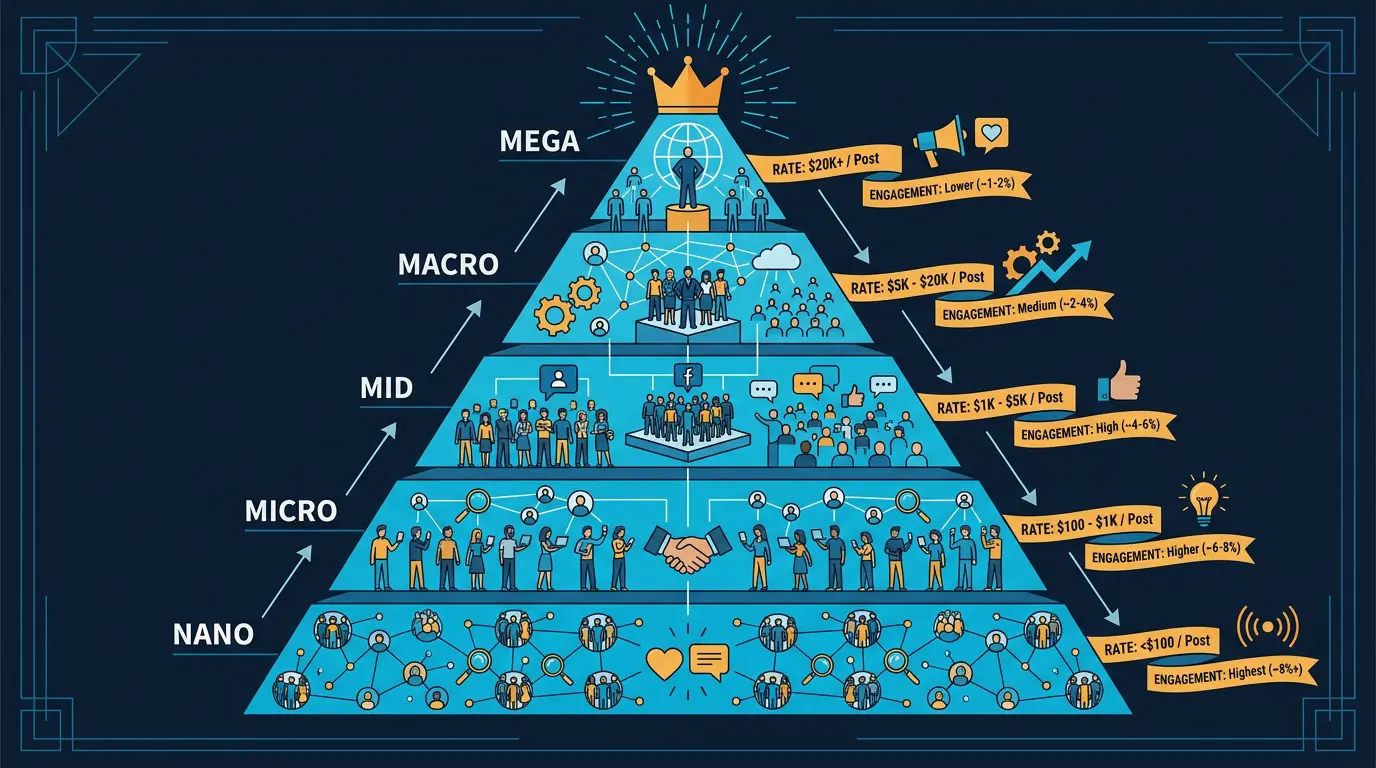
Micro-Influencers (10K-100K Followers)
Micro-influencers dominate the dating space because their audiences trust them more. These are typically relationship coaches, lifestyle bloggers, comedy creators, and single-life content creators.
Advantages:
- Engagement rates of 5-8% (compared to 2-4% for macro-influencers)
- Highly engaged, genuine communities
- Lower cost per partnership ($2,000-15,000)
- Easier to negotiate custom content
- Less likely to have brand safety concerns
- Can promote platform safety features to aligned audiences
Disadvantages:
- Reach is limited (10K-100K per post)
- Requires coordinating with many creators for scale
- More admin overhead
Best for: Budget-conscious campaigns, highly targeted demographics, building long-term relationships.
Macro-Influencers (100K-1M+ Followers)
Macro-influencers offer bigger reach but less direct engagement. These might be reality TV personalities, celebrity dating coaches, or popular lifestyle creators.
Advantages:
- Large immediate reach (100K-1M+)
- Pre-built credibility and trust
- Easier logistics (fewer partnerships needed)
- Potential for mainstream media coverage
Disadvantages:
- Engagement rates drop to 2-4%
- Cost ($25,000-150,000+ per post)
- Less flexibility on content
- Audiences may not align with your platform
Best for: New platform launches, mass-market positioning, announcements with broad appeal.
Budget Allocation and Campaign Structure
Sample Campaign Budgets
| Campaign Type | Duration | Influencer Spend | Content/Admin | Platform Spend | Total |
|---|---|---|---|---|---|
| Micro-Influencer Mix | 3 months | $15,000 | $3,000 | $5,000 | $23,000 |
| Macro-Influencer Launch | 1 month | $75,000 | $5,000 | $15,000 | $95,000 |
| Hybrid Strategy | 6 months | $40,000 | $8,000 | $12,000 | $60,000 |
| Performance-Based | Ongoing | $20,000 base | $2,000 | $5,000 | $27,000+ |
Budget Breakdown
Influencer fees (60-70% of budget): The direct cost to creators. Negotiate package deals if working with multiple micro-influencers.
Content creation and management (15-20%): Admin time, content approval, tracking links, managing spreadsheets.
Paid amplification (10-15%): Boosting top-performing organic posts, retargeting on other platforms.
Tools and tracking (5%): Link shorteners, promo code tracking, discount code management.
Negotiation Tips
With micro-influencers, you have leverage. Propose packages like 3-4 posts over 8 weeks for a flat rate rather than per-post pricing. Offer gifting plus a smaller fee instead of large upfront payments. With macro-influencers, expect fixed pricing but try to negotiate revisions, rights to repurpose content, and exclusive discount codes.
Types of Content That Convert
1. Honest Review/Unboxing
"I tried [dating app] for 2 weeks. Here's what actually happened."
!1. Honest Review/Unboxing best practices and action checklist for Influencer Marketing for Dating Apps and Sites *Disclosure Requirements metrics and performance data for Influencer Marketing for Dating Apps and Sites*
- Reels/shorts format, 30-60 seconds
- Realistic screenshots and conversations
- Honest pros and cons
- Call-to-action at the end (link in bio)
Why it works: Audiences crave authenticity. Reviews outperform ads because they feel like peer recommendations.
2. Personal Story/Success
"I met my boyfriend on [dating app] and here's how."
- Longer-form content (1-3 minutes)
- Emotional resonance matters
- Success stories are highly shareable
- Works best with relationship/lifestyle creators
Why it works: People want to see that matches actually happen. Stories prove your platform works.
3. Funny/Relatable Takes
"Dating app profile red flags I see as a woman."
- Comedy-focused creator content
- Relatability over selling
- High engagement, high shares
- Subtle product mention (not pushy)
Why it works: Humor breaks through the noise. People share comedy because it's entertaining, not because they're being sold.
4. Educational/Tips Content
"5 profile tips that actually get matches (tested on 3 apps)."
- Tutorial-style, educational value
- Demonstrates expertise
- Positions your platform as one of the best
- Evergreen content with long shelf-life
Why it works: People want to improve their dating success. Content that teaches them how positions your platform as the solution.
5. Comparison Content
"Dating app showdown: which actually works?"
- Comparative breakdown of 3-4 platforms
- Honest assessment of strengths/weaknesses
- Your platform clearly positioned as best-fit
- Risky but highly engaging if honest
Why it works: People researching dating apps look for comparisons. Honest comparisons build trust (don't always make you the winner, but when you are, it's credible).
6. Behind-the-Scenes/Brand Story
"Here's how [dating app] actually works (I talked to the founder)."
- Interview format or explainer
- Brand transparency
- Differentiation from competitors
- Works well for positioning
Why it works: People want to know the team behind platforms they use. Humanizes your brand.
Measuring Influencer Campaign Performance
Key Metrics to Track
| Metric | How to Measure | Benchmark | Importance |
|---|---|---|---|
| Reach | Platform analytics | 50K-100K per micro post | Awareness |
| Engagement Rate | (Likes + Comments + Shares) / Followers | 5-8% micro, 2-4% macro | Quality signal |
| Click-Through Rate | Traffic from unique promo code or link | 2-5% | Conversion intent |
| Cost Per Click | Campaign spend / clicks | $0.50-2.00 | Efficiency |
|---|---|---|---|
| Conversion Rate | Signups from promo code / clicks | 15-30% | Quality of traffic |
| Cost Per Acquisition | Campaign spend / new users | $5-20 | Profitability |
| Retention (Day 7) | % of signups still active Day 7 | 40-60% | User quality |
| to CAC Ratio | User lifetime value / acquisition cost | 3:1 minimum | Campaign viability |
Setup and Tracking
- Unique promo codes: Give each influencer a custom code (e.g., MICRO_SARAH_2026) for discount tracking.
- URL parameters: Use UTM parameters in links (utm_source=influencer_micro, utm_medium=social, utm_campaign=[creator_name]).
- Monthly reporting: Pull analytics weekly, compile monthly summaries showing ROI and performance trends.
- Cohort analysis: Track the quality of users from each influencer to identify best-performing creators.
Setting Benchmarks
Budget for the learning phase. Your first 3-4 campaigns will establish benchmarks for your vertical. After 2-3 months of data:
- Identify top-performing influencers and scale with them
- Cut underperformers
- Optimize messaging and content types based on results
- Adjust budget allocation toward what's working
Compliance and Safety Considerations
Disclosure Requirements
!Disclosure Requirements metrics and performance data for Influencer Marketing for Dating Apps and Sites *Disclosure Requirements metrics and performance data for Influencer Marketing for Dating Apps and Sites* All influencer partnerships must be clearly disclosed. Platform rules:
- Instagram: #ad or #sponsored hashtag is required by law (FTC regulations)
- TikTok: Add "Branded" tag to videos (required in most jurisdictions)
- YouTube: "Paid promotion" disclaimer in first 5 seconds (required)
- Threads/X: Use #ad or mention "ad" clearly in post
Non-compliance leads to platform penalties and damages your platform's brand reputation.
Vetting Influencers
Before partnering:
- Check audience demographics: Use tools like HypeAuditor or Grin to verify audience matches your target user
- Review past content: Look for misalignment, controversial takes, or problematic behavior
- Check follower quality: Look for bot activity, fake engagement (use Influee or Social Blade)
- Verify brand alignment: Dating platforms need influencers with strong values alignment, especially around consent and respect
Content Guidelines
Your white-label platform's reputation depends on influencer behavior. Set clear guidelines:
- No misleading claims about success rates or matching algorithms
- No suggestions that the app is a replacement for authentic human connection
- No content that sexualizes or fetishizes users
- No testimonials from paid actors (use real users only)
- No privacy violations (no sharing actual conversations without consent)
Liability and Contracts
Use a contract template that covers:
- Content approval requirements
- Disclosure obligations
- Indemnification (influencer liable for false claims)
- Usage rights (can you repost their content?)
- Timeline and deliverables
Choosing the Right Platform and Influencers
Platform Selection for Dating
| Platform | Best For | Typical Influencer Type | Content Format | ROI |
|---|---|---|---|---|
| TikTok | Gen Z, young millennials | Comedy, lifestyle, dating advice | 15-60 sec videos | High |
| 25-45 demographic | Lifestyle, relationship coaches | Reels, feed posts | Medium-High | |
| YouTube | In-depth content, older demo | Dating coaches, educators | Long-form videos | Medium |
| Threads | Early adopters, younger | Comedy, lifestyle | Short-form text | Medium |
| Niche communities | Community members (organic) | Text, AMAs | High (organic) |
Finding and Vetting Creators
Tool-based discovery:
- AspireIQ, Grin, Billo: Database of influencers with analytics
- Manual search: Instagram/TikTok hashtags (#datingapp, #singlelife, #relationshipadvice)
- Agency partnerships: Agencies like Influee or Mediakix have existing creator networks
Evaluation criteria:
- Audience overlap with your target demographic (check their audience analytics)
- Engagement rate (aim for 4%+ for micro)
- Content quality and tone (does it match your brand?)
- Authenticity signals (real comments, consistent posting, genuine followers)
Negotiation Framework
Micro-influencers (10K-100K):
- $500-3,000 per post (Instagram)
- $1,000-5,000 per video (TikTok/YouTube)
- Package deals: 3-4 posts over 2 months for 20-30% discount
Macro-influencers (100K-1M):
- $5,000-25,000+ per post
- Usually agency-managed
- Fixed pricing, less negotiation room
- Try to bundle multiple creators for volume discounts
Key Takeaways
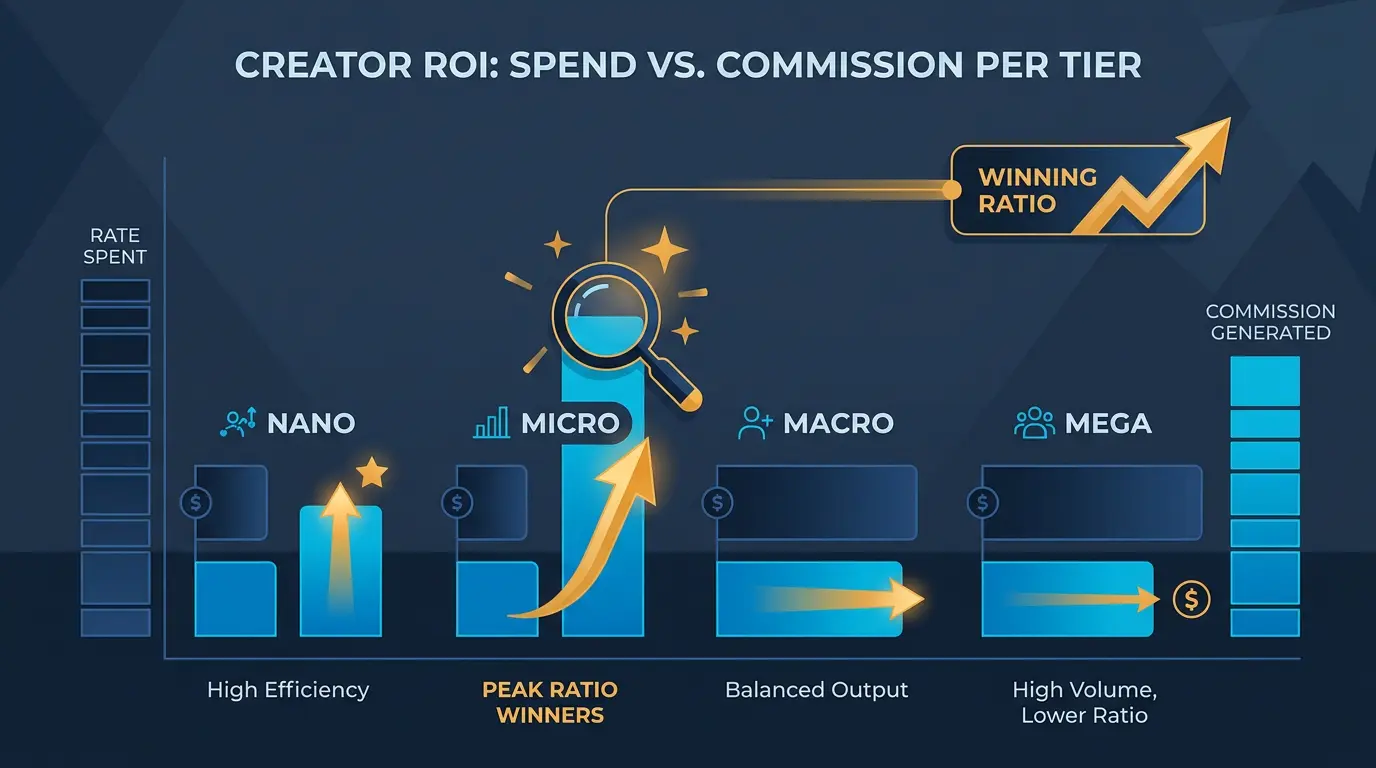
- Influencer marketing works for dating because it provides authentic social proof that ads can't replicate. Micro-influencers (10K-100K followers) deliver better engagement and ROI than macro-influencers for most dating platform launches.
- Budget $5,000-20,000 per micro-influencer campaign with expected CAC of $5-20 per user. Track unique promo codes and UTM parameters to measure actual ROI.
- Content types that convert best are honest reviews, personal success stories, educational tips, and relatable humor. Avoid overly promotional framing.
- Always disclose partnerships clearly with #ad or #sponsored tags. Non-compliance damages credibility and violates FTC regulations.
- Start with micro-influencer pilots (3-4 posts) to establish benchmarks, then scale with top performers. Expect 2-3 months of testing before you can optimize budget allocation.
- Combine influencer marketing with other channels (SEO, paid ads, email). Influencer campaigns are highest-ROI when they support broader brand positioning.
!Disclosure Requirements metrics and performance data for Influencer Marketing for Dating Apps and Sites *Disclosure Requirements metrics and performance data for Influencer Marketing for Dating Apps and Sites*
Cross-link to: Dating Site Launch Marketing Plan, User Acquisition Costs in Dating, How to Build a Dating Brand That People Trust
DatingPartners runs an influencer whitelist with compliant creative. Apply as brand or creator.
Visit DatingPartners.com →