
GDPR Basics for Dating Platforms
GDPR (General Data Protection Regulation) applies if your dating platform processes personal data of EU or UK residents. Most platforms do, which means GDPR compliance is non-negotiable.
Key principles:
- You need a lawful reason to process data
- Users must understand how their data is used
- You must minimize data collection
- Users have rights to access, correct, and delete their data
- Breaches must be reported to regulators
For dating platforms specifically, you're collecting and processing:
- Names and email addresses
- Profile information (interests, preferences)
- Location data (latitude, longitude)
- Photos (sensitive data under GDPR)
- Interaction data (messages, likes, views)
- Payment information (requiring compliance)
This is a lot of personal data, which means GDPR compliance requires careful attention. For EU dating site founders, see also legal requirements for dating startups.
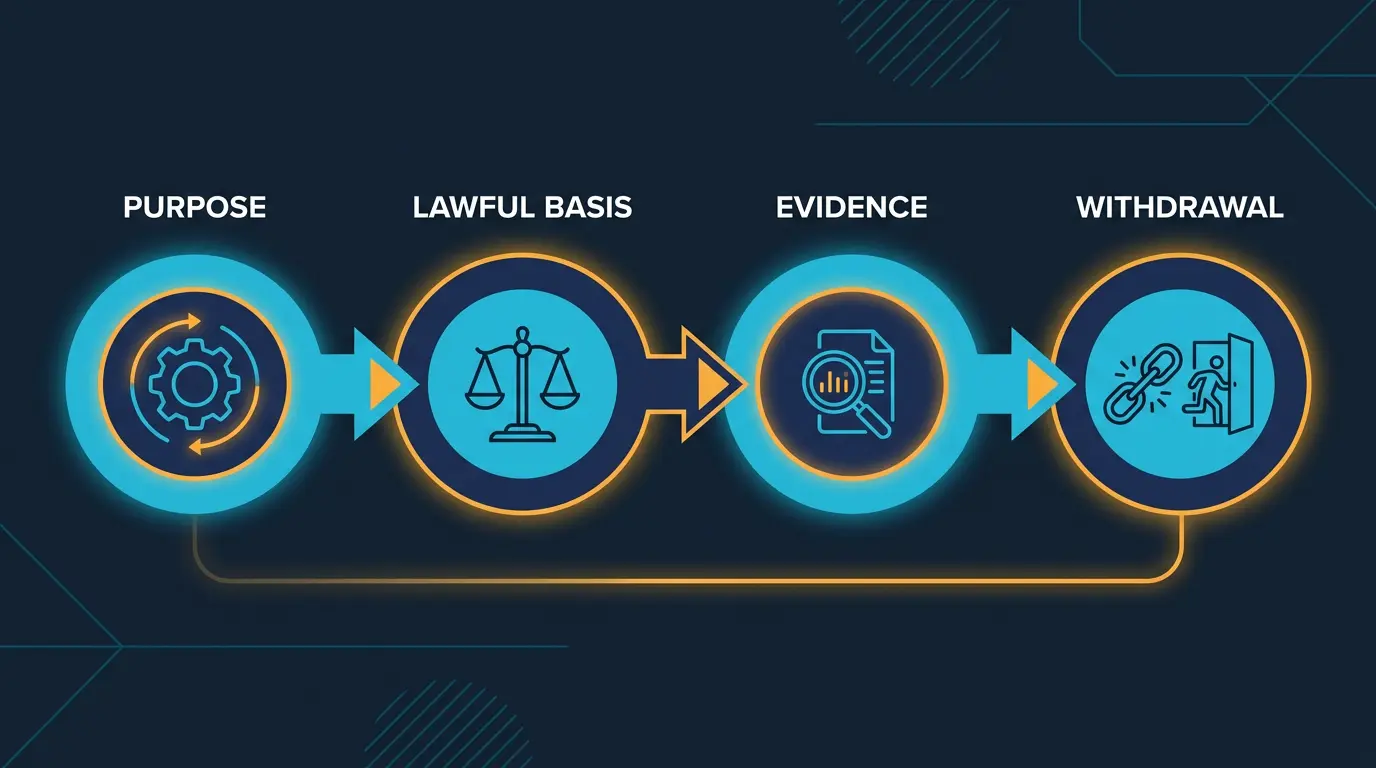
Lawful Basis for Processing
Before you collect any data, you need a lawful basis. GDPR lists six:
- Consent - User explicitly agrees
- Contract - Data processing is necessary to fulfill service
- Legal obligation - Law requires you to process it
- Vital interests - Protects someone's life
- Public task - You're performing a public duty
- Legitimate interest - You have a legitimate business reason that outweighs user privacy
Dating platforms typically rely on consent and contract.
Consent as Lawful Basis
Consent must be:
- Freely given - No coercion or pressure
- Specific - Clear what you're using data for
- Informed - Users understand the implications
- Unambiguous - Clear affirmative action (opt-in, not opt-out)
Bad consent examples:
- Pre-checked boxes (requires explicit opt-in)
- Vague terms like "improve your experience"
- Bundled with other terms
- Implied by signup
Good consent example: "I consent to WhiteLabelDating using my profile information to match me with other users and send personalized recommendations. I can withdraw this consent anytime in settings."
Contract as Lawful Basis
The contract is your Terms of Service. Data processing necessary to provide the dating service is lawful because users agreed to the contract. This covers:
- Processing profile information to create matchmaking
- Storing user data while account is active
- Processing payment information
- Logging activity for platform operation
However, contract doesn't cover everything. Using data for marketing or selling to third parties requires separate consent.
Legitimate Interest
You can process data based on legitimate interest (your business need outweighs privacy impact), but only if:
- You have a legitimate purpose (fraud prevention, safety)
- Processing is necessary for that purpose
- Privacy impact is balanced against your interest
Dating platforms commonly use this for:
- Fraud and scam detection
- Safety systems (blocking bad actors)
- Platform optimization and analytics
- Account security
But not for:
- Selling user data to advertisers
- Marketing to users who didn't opt in
- Behavioral profiling without consent
Which Basis to Use
| Data Type | Lawful Basis | Notes |
|---|---|---|
| Profile information | Contract | Needed to operate the dating service |
| Interaction history | Contract | Messages, matches, viewing history |
| Location data | Consent | Request explicit consent to use location features |
| Photos | Consent + Contract | Contract to use for matching, consent for advertising use |
| Payment information | Contract + Legal obligation | Contract for service, legal obligation for tax |
| Marketing communications | Consent | Explicit opt-in required, not opt-out |
| Fraud detection | Legitimate interest | Balance fraud prevention vs. privacy |
| Device fingerprinting | Consent | Usually requires explicit consent |
Consent and Opt-Ins
Consent Requirements
GDPR requires "affirmative consent" - users must actively opt in. Common mistakes:
Mistake 1: Pre-checked boxes ``` [ ] I agree to receive marketing emails ``` This is opt-out (negative consent). Bad under GDPR.
Correct approach: ``` [ ] I agree to receive marketing emails (unchecked by default) ``` User must check to opt in. Good under GDPR.
Mistake 2: Bundling consent "I agree to the Terms of Service (which includes marketing emails)"
This hides consent in larger terms. Bad under GDPR.
Correct approach: Separate checkboxes:
- [ ] I agree to the Terms of Service
- [ ] I consent to receive marketing emails
Mistake 3: Vague consent "I consent to personalized experiences"
What does "personalized" mean? Bad under GDPR.
Correct approach: "I consent to WhiteLabelDating analyzing my profile and interaction data to send personalized match recommendations."
What Needs Explicit Consent
Always require consent for:
- Marketing communications
- Third-party sharing (if you sell data)
- Profiling or behavioral analysis
- Cookie tracking (analytics, advertising)
- Location services
- Device fingerprinting
- Sensitive data usage (photos, interests)
Contract is sufficient for:
- Core profile data needed for matching
- Interaction data within the service
- Payment processing
Withdrawal of Consent
Users must be able to withdraw consent as easily as they gave it. Include in user settings:
- Unsubscribe from marketing (one click)
- Opt-out of data sharing
- Disable location services
- Delete profile photos
Track when users withdraw consent and stop processing immediately.
Data Minimization
GDPR requires you to collect only data necessary for your stated purpose. This is "data minimization."
What's Necessary vs. Nice-to-Have
Necessary for dating matching:
- User's name or username
- Age or date of birth
- Gender identity
- Sexual orientation (if relevant to platform)
- Location (city or region)
- Up to 5 photos
- Brief bio/description
- A few key interests
Nice-to-have (requires extra consent):
- Full browsing history
- Location history (map of where they move)
- Social media connections
- Phone number
- Relationship history
- Income information
- Political views
Should avoid collecting:
- Biometric data beyond facial recognition for ID (unless explicitly consensual)
- Medical data
- Criminal history
- Genetic data
- Religious or political affiliations (unless relevant and consensual)
Data Minimization Checklist
For each data field your platform collects, ask:
- Is this necessary to provide the dating service?
- Can we provide value without it?
- If not necessary, does user consent to collection?
- How long do we need to keep it?
- Can we collect a less invasive version (e.g., age range instead of exact DOB)?
Practical Example: Location Data
Bad approach: Collect exact GPS coordinates and store full location history.
Better approach: Collect city/region level location, use for matching, don't store history.
Best approach: Let users choose between:
- City-level location (low precision, better privacy)
- Neighborhood level (medium precision)
- Exact location (high precision, opt-in only)
Right to Erasure and Account Deletion
GDPR gives users the "right to be forgotten" - they can request deletion of their data. When a user requests deletion, you must:
!GDPR lawful basis framework showing six legal grounds for data processing *GDPR lawful basis framework showing six legal grounds for data processing*
- Delete their profile and all personal data
- Honor reasonable exceptions (legal obligations, fraud prevention)
- Complete deletion within 30 days (responding to request takes up to 30 days)
- Confirm deletion to the user
What Must Be Deleted
- Profile information
- Messages (though other users' copies don't have to be deleted)
- Photos
- Interaction history
- Location data
- Search history
- Device information
Reasonable Exceptions to Deletion
You don't have to delete everything if:
- Legal obligation - Tax records, payment records needed for accounting
- Fraud prevention - Keep record of confirmed scammers
- Public interest - Protecting others from harm
- Legitimate interest - Preventing abuse (but minimal data only)
For dating platforms, keep a minimal record of confirmed fraudsters and scammers for 2 years to prevent re-registration. Don't keep the full profile or messages.
Account Deletion Best Practices
Offer both options:
- Soft delete - Account deactivated but data retained for 30 days in case user changes mind
- Hard delete - All data permanently deleted immediately (irreversible)
Make hard delete available after a cooling-off period. Example flow:
- Day 1: User requests deletion
- Days 1-30: Account deactivated, data retained
- Day 31+: Permanent deletion option available
- User chooses permanent or reactivates
This balances user control with practical operations.
Data Protection Officer Requirements
GDPR requires a Data Protection Officer (DPO) if you:
- Are a public authority
- Process large amounts of sensitive data as core activity
- Conduct regular systematic monitoring of users
Most dating platforms don't need a DPO because you're not a public authority and monitoring users isn't your core activity (matching is).
However, if you're processing unusually large amounts of location data or profiling extensively, you might need one. Get legal advice specific to your platform.
Even without a DPO, appoint someone as your privacy lead. They should:
- Manage GDPR compliance
- Handle data requests
- Coordinate breach response
- Update privacy policies
- Train staff on data protection
Data Mapping and Inventory
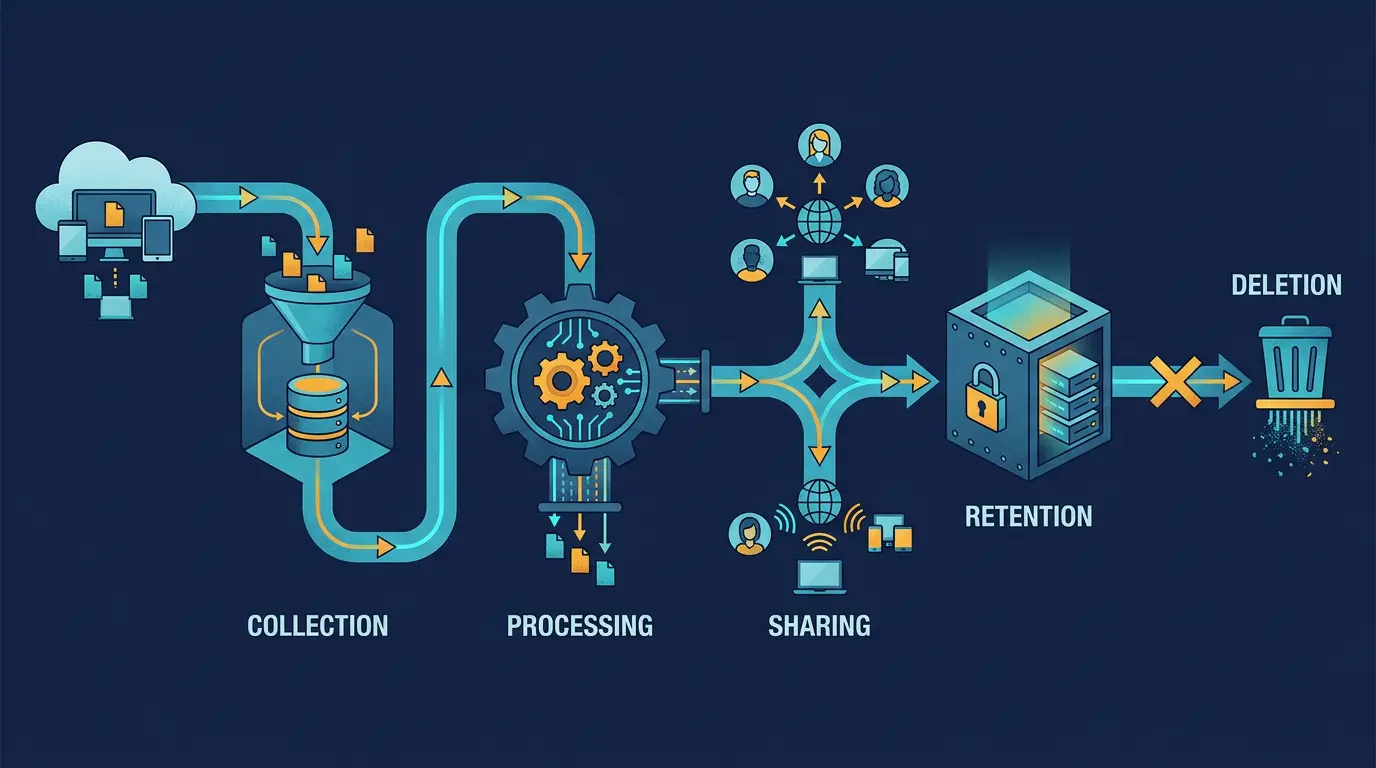
Create a "data map" documenting all personal data your platform processes.
What to Document
For each data category:
| Data Type | Why Collected | Lawful Basis | Retention Period | Who Has Access | Third Parties |
|---|---|---|---|---|---|
| Email address | Account creation, login | Contract | Active + 1 year | Support team | None |
| Age/DOB | Regulatory compliance, matching | Contract + Legal obligation | Active + 1 year | Match algorithm, support | Age verification provider |
| Profile photos | Display in matching | Consent + Contract | Active + 30 days after deletion | All members | Photo moderation service |
| Location data | Geographic matching | Consent | Active session only | Match algorithm | Payment processor (fraud) |
| Messages | Communication | Contract | Active + 90 days | Support (disputes) | None |
| Payment info | Billing | Legal obligation | 6 years (tax) | Finance team | Payment processor |
Retention Policies
Establish clear retention periods:
- Active data - Keep while account exists
- After deletion - Keep minimal data for fraud prevention (30-90 days)
- Legal requirement - Tax records (6 years), payment records
- Legitimate interest - Fraud prevention on identified scammers (2 years)
Document retention in your privacy policy so users understand what happens to data after account deletion.
Third-Party Data Sharing
Document all third parties who receive user data:
- Payment processors
- Age verification providers
- Content moderation services
- Analytics providers
- Customer support platforms
- Backup/storage providers
For each, establish a Data Processing Agreement (DPA) requiring:
- GDPR compliance from the vendor
- Limited use of data (only for specified purpose)
- Security measures
- Sub-processor notification
User Rights and Requests
Users have rights to their data. You must respond to requests within 30 days.
Right to Access
Users can request all their personal data. You must provide:
- Full data export in machine-readable format (CSV or JSON)
- Clear explanation of how data is used
- List of who has access to their data
Right to Rectification
Users can request correction of inaccurate data. Examples:
- Wrong age listed
- Incorrect location
- Outdated interests
Update records within 30 days and notify relevant third parties if data was shared.
Right to Erasure ("Right to Be Forgotten")
Already covered above. Users can request deletion.
Right to Restrict Processing
Users can request you stop using their data for certain purposes. Example:
- Stop using their location for matching
- Stop tracking activity
- Stop profiling for recommendations
You can still store data but can't use it for the restricted purpose.
Right to Data Portability
Users can request their data in standard format so they can move to another platform. Provide:
- Profile information
- Message history
- Photos
- Any other personal data
- In common format (CSV, JSON)
Right to Object
Users can object to processing. You must respect unless:
- You have a compelling legitimate interest
- Processing is for legal compliance
Rights Related to Automated Decision Making
If you use algorithms to make decisions about users (bans, recommendations, matching), users have rights to:
- Know when automated decisions are being made
- Understand the logic
- Request human review
Dating matching is generally not considered a "decision" requiring explanation unless it leads to consequences (account restrictions, bans).
Data Breach Notification
A data breach is unauthorized access to personal data. If you suffer a breach, you must:
- Assess impact (within 72 hours)
- What data was accessed?
- How many users affected?
- Severity of impact?
- Notify authority (if high risk)
- Report to Information Commissioner's Office (ICO)
- Explain what happened, how many users, what measures you've taken
- Notify users (if high risk)
- Email users if their data could cause harm
- Explain what happened, what you're doing, how to protect themselves
- Don't delay notification waiting for investigation to complete
What Counts as a Reportable Breach
- Unauthorized access to profiles
- Exposure of payment data
- Leak of photos
- Unauthorized access to messages
- Compromise of location data
Not reportable if:
- Data is encrypted and key wasn't compromised
- Access is brief and you detect no misuse
- You're confident data wasn't actually accessed
Breach Response Checklist
- [ ] Contain the breach (shut down affected systems)
- [ ] Preserve evidence
- [ ] Assess impact (which users, what data)
- [ ] Notify ICO within 72 hours if high risk
- [ ] Notify users (same time as ICO if risk is high)
- [ ] Document everything
- [ ] Investigate root cause
- [ ] Implement fixes
- [ ] Communicate with users on resolution
Key Takeaways
- GDPR applies to all dating platforms handling EU or UK user data. Non-compliance brings fines up to 20 million EUR or 4% of global revenue.
!Data mapping worksheet showing data types, retention periods, and third-party access *Data mapping worksheet showing data types, retention periods, and third-party access*
- You need a lawful basis for processing data. Dating platforms typically use contract (service agreement) and consent (explicit opt-in).
- Consent must be freely given, specific, informed, and unambiguous. Pre-checked boxes and vague terms don't meet GDPR standards.
- Collect only data necessary for your service. If data isn't necessary, require separate consent.
- Users have rights to access, correct, delete, restrict, and port their data. Respond within 30 days.
- Soft delete (deactivation) offers users a safety net, with hard delete after 30 days.
- Keep a data map documenting all personal data, why it's collected, how long it's retained, and who has access.
- Data Processing Agreements required with all third parties (payment processors, analytics, etc.).
- Data breaches must be reported to the ICO within 72 hours if they pose high risk. Users must be notified promptly.
- Privacy by design - consider privacy in system design and development, not as afterthought.
Cross-Links
- Identity Verification for Dating Sites: A Complete Guide
- PCI DSS for Dating Sites: Payment Security Requirements
- Content Moderation for Dating Sites: Tools and Strategies
DatingPartners supplies DPIA templates, ROPA and breach playbooks. Skip months of legal work.
Visit DatingPartners.com →