
Why Breach Response Matters
A data breach involving user data is a crisis. Dating platforms are especially vulnerable because they hold:
- Email addresses and phone numbers
- Photos and personal information
- Location data
- Sexual orientation and relationship preferences
- Payment information
- Private messages and communications
A breach can result in:
- Regulatory Fines: GDPR (4% of revenue), CCPA ($7,500), state laws
- Civil Liability: Class action lawsuits from users
- Reputational Damage: Users lose trust, switch platforms
- Legal Fees: Expensive investigations, notifications, legal defense
- Operational Costs: Crisis response, notifications, credit monitoring
- Regulatory Scrutiny: State AG investigations, audits
- Payment Processing Issues: Payment processors may terminate you
A well-executed response minimizes these impacts. A bungled response multiplies them.
Breach Detection
How Breaches Are Discovered
- Internal Monitoring: Your security systems detect unauthorized access
- User Reports: Users notice unusual activity or exposures
- Third-Party Reports: Security researchers, news organizations, competitors
- Regulatory Tip: Law enforcement or regulators notify you
- Dark Web Monitoring: Your data appears being sold on dark web
- Log Analysis: You discover logs of unauthorized access during audit
Early Warning Signs
Watch for:
- Unusual database access patterns
- Failed login attempts from multiple IPs
- Unexpected data exports or downloads
- Changes to user data without user action
- Server performance degradation
- Third-party reports of exposed data
Monitoring and Alerting
Best practices:
- Real-Time Alerts: Set up monitoring to alert on suspicious activity
- Log Aggregation: Centralize logs from all systems (servers, databases, APIs)
- SIEM System: Use security information and event management system (e.g., Splunk)
- Regular Audits: Weekly review of access logs and unusual activity
- Penetration Testing: Quarterly third-party security testing
Tools:
- AWS CloudTrail (if on AWS)
- Google Cloud Logging (if on Google Cloud)
- Splunk, Datadog, New Relic (third-party monitoring)
- Rapid7 Nexpose (vulnerability scanning)
Immediate Response (0-4 Hours)
When you detect a breach, the first 4 hours are critical.
Step 1: Activate Incident Response Team
Convene immediately:
- CEO/Founder: Overall decision making and communications
- Chief Security Officer (or equivalent): Technical response
- Legal Counsel: Regulatory and legal guidance
- Communications Lead: External communications
- Engineer/IT Lead: Technical investigation and containment
- Finance: Cost tracking and insurance claims
If you don't have these roles, assign people (CEO can wear multiple hats initially).
Step 2: Assess Severity
Determine:
- What data was accessed? Names, emails, passwords, payment info, location, messages, photos?
- How many users? 100? 10,000? 1 million?
- Is it ongoing? Is the breach still happening?
- Impact level? Sensitive data (location, sexuality, messages) = high impact
This determines your response level and timeline.
Step 3: Contain the Breach
Do NOT shut down the entire platform immediately unless the attacker is actively accessing it.
Initial containment:
- Disable Compromised Access: Revoke credentials and API keys if exposed
- Isolate Affected Systems: If database is compromised, isolate it from other systems
- Block Attacker IP: If you know the attacker's IP, block it
- Reset Passwords: For exposed accounts, reset all passwords
- Enable MFA: Force multi-factor authentication for all users
Step 4: Preserve Evidence
Do not delete logs or evidence. You'll need them for:
- Investigation
- Regulatory response
- Litigation defense
- Law enforcement cooperation
Preserve:
- Access logs
- Database backup (frozen at breach time)
- Application logs
- Server logs
- Network logs
- Code repositories (check for unauthorized changes)
Step 5: Notify Your Insurance
If you have cyber liability insurance (you should), notify them immediately.
Most policies require prompt notification (24-48 hours). Delay could void coverage.
Provide:
- Description of breach
- Data types affected
- Estimated number of users
- Preliminary timeline
Step 6: Consult Legal Counsel
Talk to your lawyer immediately. They'll advise on:
- Regulatory notification requirements
- Timing and content of notifications
- Privacy law requirements
- Litigation risks
- Public statements to avoid
Containment (4-48 Hours)
Identify the Root Cause
What happened? Understand the attack:
- Vulnerability: SQL injection, weak password, exposed API key, misconfigured database?
- Entry Point: How did the attacker get in?
- Timeline: When did the breach start? When was it discovered?
- Scope: What data was accessed?
Work with your security team and/or hire a forensic investigator to answer these questions.
Determine Scope
What data was exposed?
- Names: Yes/No
- Emails: Yes/No
- Phone numbers: Yes/No
- Passwords: Hashed or plain text?
- Payment info: Yes/No (if yes, credit cards or just transaction history?)
- Photos: Yes/No
- Messages: Yes/No (if yes, encrypted or plain text?)
- Location: Yes/No
- User preferences: Yes/No
The more sensitive the data, the more aggressive your response needs to be.
Timeline
Document:
- When was the breach first possible? (e.g., if vulnerability existed)
- When did the attacker likely access data?
- When was the breach discovered?
- When was containment completed?
This timeline is critical for notifications (you must notify "without undue delay").
Stop the Bleeding
Immediate operational steps:
- Patch Vulnerability: Fix whatever vulnerability was exploited
- Reset All Credentials: Force password resets for all users
- Revoke Tokens: All API keys, authentication tokens, sessions
- Rotate Secrets: All database passwords, API credentials, encryption keys
- Enable MFA: Force multi-factor authentication for all users
- Monitor for Exfiltration: Check dark web and data broker sites for your data
- Monitor for Secondary Attacks: Compromised data may be used for phishing or fraud
Full System Assessment
Have a security expert (internal or external) assess:
- How did this happen?
- What other vulnerabilities exist?
- Are there backdoors or persistence mechanisms?
- Is the attacker still in your systems?
This may require hiring a forensic firm ($20k-100k+).
Testing
Before bringing systems back online:
- Vulnerability Scan: Scan for remaining vulnerabilities
- Code Review: Review changed code for backdoors
- Penetration Test: Full pentest to find other vulnerabilities
- Configuration Review: Check security settings and access controls
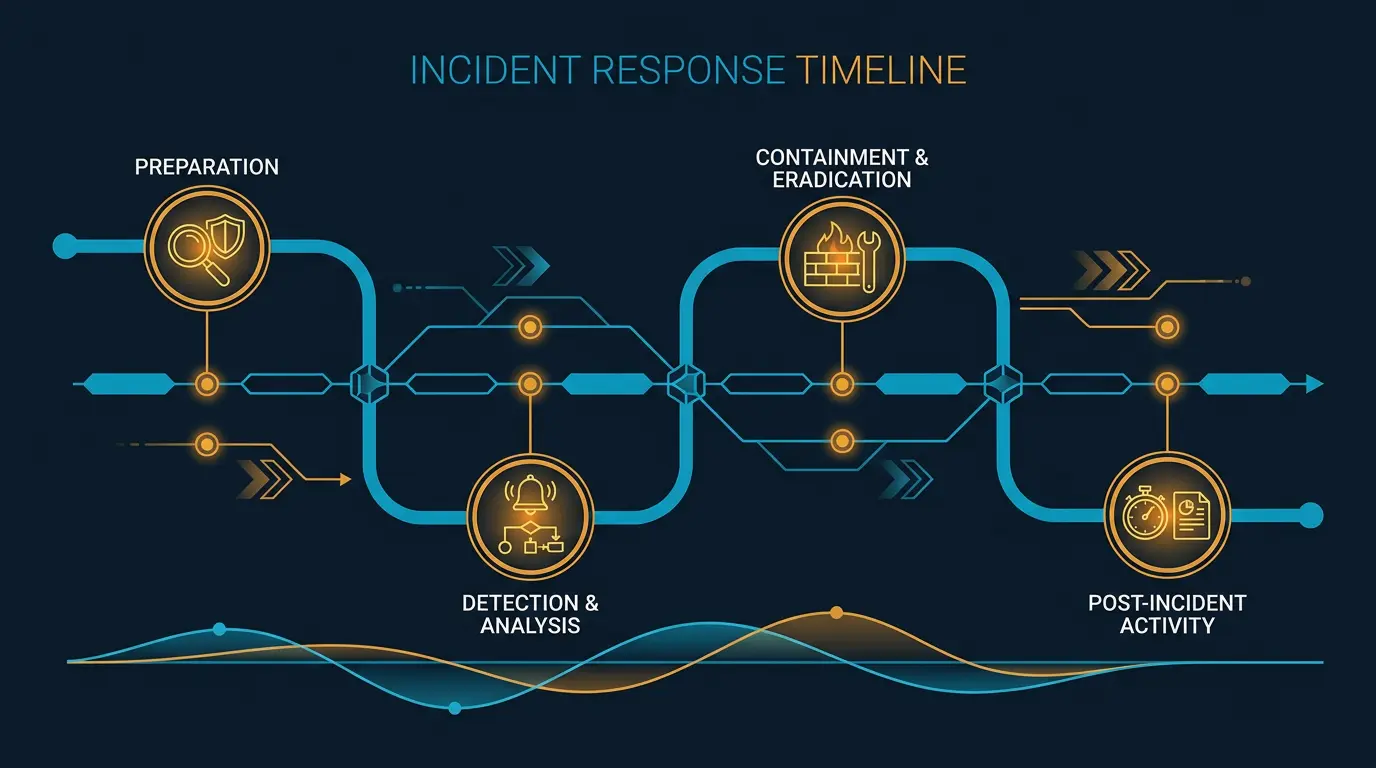
Investigation (48 Hours-2 Weeks)
Full Forensic Investigation
Conduct a thorough investigation:
- Timeline: Detailed timeline of the breach
- Evidence: Preserve and document all evidence
- Scope: Exact data exposed
- Intent: Was this random, targeted, or opportunistic?
- Attacker: Who did this? (may be impossible to determine)
Engage External Experts
If this is serious, hire:
- Forensic Investigator: To determine what happened
- Legal Counsel: To guide legal response
- PR Firm: To manage communication
- Incident Response Firm: To help coordinate response
Expect to spend $50k-500k+ on external help for a serious breach.
Deep Dive Analysis
Answer these questions:
- How did they get in? Exploit a vulnerability? Weak password? Stolen credentials?
- How long were they in? Hours? Days? Months?
- What did they access? Database tables? Application logs? Source code?
- Did they modify anything? Or just read data?
- Did they exfiltrate data? Download it somewhere?
- Are they still in? Or have they left?
Document Everything
Create an investigation report that includes:
- Summary of findings
- Root cause analysis
- Timeline of events
- Data exposed
- Impact assessment
- Remediation steps taken
- Recommendations for preventing future breaches
This report will be reviewed by:
- Regulators
- Law enforcement (possibly)
- Your insurance company
- Plaintiffs' attorneys (if lawsuit)
Be thorough and honest.
Notification (72 Hours GDPR, 45 Days CCPA)
Notification Timeline
Notification requirements vary:
- GDPR: Notify "without undue delay" and within 72 hours of discovery (if risk of harm)
- CCPA: Notify without unreasonable delay (typically 30-60 days)
- Most states: Notify "without unreasonable delay" (typically 30-45 days)
72 hours is tight. You need to:
- Determine scope (what data)
- Determine affected users (how many)
- Draft notification
- Get legal approval
- Send notification
Start the notification process within 24 hours to meet 72-hour deadline.
Who to Notify
- Affected Users: All users whose data was exposed
- Regulatory Authorities: State AG, data protection authorities (GDPR), others as required
- Credit Bureaus: If payment data was exposed
- Major News Media: If over 250 users affected (varies by state)
- Law Enforcement: If illegal activity occurred
What to Include in Notification
At minimum:
- What Happened: Brief description of the breach
- When: Date the breach occurred and date discovered
- What Data: Specific types of data exposed
- Who's Affected: How many users (can be approximate)
- What You're Doing: Remediation steps and timeline
- What Users Should Do: Recommended actions (monitor credit, change passwords)
- Resources: Credit monitoring (often you pay), support phone number
- Apology: Express concern and commitment to security
Example Notification Template
"We are writing to inform you that [Company] has discovered a security incident affecting your account. On [date], unauthorized individuals gained access to [description of data]. This incident may have exposed [what data]. We discovered this on [date] and have contained the breach.
What We're Doing:
- We have patched the vulnerability that allowed this breach
- We are conducting a thorough investigation
- We have engaged forensic experts to determine the scope
- We are monitoring for any misuse of exposed data
What You Should Do:
- Change your password on our platform and any other sites using the same password
- Monitor your credit report and financial accounts for fraudulent activity
- Consider placing a fraud alert on your credit report
We Are Providing:
- 24 months of free credit monitoring and identity theft protection
- Support at [phone number] or [email]
- Regular updates on our investigation at [URL]
We sincerely apologize for this incident and for any inconvenience or concern it causes."
Credit Monitoring and Identity Protection
For breaches involving payment data or personal information, offer:
- Free credit monitoring for 2-3 years
- Credit freeze (if offered)
- Identity theft protection
- Legal support if identity theft occurs
Cost: Depends on number of users and duration.
- 10,000 users, 2 years: $20k-50k
- 1 million users, 2 years: $500k-2 million
Your insurance may cover these costs.
Notification Method
Notify via:
- Direct Email: Most reliable, includes notification evidence
- In-App Notification: Users who log in will see it
- Phone Call: For high-value accounts or serious breaches (expensive)
- Postal Mail: Required by some states, expensive but formal
- Website Notice: Display on homepage
Combine methods. Email is most important.
Regulatory Notification
Submit regulatory notifications to:
- State Attorneys General: All states where users live
- Federal Trade Commission (FTC): If serious breach (they don't regulate but create precedent)
- Data Protection Authority (DPA): If EU users (GDPR)
- State Data Protection Authorities: If state has one
Regulatory notification often has specific forms and requirements. Consult your lawyer.
Communication Strategy
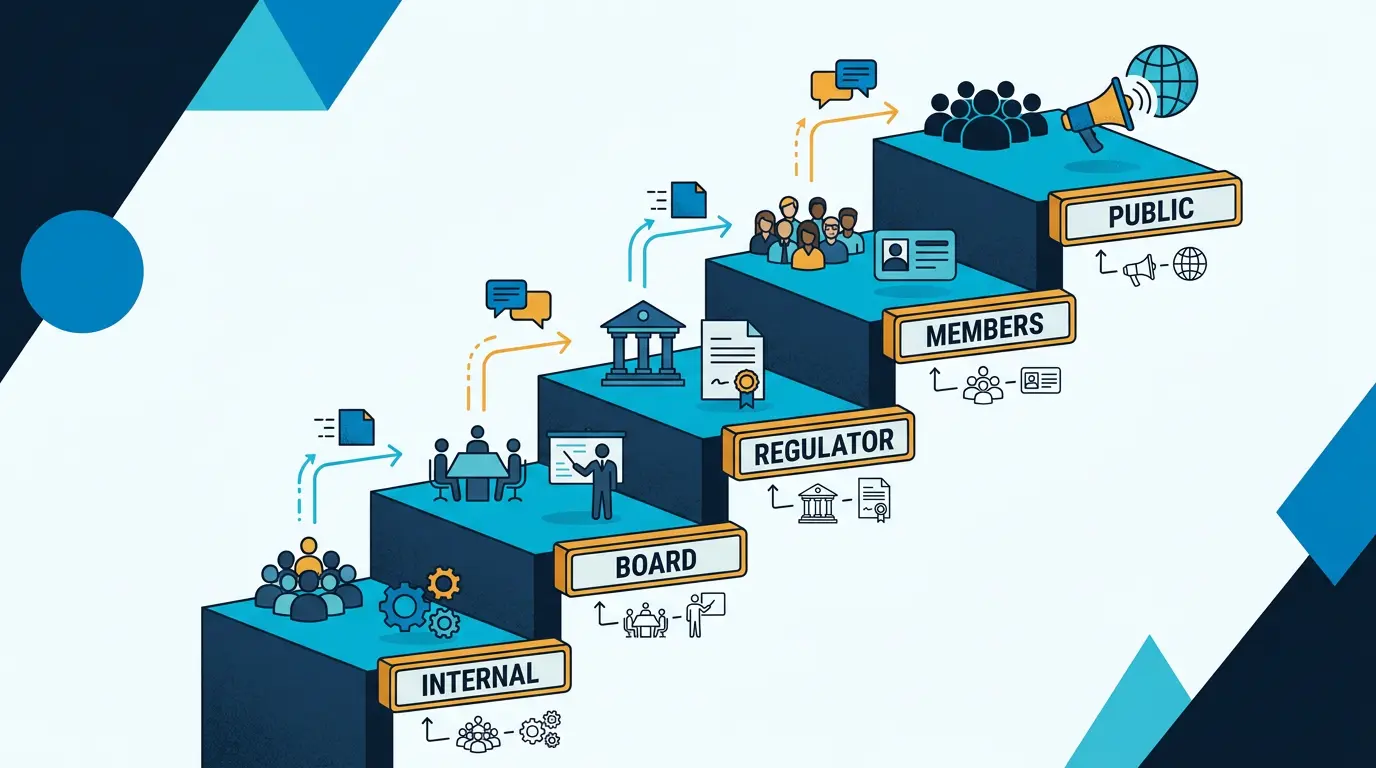
Internal Communications
Be honest with staff:
!Data breach response timeline and escalation procedures *Data breach response timeline and escalation procedures*
- What Happened: Brief, factual description
- Timeline: When was it discovered, what's being done
- User Impact: What data was exposed
- Your Response: What you're doing
- Staff Role: What they should do (don't discuss externally, support customers, etc.)
Keep internal communications separate from external. Staff should not speak publicly about the breach.
External Communications
Be prepared for:
- User Inquiries: Support will get flooded. Set up dedicated line
- Media Requests: Don't comment; have PR firm handle
- Regulatory Requests: Respond through legal counsel
- Investor Concerns: CEO may need to communicate
Public Statement
Consider a short public statement:
"We have discovered a security incident affecting user data. We have contained the incident and are investigating. We are notifying affected users and regulators. Our full commitment is to our users' security and privacy."
That's it. Don't elaborate publicly. Lawyers and investigators will determine what actually happened.
Avoiding Statements That Hurt You
Don't say:
- "This is unprecedented" (every breach is someone's fault)
- "We had no idea this was possible" (shows negligence)
- "Users should have used stronger passwords" (victim blaming)
- "This was a highly sophisticated attack" (often not true, admits low security)
- Specific technical details (helps attackers, suggests negligence)
Do say:
- "We discovered a security incident"
- "We are investigating"
- "We are taking steps to prevent this in the future"
- "We are committed to user security"
Transparency vs. Liability
Balance transparency with legal protection:
- Honest: Tell users what happened
- Careful: Don't admit liability ("We failed to protect you")
- Forward-Looking: Focus on what you're doing to fix it
Your lawyer will help with this balance.
Legal and Regulatory
Regulatory Response
Prepare for:
- State Attorney General Inquiry: They'll want to know what happened
- Data Protection Authority: If EU (GDPR)
- Law Enforcement: If criminal activity
- Customer Lawsuits: Class action likely if serious breach
Liability Exposure
Potential liabilities:
- Negligence: Failed to implement reasonable security
- Breach of Contract: Violated your TOS/Privacy Policy
- Breach of Fiduciary Duty: For data controllers
- Statutory Liability: GDPR fines, CCPA fines, state law fines
- Emotional Distress: For serious breaches with sensitive data
Insurance Claims
File with your cyber liability insurance:
- Document the breach
- Document costs (investigation, notification, credit monitoring)
- Follow insurance procedures
- Provide all requested information
- Request coverage determination
Expected costs covered:
- Forensic investigation
- Notification costs
- Credit monitoring
- Legal fees
- PR/crisis management
Post-Breach Recovery
Immediate (1-4 Weeks)
- Patch Vulnerabilities: Fix what caused the breach
- Reset Credentials: All passwords, keys, tokens
- Security Audit: Full assessment of remaining vulnerabilities
- Communication: Keep users updated on investigation
- Monitoring: Watch for misuse of exposed data
Short-Term (1-3 Months)
- Security Improvements: Implement new security measures
- Penetration Testing: Verify vulnerabilities are fixed
- Staff Training: Security training for all staff
- Incident Response Plan: Create/improve your response playbook
- Insurance Review: Ensure adequate coverage
Medium-Term (3-12 Months)
- Security Certification: Consider SOC 2 Type II or ISO 27001
- Third-Party Audit: Regular security audits
- Monitoring: Ongoing dark web monitoring
- Updates: Keep software, frameworks, libraries updated
- Culture: Foster security-first culture
Trust Rebuilding
Users will lose trust. Rebuild it:
- Transparency: Publish what you learned and how you're fixing it
- Improvements: Publicly announce security upgrades
- Communication: Regular updates on security measures
- Trust Signals: Add SSL badges, security certifications
- Support: Exceptional customer service to affected users
Pre-Breach Preparation
Before Breach Occurs
Prepare now:
- Incident Response Team: Identify who will respond
- Incident Response Plan: Document the process
- Contact List: Lawyers, forensic firms, PR firms, insurance agent
- Communication Templates: Draft notification letter, public statement
- Monitoring Systems: Deploy tools to detect breaches early
Security Baseline
Before a breach can happen:
- Secure Code: Code reviews, static analysis, dependency scanning
- Infrastructure Security: Firewalls, VPCs, access controls
- Data Protection: Encryption at rest and in transit
- Access Controls: Least privilege, MFA, logging
- Vulnerability Management: Regular scanning and patching
- Employee Security: Background checks, security training, NDAs
- Vendor Management: Vet vendors, contracts require security
Insurance
Get cyber liability insurance covering:
- Breach investigation costs
- Notification costs
- Credit monitoring
- Legal fees
- PR and crisis management
- Regulatory fines (if available)
- Cyber extortion
Cost: $5k-50k/year depending on size
Crisis Communication Plan
Pre-draft:
- Internal memo (to staff)
- Customer notification letter
- Public statement
- Media response
- Regulatory response
Key Takeaways
- Prepare before a breach occurs: incident response plan, contact list, monitoring systems
- Detect breaches quickly through monitoring and alerts
- Activate incident response team immediately
- Contain the breach within 4 hours (disable access, isolate systems, reset credentials)
- Investigate thoroughly to determine scope and root cause
- Notify users, regulators, and authorities within 72 hours (GDPR) or 30-60 days (most states)
- Offer credit monitoring and support for serious breaches
- Communicate honestly but carefully with users and media
- Engage external experts (forensics, legal, PR) for serious breaches
- File insurance claims to cover costs
- Post-breach, focus on rebuilding trust through security improvements and transparency
Cross-link to: Dating Site Privacy Policy, PCI-DSS Compliance, GDPR Compliance for Dating
- A well-executed response can minimize damage; a poor response multiplies it
- Have cyber liability insurance to cover costs
- Practice your incident response plan regularly
A data breach is a crisis, but it's manageable with a plan. Prepare now, respond quickly, and communicate honestly when it happens.
DatingPartners incident playbook, templates and response team ready. Don't improvise.
Visit DatingPartners.com →