
What White Label Dating Actually Is
Let's start with a straightforward definition. dating is a pre-built dating platform that another company operates and maintains for you. You get the fully functional software - profiles, matching algorithms, messaging, payment processing, admin tools, everything - but you rebrand it completely. It becomes your dating site.
The term "white label" comes from the retail world. If you've ever bought a generic product with someone else's label slapped on it, that's the basic concept. The underlying product is the same, but customers see your brand.
In dating specifically, this means you're not paying a developer to build a matching system from scratch. You're not inventing profile features or messaging architecture. Someone else has already done all that work. You're licensing access to their platform, customizing the look and feel to match your brand, and launching it.
The dating sites you see online fall into roughly three buckets: giant platforms with massive development teams like Match Group, custom-built sites developed by entrepreneurs or agencies, and white label sites operated by people like you. More sites fall into that third bucket than you'd expect. The white label model has become incredibly popular because it actually works.
Here's the key thing to understand - the person operating the white label site doesn't need to be a programmer. You don't need to understand code. You need to understand dating, understand your niche market, and understand how to market and operate a business. The technology part is handled.
How White Label Dating Works Technically
Understanding the mechanics helps you evaluate whether white label is right for you.
When you sign up with a white label provider, they give you access to an admin dashboard. This dashboard is where you control everything about your site - without touching a single line of code.
You upload your logo and color scheme. The entire site instantly reflects your branding. You set your matching algorithm - whether users see potential matches based on interests, location, age preferences, or whatever criteria matter in your niche. You create your own terms of service. You set pricing. You decide what features are active on your site and which are disabled.
The white label provider maintains the core technology on their servers. When someone joins your dating site, their data is stored on their servers. They handle the database, the hosting, the uptime, the security patches. If there's a bug in the matching algorithm, they fix it for everyone at once, and you benefit automatically.
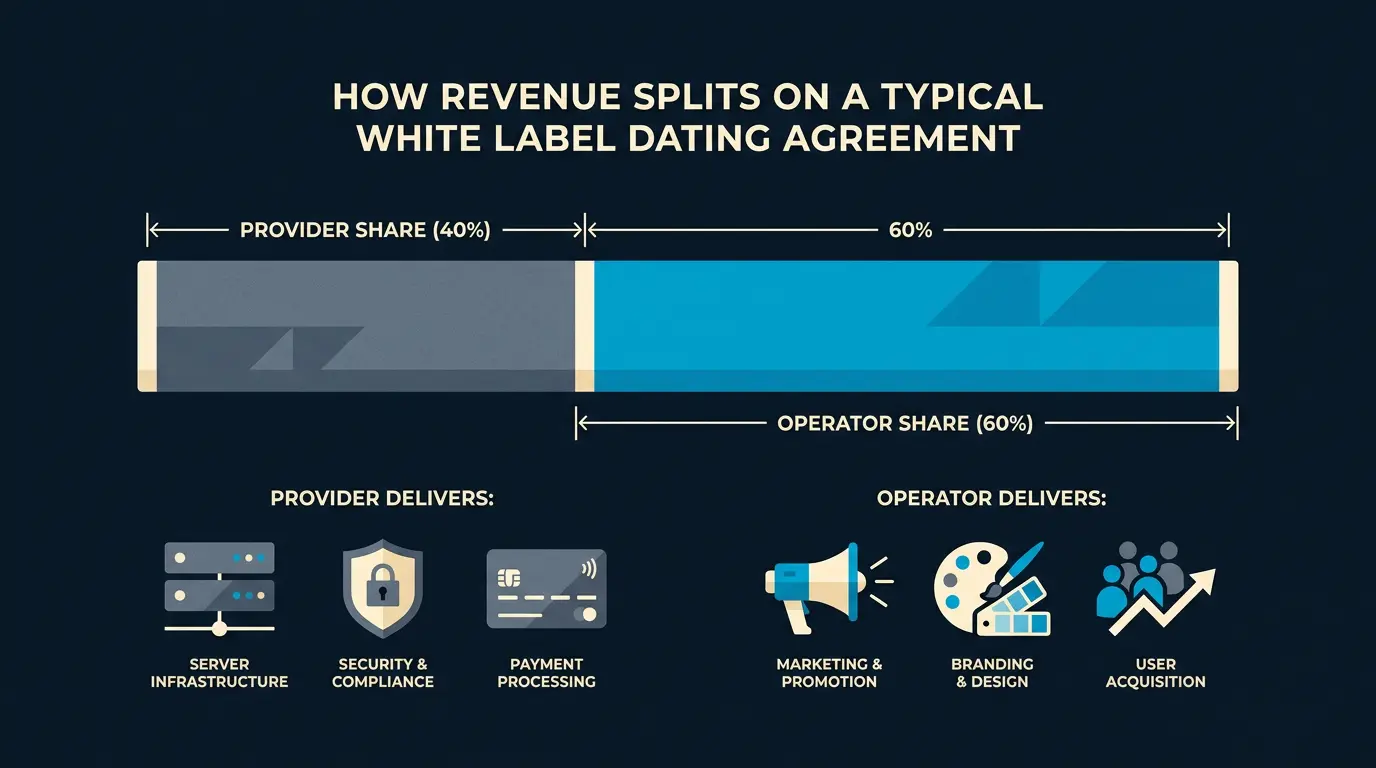
Payment processing works like this: users pay through your branded checkout. The money goes into your account. The white label provider takes their cut (typically 20-40% of revenue, though this varies), and you keep the rest.
Here's what's important - the fact that the infrastructure is shared doesn't mean the sites look the same. Users visiting your site have no idea it's running on someone else's platform. They see your branding, your rules, your messaging. It's your site in every way that matters.
The technical setup typically involves a few custom integrations. You might connect your own domain to their platform. You might integrate your email service so you can send branded communications. Some operators connect analytics tools to track user behavior. The white label provider handles all of this through their dashboard - no developers required.
Updates are automatic. When the white label company releases new features, your site gets them. Better matching algorithms, new profile fields, improved mobile experience - you get them without doing anything.
This is both an advantage and something to understand. You're getting continuous product improvement without investment, but you're not directing that development. If the white label provider adds a feature you don't want, you sometimes can't disable it. If they remove something you rely on, you have to adapt.
Who Uses White Label Dating and Why
The white label model attracts different types of operators for different reasons.
Dating entrepreneurs are the most obvious users. These are people with dating market expertise - maybe they ran a niche dating community, have connections in a specific demographic, or understand what a particular type of dater actually wants. They know dating but don't know software development. White label lets them start immediately without learning to code or hiring expensive developers. If you're targeting a specific niche, our guides on starting niche dating sites can help you understand how to position your platform.
Affiliate marketers and traffic operators often run white label sites. They have tons of website traffic from various sources and want to monetize it beyond ads. They'll set up a white label dating site, funnel their traffic into it, and collect revenue from their dating users. They might operate multiple white label sites in different niches simultaneously.
Media companies and lifestyle brands use white label dating to extend their offerings. If you run a men's magazine, a women's community, or a lifestyle blog with engaged readers, white label dating is a natural adjacent business. Your audience already trusts your brand. A dating site naturally extends that relationship.
Niche community operators are a big category too. If you run a community site for single parents, or a forum for outdoor enthusiasts, or a professional network in a specific industry - white label dating lets you offer a dating product to your existing audience without the development burden.
International operators often choose white label because they want to launch in a new market quickly. If you operate dating sites in three countries and want to enter a fourth, white label gets you live faster than custom development.
Private equity and larger operators sometimes use white label for portfolio companies or smaller vertical plays while reserving custom development for their flagship properties.
The common thread is always the same: you have something valuable (traffic, audience, brand, market knowledge) and you want to add a dating product without the complexity of building technology from scratch.
Major White Label Providers in the Market
Several companies dominate the white label dating space. Understanding who they are helps you evaluate your options.
DatingPartners.com is one of the largest. They've been in the space for years and operate dozens of white label sites across different niches - from mainstream dating to niche-specific platforms. They offer significant customization and have a reputation for reliability.
White Label Dynamics (and similar providers) focus on the dating app space, offering white label apps for iOS and Android. They handle the app store submissions and updates.
Platform-specific providers include companies that specialize in certain types of dating - like international dating platforms or hookup-focused sites. These often have specialized matching algorithms and communities designed for specific dating styles.
Smaller regional providers operate in specific countries or languages, offering white label solutions with local payment processing and compliance already built in.
When evaluating providers, look for: how long they've been operating (longevity matters), how many live sites they operate (if it's zero or two, that's a red flag), what their customer support looks like, whether they have case studies or references, and what their financial stability appears to be. A white label provider going out of business is your worst case scenario.
You should also review their pricing transparency. Some charge monthly platform fees plus revenue share. Some charge just revenue share. Some have setup fees or integration costs. Get it in writing and understand exactly how much of your revenue you'll be paying them.
Advantages Over Building Your Own
The case for white label comes down to speed, cost, and risk.
!White label platform technical architecture diagram showing server infrastructure, user data flow, and provider backend *How white label dating platforms work: shared infrastructure maintained by the provider, your branded user interface*
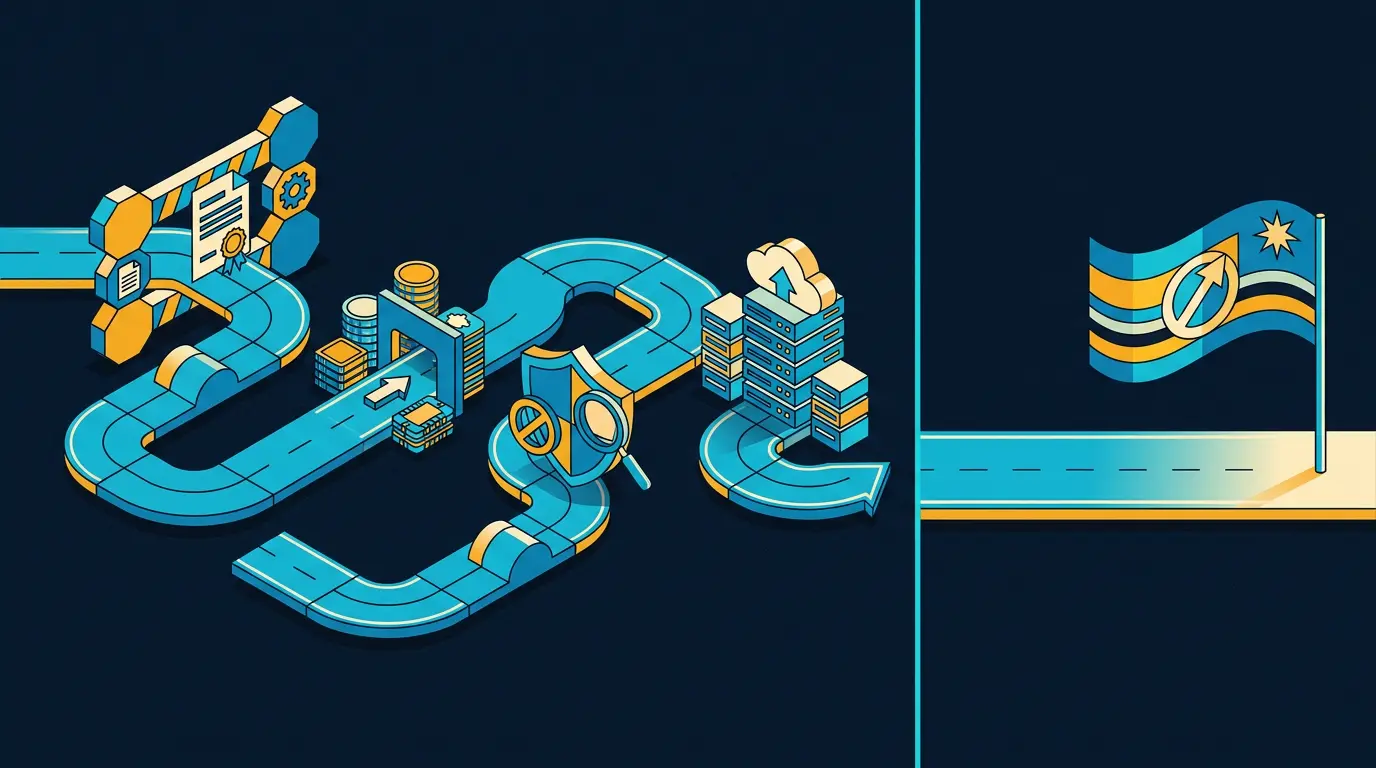
Speed to market is massive. A custom dating site built from scratch takes six months to two years. White label takes weeks. You can be operational and acquiring users in a month or two. In competitive niches, speed is money. Launching fast lets you establish market position before competitors.
Development cost is the most obvious advantage. A custom dating site costs $50,000 to $500,000+ depending on features and quality. You need to hire developers, pay them for months, manage the project. White label platforms cost a fraction of that - typically $5,000 to $15,000 in setup fees plus monthly recurring costs.
Technical risk is eliminated. When you build custom, you're betting that your developers can actually build what you envision. Dating platforms are technically complex - user matching, real-time messaging, payment integration, security. You need experienced developers. With white label, the technology is proven. Thousands of sites run on these platforms. The technical risk is gone.
Ongoing maintenance is someone else's problem. Your developers need to maintain the code, fix bugs, handle security updates, optimize performance. With white label, the provider does all of this. You just pay them.
Feature updates come automatically. That new matching algorithm or improved mobile interface - you get it without paying extra. Compare that to custom development where every feature costs money and takes time.
Compliance and security are built in. Dating sites handle sensitive personal data and payment information. They need strong security and compliance with regulations like GDPR, CCPA, and others. White label providers invest heavily in this. You get their institutional knowledge and compliance infrastructure without building it yourself. For specific guidance on dating site legal requirements, see our article on dating site legal requirements.
Focus on what you're good at. If you're a marketing expert or community builder or niche expert, white label lets you focus there. You're not managing developers or worrying about server uptime. You're doing business development and operations - the things you actually understand.
Scalability without extra investment. White label platforms are built to handle growth. As you acquire more users, the platform scales without you having to architect database solutions or invest in additional servers.
The disadvantage is that you don't own the underlying code and you're somewhat dependent on the provider's roadmap. But for most people starting out, those are acceptable tradeoffs for the advantages you get.
The Cost Structure Explained
Understanding white label pricing is essential before you commit.
There are several pricing models in the industry.
Monthly platform fee plus revenue share is common. You might pay $500-2,000 per month for access to the platform, plus the provider takes 20-40% of your dating revenue. This model is predictable - you know your minimum monthly cost - but it also means the provider is highly motivated for you to succeed because they make more when you make more.
Revenue share only means you pay nothing upfront, but the provider takes 25-50% of revenue. This is attractive if you're bootstrapping and cash is tight. The downside is that you've got less revenue to work with if you do manage to grow.
Tiered pricing means your percentage decreases as you grow. You might pay 40% until you hit $10,000 revenue monthly, then 30% thereafter. This incentivizes growth since your margin improves as you scale.
Custom arrangements with larger operators. If you're committing to a long-term partnership or operating at significant scale, you might negotiate terms.
Most white label providers also charge setup fees - anywhere from $2,000 to $10,000 depending on the level of customization you need. Some charge for additional integrations beyond standard.
Payment processing fees are additional. When someone subscribes on your site, there's a payment processing fee (typically 2-3%) that comes out before you and the white label provider split the remainder. Understanding these payment mechanics is crucial - we go deeper into this in our articles on payment processors for dating sites and how much you can earn running a dating site.
Let's model a realistic scenario. You operate a white label site with 500 paying subscribers at $9.99/month.
- Monthly revenue: $4,995
- Payment processing (2.5%): -$125
- Net revenue: $4,870
- White label provider (30% revenue share): -$1,461
- Your gross revenue: $3,409
That's your money before marketing, operational costs, or taxes. It's enough for a solo operator to build toward something bigger, but you need to understand the math upfront.
High-volume operators obviously do better with better pricing. If you're running at $100,000 revenue monthly, you'd have negotiating leverage to reduce that percentage.
What You Actually Own and Control
This is important to understand. When you operate a white label site, what's actually yours?
You own: Your brand, your customer relationships, your domain, your reputation, your data exports, your marketing assets, and your revenue. You own the userbase you build. You control how you market and what positioning you take.
You don't own: The underlying code, the platform architecture, the database infrastructure, or the matching algorithm. You're licensing these, not buying them.
You can transfer: Your branding and most of your customizations can often be migrated to a different white label provider or to a custom build if you decide to move. Your users can typically be exported (though this varies by provider).
You can't do: You can't modify the core code. You can't redesign the matching algorithm on your own. You can't remove the provider's brand entirely in some cases - there might be a small attribution line somewhere. You can't access the underlying database directly.
The practical question most people have is: what happens if the white label provider goes out of business or discontinues service?
This is a real risk, though it's rare with established providers. Good white label contracts include data export provisions and transition periods. You should be able to get all your user data and migrate your users somewhere. It's not ideal - you'd have downtime and your users might have to re-register - but you won't be completely stranded.
This is why checking the provider's stability and asking for references from long-term customers is important. You're betting your business on their continued operation.
Is White Label Dating Right for You?
Let's be concrete about who should and shouldn't pursue white label.
White label makes sense if:
- You have dating market expertise or a specific niche audience you understand well
- You have traffic or a community to promote your site to
- You want to launch quickly and start acquiring users and revenue
- You don't have $100,000+ to invest in custom development
- You don't need complete control over every technical detail
- You're comfortable with a business model where you're licensing rather than owning the platform
White label might not be right if:
- Your niche requires highly customized matching algorithms that a general platform won't support well
- You need complete technical control and plan to modify the core platform significantly
- You plan to build a massive global platform and want to own the technology to scale infinitely
- You're not confident in your ability to market and acquire users effectively
- You view technology as your primary competitive advantage
The key honest question: do you have something valuable outside the technology? Do you have users, traffic, brand, community, or market expertise? If yes, white label is probably a smart move. If you're thinking "I'll build a site and hope it succeeds," white label or not, you need the first part - users or traffic to acquire them - or you're going to struggle regardless of your platform.
Common Misconceptions About White Label
Let me clear up some confusion people have about white label dating.
!Pricing comparison chart showing revenue share vs monthly fee models with profitability curves at different user scales *White label pricing models compared: understanding how revenue splits affect your margins at different scales*
Misconception: "It's not really my business if I don't own the code."
Reality: Plenty of successful businesses operate on licensed platforms. Restaurants license recipes and operational systems. Most affiliate marketers don't own the underlying technology of what they promote. What matters is that it's your brand, your rules, your users, and your revenue. That's your business.
Misconception: "My site will look exactly like everyone else's."
Reality: Customization is extensive. Your site will look completely different from other white label sites once you brand it. Users won't know it's white label unless you tell them.
Misconception: "I have no control over my site."
Reality: You control everything business-related. You set rules, pricing, features that are active, matching criteria, content policy. You control how users experience your site.
Misconception: "I'm getting a cheap knockoff solution."
Reality: Most white label providers power sites with thousands of active users and millions in annual revenue. The technology is legitimate and has been battle-tested.
Misconception: "I'll get rich quick with a white label dating site."
Reality: Building any successful dating business requires work. You need to acquire users, retain them, operate well. White label handles the technology but not the marketing and operations. Expect it to take months to build real traction.
Misconception: "White label is only for people who can't code."
Reality: Some technical founders choose white label to focus on business rather than technology. White label isn't a mark of inability - it's a strategic choice.
Getting Started: Next Steps
If white label dating seems like the right fit, here's what comes next.
Step 1: Identify your niche and validate demand. Who are you building for? What type of dating experience do they want? Before evaluating white label providers, be clear on this. Check our guide on most profitable dating niches for detailed analysis.
Step 2: Research white label providers. Get on calls with 3-5 providers. Ask about their platform features, their customer support, case studies from existing operators, and their pricing. Don't commit to the first one. Our article on how to choose a white label dating provider covers the key evaluation criteria.
Step 3: Understand the financial model. Model out the revenue split, monthly fees, and how much you need to acquire to break even. Check out our cost to start a dating site guide for detailed breakdown. You should also review dating site revenue models to understand what revenue options are available to you.
Step 4: Plan your go-to-market. How will you acquire your first 100 users? Do you have traffic, a community, or marketing skills? This is more important than the platform choice. Visit our comprehensive guide on how to start a dating business for practical acquisition strategies and marketing tactics.
Step 5: Handle legal and compliance. Even on white label, you need your own terms of service, privacy policy, and age verification. Review our guide on dating site legal requirements.
Step 6: Choose and sign up with a provider. Once you've done your homework, pick the provider that best fits your niche and budget. Start the onboarding process.
The actual launch comes fast once you sign up - typically 2-4 weeks from signing the contract to live site. But the prep work before that is critical.
Key Takeaways
- White label dating is a pre-built platform you license, brand, and operate as your own business
- The model eliminates technology and development risk while getting you to market in weeks instead of months
- You own your brand, users, revenue, and business relationships - what matters for your business
- Major providers like DatingPartners.com operate dozens of successful sites across different niches
- Cost structure varies but typically involves monthly fees plus revenue share (20-40%)
- White label works best if you have traffic, audience, or niche expertise outside of the technology
- Setup and launch happens fast - 2-4 weeks from contract to live site in most cases
- Your ability to succeed depends more on marketing and operations than on the platform choice
- Always research providers, understand the financial model, and validate your niche before committing
!Comparison visual showing white label vs custom development timelines and cost breakdowns side-by-side *White label vs custom development: the stark differences in time-to-market, costs, and ongoing investment*
Ready to launch a dating site without building from scratch? DatingPartners offers zero setup fees, shared member pool access from day one, and dedicated onboarding support. [See how DatingPartners compares →]
Visit DatingPartners.com →